

Crane Courses in Indianapolis: How to Choose the Right Training Path
If you are comparing crane courses in Indianapolis, the first step is not just finding a class. It is figuring out which training path matches the work you actually want to do. Some students need full NCCCO crane operator certification training. Others already have field experience and mainly need NCCCO practical exam preparation. Some are not pursuing operator status at all and instead need crane rigging certification training or crane signal person certification.
That difference matters. Choosing the wrong course can waste time, add unnecessary cost, and leave you preparing for the wrong exam or role. Train For The Crane helps Indianapolis-area students sort through those options in a direct, safety-focused way so they can prepare for the right certification track based on job goal, current experience, and the type of work they expect to perform in Indiana.
This guide breaks down the main crane course types, who each one fits, what to expect before class, how costs typically vary, and how to decide whether you need full training or focused exam prep.
Who This Guide Is For in Indianapolis
This article is written for people in Indianapolis and across Indiana who need a practical answer to a very specific question: Which crane course should I take?
That includes several different groups:
- Aspiring crane operators who are starting from scratch and want to understand become a crane operator requirements.
- Construction workers who already work around lifting operations and now need operator certification preparation.
- Riggers who need formal crane rigging certification training tied to safe load handling and jobsite responsibilities.
- Signal persons who need OSHA-aligned signal person qualification information and structured test preparation.
- Trade school prospects in Indiana comparing crane training against other skilled trades paths.
- Career changers who want a realistic look at the process, not vague promises.
- Workers comparing crane school costs, class formats, and training options in the Indianapolis market.
Many students reach this stage with partial information. They may have heard the term “crane license,” but are not sure what that actually means in day-to-day training. They may know they need NCCCO-related preparation, but not whether they need a full operator course or just help with written and practical exams. They may be doing rigging or signaling on site already and now need documentation and formal preparation to match their role.
In Indianapolis, this confusion is common because crane work touches several construction and industrial job paths. A person working for a contractor, steel erector, precast crew, mechanical contractor, or general construction employer may all use the word “certification,” but they may be talking about very different responsibilities. One worker may need full operator preparation. Another may only need signal person credentials. Another may need rigger training because they are involved in attaching loads, choosing hardware, and understanding load control.
That is why this guide separates the training tracks clearly. Instead of treating all crane classes as interchangeable, it explains what each course is for and when it makes sense.
The 4 Main Types of Crane Courses and What Each One Covers
When people search for crane courses in Indianapolis, they are usually looking at one of four categories. Each serves a different certification goal.
1. NCCCO Crane Operator Certification Training
This path is for people who want to operate cranes and need structured preparation for the written and practical portions associated with crane operator certification. It is the most complete training route and usually the right fit for:
- Beginners entering the field
- Workers moving from general construction into crane operation
- Equipment operators adding crane responsibilities
- Experienced workers who have field familiarity but need formal exam-focused preparation
NCCCO crane operator certification training typically covers the knowledge base needed to work safely and prepare for testing. Topics often include crane terminology, setup awareness, inspection concepts, load chart understanding, site conditions, operational safety, hand signals, and responsibilities tied to lifting operations. Practical training is also important because many students do not struggle with effort; they struggle with translating jobsite familiarity into exam-ready precision.
If your goal is to operate cranes rather than support lifts from the ground, this is usually the training category to review first. If you are unclear about the licensing side, read how to get a crane license for a broader overview of the process.
2. Crane Rigging Certification Training
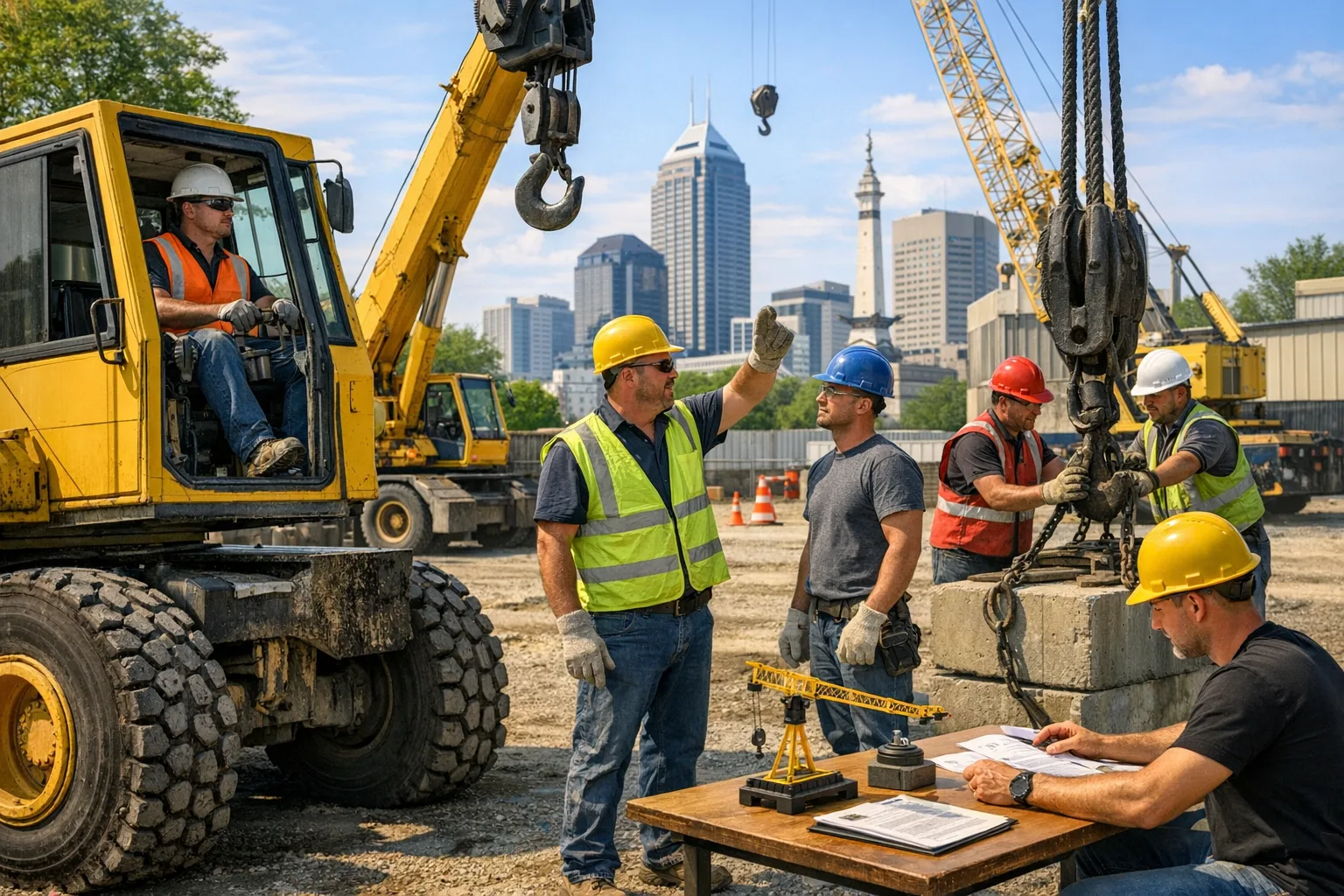
Crane rigging certification training is designed for workers whose role involves attaching loads, understanding rigging hardware, identifying proper rigging methods, and supporting safe lifting operations. This path is for the person who may not be in the operator’s seat but has a direct effect on lift safety.
Typical students include:
- Ironworkers and erection crews
- Workers who connect loads before a lift
- Site personnel responsible for sling selection or rigging inspection awareness
- Construction workers who want to add a recognized lifting-related credential
Rigging training is not just an “extra” class. It is role-specific preparation for work that directly affects load control and safety. Students need to understand equipment, rigging practices, communication, hazard awareness, and safe procedures. If that is your track, review crane rigging certification for more detail.
3. Crane Signal Person Certification
Signal person training is for workers who direct crane movement through standardized signals and communication procedures. This role becomes especially important when the operator’s view is limited or when the lift setup requires coordinated movement and communication.
This course type is often a fit for:
- Workers designated to communicate directly with crane operators
- Crew members who need documented signal person qualification preparation
- Contractors trying to align team roles with OSHA expectations
- Workers who support lifting operations but are not pursuing operator certification
Crane signal person certification training focuses on proper signaling methods, communication clarity, hazard awareness, and role-specific responsibilities. It is narrower than full operator training, but it is not minor. On a busy jobsite, signal quality affects safe crane movement and clear coordination.
If that is the credential you need, see crane signal certification.
4. NCCCO Practical Exam Preparation
Not every student needs full classroom retraining. Some already understand the written content reasonably well, have spent time around cranes, or have prior instruction, but they need hands-on practical exam preparation. This path is especially useful when the issue is performance under testing conditions rather than lack of basic exposure.
Practical exam prep may be the right fit if:
- You already studied the written material and need hands-on refinement
- You have field experience but limited test-course experience
- You know the concepts but need work on control, sequence, or time management
- You want focused preparation before an upcoming practical test
This category matters because a student can be capable on site and still need targeted preparation for formal practical testing. Exam environments require accuracy, composure, and familiarity with the test structure. That is different from casual repetition in the field.
How to Choose Between Operator, Rigger, Signal Person, or Practical Prep
The easiest way to choose is to start with your expected job role, not the course title.
If You Want to Run the Crane
You likely need operator training. This is the path for people responsible for crane controls, lift execution from the machine, and the broader operating knowledge required for certification preparation. If your employer expects you to operate, or you are pursuing crane work as a career move, start with NCCCO crane operator certification training rather than a smaller supporting credential.
If You Attach Loads and Help Prepare the Lift
You likely need rigging training. Riggers do not just “help out” near the crane. They play a direct role in safe load handling. If your work involves slings, hardware, load attachment, balancing, or preparing a load for movement, a crane rigging certification training path is a more accurate fit than operator training alone.
If You Direct Crane Movement by Signal
You likely need signal person training. If your job is to communicate movement instructions, especially where the operator’s line of sight is limited, signal person preparation is usually the right route. This is common for workers on active sites where clear role separation matters for safety and compliance.
If You Already Know the Basics but Need Test Performance Help
You may need practical exam prep instead of full training. This is common for experienced workers who are not brand new to cranes but need structured practice under test conditions. It is also useful for students who have already completed related training and want focused time on practical tasks before the exam.
Questions to Ask Yourself Before Choosing
- What job do I actually expect to perform after training?
- Am I trying to operate the crane, support the lift, or direct movement?
- Do I need broad instruction, or am I mainly trying to improve exam readiness?
- Do I already have construction or crane-adjacent experience?
- Is my employer asking for a specific credential?
- Am I comparing operator training to a supporting role certification by mistake?
For many Indianapolis-area students, the biggest mistake is assuming operator, rigger, and signal person courses are just different names for the same thing. They are not. They relate to different responsibilities on a lift.

Requirements, Timeline, and What to Expect Before Class
One of the most common questions is: How to get crane certified in Indiana? The answer depends on your target role, but there are a few practical expectations that help students prepare before they enroll.
Know Your Intended Certification Path
Before class, know whether you are seeking operator training, rigger training, signal person preparation, or primarily practical exam prep. Your timeline, study load, and readiness expectations can vary based on that choice.
Expect Both Knowledge and Performance Preparation
Crane-related certification paths are not just about showing up and watching a presentation. Students should expect to spend time understanding safety principles, role responsibilities, procedures, and test expectations. Operator candidates should also expect hands-on performance preparation if practical testing is part of their goal.
Prior Construction Experience Can Help, But It Is Not the Only Factor
Some students come from concrete, steel, equipment, trucking, warehousing, or general construction backgrounds. That experience can help because the student may already understand jobsite communication, hazard awareness, and the pace of heavy work. But prior experience does not automatically replace training. Formal exam prep still matters.
For career changers, it is important to be realistic. You do not need to be born into the trades to pursue crane training, but you do need the right expectations. This is safety-critical work, and serious training matters.
Have Your Questions Ready Before Enrollment
Before selecting a class, ask practical questions such as:
- Is this course designed for operators, riggers, signal persons, or practical exam candidates?
- What prior experience, if any, is helpful for this track?
- Does the course focus more on written preparation, practical preparation, or both?
- What should I study or bring before class?
- Am I preparing for an initial certification path or refreshing an existing skill set?
Timeline Depends on the Training Track
There is no honest one-size-fits-all answer for training timeline because course structure varies by certification goal, student experience, and the level of preparation needed. A person starting from zero and pursuing operator certification will usually need a more involved path than a worker coming in for focused practical exam preparation. A signal person course also differs from a full operator preparation track.
That is why practical guidance matters more than generic promises. Students in Indianapolis should compare training based on role, experience, and current readiness rather than looking for the shortest label.
What to Have Ready Before Class
Before enrolling, it helps to gather:
- Your target job role or employer requirement
- Your current construction or lifting-related experience level
- Any prior crane or rigging training history
- Questions about written versus practical test preparation
- Your availability for class and study time
- Your budget for training and associated certification-related expenses
If you are still uncertain about the broader path, the page on become a crane operator can help frame the bigger picture.
Cost Factors and How Training Options Compare
When people search for crane training cost Indianapolis, they are often hoping for one exact number. In practice, training cost depends on what type of course you need and how much preparation is included. The more useful question is not “What does crane training cost?” but “What am I paying for, and does it match my goal?”
Course Type Changes the Cost Structure
A full operator training path is different from a signal person course. Rigging training differs from practical-only coaching. Costs vary because the depth of instruction, hands-on preparation, exam focus, and role complexity vary. If you compare prices without comparing course scope, you can easily make the wrong decision.
Written Prep Versus Practical Prep
Some students need both. Others mainly need one. If your issue is knowledge, terminology, and written test readiness, your training needs look different from someone who knows the material but needs more hands-on practice for the practical exam. That is why practical exam preparation should be viewed as its own meaningful category, not just an add-on phrase.
Experience Level Affects Training Needs
A beginner usually needs more comprehensive instruction than an experienced worker who has spent time around cranes and only needs structured certification prep. That does not mean experienced workers should skip training. It means the right training fit may be more targeted.

Type of Crane Path Matters
Students pursuing specialty operator paths, such as tower work, should also compare training needs carefully. If tower work is part of your goal, you can review tower crane operator training cost to understand why specialty paths should be evaluated separately from general assumptions.
Questions to Ask When Comparing Cost
- Is this a full operator course or a narrower role-based course?
- Does the course include practical exam preparation?
- Am I paying for broad entry-level instruction or targeted upgrade training?
- Does the training fit my actual certification goal?
- Will I need operator training now and rigging or signal person credentials later?
The goal is not to find the lowest price line item. The goal is to avoid paying for the wrong track.
Realistic Cost Expectations
It is smart to expect that crane-related training costs can vary based on certification category, class scope, and exam preparation needs. A student who needs a full entry path should not compare that cost directly to a worker taking a narrower signal person course. The class names may all contain the word “crane,” but they serve different purposes.
For Indianapolis students, the best next step is often to describe your role, your experience, and your target certification, then compare training options based on that information rather than trying to estimate everything from search results alone.
Common Mistakes When Picking a Crane Course
Most course-selection mistakes happen before training ever begins. The student is motivated, but they choose based on a vague term instead of an actual role requirement.
Mistake 1: Assuming All Crane Courses Lead to the Same Outcome
This is the most common problem. Operator training, rigging training, signal person training, and practical exam prep all support lifting operations, but they are not interchangeable. A signal person credential does not replace operator preparation. Rigging training does not make someone an operator. Practical prep is not a substitute for foundational knowledge if you are truly starting from zero.
Mistake 2: Choosing a Course by Price Alone
A lower-cost class that does not match your role can become the more expensive mistake. If you need full operator preparation and choose a narrower course because it looks simpler, you may end up paying twice.
Mistake 3: Overestimating Field Experience
Some workers assume that because they have been around cranes, they are ready for testing without structured preparation. Field exposure helps, but exams require deliberate readiness. Written testing and practical testing reward specific preparation, not just familiarity.
Mistake 4: Underestimating Safety Responsibility
Crane work is safety-critical. Students should avoid any training mindset built around shortcuts, quick labels, or unrealistic promises. Serious preparation matters because the work itself matters.
Mistake 5: Picking a Course Before Confirming the Employer Requirement
If your employer or intended employer expects a specific certification path, verify that before enrolling. Some workers sign up for operator-focused material when their immediate need is signal person or rigger preparation. Others do the reverse and later realize they need a broader operator path.
Mistake 6: Ignoring Practical Prep Needs
Some students focus only on classroom study and then realize too late that their main weakness is hands-on performance under test conditions. If your concern is execution rather than written material, practical exam prep may be the missing piece.
Mistake 7: Treating Indiana Career Planning as Separate From Certification Planning
For trade school prospects and career changers in Indiana, the training decision should connect directly to the job you want to pursue. Do not choose a course only because it sounds familiar. Choose the training path that fits the work you plan to do in the Indianapolis market.
How Train For The Crane Helps Indianapolis Students Prepare
Train For The Crane focuses on helping students sort through crane operator and rigging certification training in a practical way. That matters because many people calling about crane courses in Indianapolis are not really asking for “a class.” They are asking for help choosing the correct certification path.
Training Guidance Based on Role, Not Guesswork
Some students need NCCCO crane operator certification training. Some need crane rigging certification training. Some need crane signal person certification. Others need NCCCO practical exam preparation because they already have enough background and want targeted help. Train For The Crane helps narrow that down based on your role, experience, and goal.

Clearer Expectations for Beginners and Experienced Workers
Beginners often need help understanding the full process. Experienced workers often need help identifying whether they need complete retraining or focused exam preparation. In both cases, clear guidance is more useful than generic sales language.
Safety-First Preparation
Because crane operation, rigging, and signaling all affect jobsite safety, training should keep the focus on role responsibilities and exam readiness rather than oversimplified promises. Students need to understand what they are preparing for and why it matters on the job.
Useful for Indianapolis and Indiana Career Planning
Students in Indianapolis often compare crane training to other skilled trades paths or are deciding whether to move from general construction into a more specialized lifting-related role. Train For The Crane supports that decision by helping students identify the appropriate track instead of forcing a one-size-fits-all answer.
Support for Students Comparing Cost and Scope
If you are trying to compare crane courses, one of the most useful things you can do is explain:
- What role you want
- Whether you already work in construction
- Whether you need operator, rigger, or signal person training
- Whether your main concern is written prep, practical prep, or both
That makes it much easier to identify the right Indianapolis-area crane training track.
Frequently Asked Questions About Crane Courses in Indianapolis
What is the difference between crane operator, rigger, and signal person training?
Operator training prepares someone to operate the crane and understand the broader knowledge and practical responsibilities tied to that role. Rigger training prepares someone to attach and manage loads safely as part of lifting operations. Signal person training prepares someone to direct crane movement using recognized communication methods. These are related but distinct job roles.
How do I know if I need full certification training or just practical exam prep?
If you are new to crane work or unclear on core knowledge, full training is usually the safer choice. If you already have solid written understanding or field exposure but need better hands-on performance under exam conditions, practical exam prep may be a better fit. The right answer depends on how much preparation you already have and what part of testing is holding you back.
How much do crane courses in Indianapolis usually cost?
Costs vary by course type, training scope, and the level of preparation involved. A full operator training path is different from a rigging or signal person course, and both are different from focused practical exam preparation. The most accurate way to compare cost is to first identify the exact certification track you need.
Can I take crane training without prior construction experience?
Some students enter training without deep construction backgrounds, especially career changers. However, crane-related roles are safety-sensitive, so it is important to approach training with realistic expectations and a willingness to learn both the knowledge and the responsibilities involved. Prior experience helps, but the right course match is what matters most.
What should I have ready before enrolling in a crane course?
Be ready to explain your target role, your current experience, whether you need operator, rigging, or signal person preparation, and whether your concern is written testing, practical testing, or both. If an employer is asking for a specific credential, have that information ready too.
Choose the Crane Course That Fits the Job You Actually Want
The right crane course is the one that lines up with your real responsibility on the job. If you want to operate, pursue operator training. If you handle load attachment and rigging decisions, pursue rigging training. If you communicate crane movement, pursue signal person preparation. If your main obstacle is hands-on testing, practical exam prep may be the right next step.
That is the difference between taking a class and making a useful training decision.
If you are comparing crane courses in Indianapolis and want help matching your role, experience, and certification goal to the right path, call Train For The Crane at (317) 385-7190. You can request guidance on whether you need NCCCO crane operator certification training, crane rigging certification training, crane signal person certification, or practical exam preparation, and get a clearer picture of what to do next in the Indianapolis area.