

How to Become a Crane Operator in Indiana: Step-by-Step From First Class to Certification
If you are researching crane operator certification Indiana requirements, the biggest problems usually are not motivation or interest. They are paperwork issues, test-day surprises, and confusion about what you actually need before you can enroll, train, and test. This guide is built for Indiana readers who want a practical, no-nonsense checklist they can use from first inquiry through NCCCO testing.
Whether you are an entry-level construction worker, an experienced laborer moving into crane work, a rigger adding credentials, or a career changer comparing a crane school Indiana option, this article explains what to bring, what to verify, and what mistakes commonly delay people. If you are still comparing programs, you can also review crane training in Indiana, crane training in Indianapolis, learn more about how to get a crane license, or read about what it takes to become a crane operator.
What This Indiana Crane Certification Checklist Covers
This article is not a generic overview of crane careers. It is a stage-by-stage preparation guide for people pursuing NCCCO crane operator certification training in Indiana. The goal is simple: help you avoid avoidable delays and show up prepared at every step.
For most students, the process includes:
- Choosing the right type of crane operator training
- Registering for class and test dates
- Preparing identification and any required forms
- Attending classroom and hands-on instruction
- Taking the written exam
- Taking the practical exam
- Planning for retesting if needed
Indiana students often ask the same practical questions:
- Do I need a CDL first?
- Do I need prior crane experience before I sign up?
- What identification is accepted on test day?
- What should I wear to practical training and testing?
- What happens if I forget a document or arrive late?
Those are the right questions to ask. Crane certification is safety-driven and process-driven. Showing up with the wrong ID, missing registration details, or wearing the wrong gear can turn a planned training week into a rescheduling problem. That matters if you are trying to line up work, use employer-sponsored training time, or coordinate around a shutdown, outage, or construction schedule in Indianapolis or elsewhere in Indiana.
What to Bring When You Register for Crane Operator Training
The registration stage is where many delays start. People assume they can “figure it out later,” but certification training runs smoother when you confirm details up front.
Basic information to have ready
When you first inquire about training, have the following information ready:
- Your full legal name exactly as it appears on your government-issued ID
- Your phone number and active email address
- Your city in Indiana and how far you are willing to travel for training or testing
- Your work background, if relevant
- Whether you are pursuing operator certification only or also need rigging or signal person training
- Whether an employer is paying, reimbursing, or requiring a certain credential
This matters because name mismatches, outdated contact information, and unclear training goals create problems later. If your test registration uses a nickname but your ID shows a formal legal name, that can create check-in issues.
Documents to gather before enrollment
Before you finalize registration, gather a simple file folder or digital folder with:
- A valid government-issued photo ID
- Any confirmation emails or registration details
- Employer contact information, if your employer is coordinating payment or requirements
- Any forms the training provider asks you to complete in advance
- Payment confirmation or billing approval details, if applicable
If you are comparing Indiana crane operator training cost and certification-related expenses, keep all confirmations in one place. Even when a training provider helps coordinate the process, students should keep their own copy of registration communications and receipts.
Do you need a CDL or driver license before you start?
One of the most common myths is that you must have a CDL before you can begin crane operator certification training. In many cases, that is not the first requirement for classroom training or exam preparation. A CDL and crane certification are different issues. Some jobs may involve truck-mounted equipment or employer-specific driving expectations, but that does not mean every person starting crane training in Indiana must already have a CDL in hand.
You should ask the training provider what applies to your intended path:

- Are you training for general NCCCO operator certification?
- Are you pursuing tower crane operator training?
- Are you entering a role where the employer separately expects a CDL?
- Are you currently a rigger or signal person expanding credentials?
A standard driver license may still be useful for identification and general employability, but it is important not to confuse employer hiring preferences with the actual first steps in the certification path.
Register early if you want fewer scheduling problems
If your goal is to train and test without interruption, do not wait until the last minute. Early registration gives you time to:
- Confirm class availability
- Review document requirements
- Fix name or ID issues
- Arrange work time off
- Prepare for written and practical testing
- Understand what happens if a retest becomes necessary
This is especially important for students in and around Indianapolis who may be balancing current construction work, family schedules, or travel from other Indiana markets.
What to Bring to Classroom and Hands-On Training
Once you are registered, your next job is to show up prepared for learning, not just attendance. Good training days are easier when you bring what you need and leave distractions behind.
Classroom essentials
Bring the basics every day unless the provider tells you otherwise:
- Your photo ID
- Registration confirmation or class reminder
- Notebook and pen
- Any training manuals or printed materials sent in advance
- Reading glasses if you use them
- Water and any allowed personal essentials for a full training day
The written side of crane training involves load concepts, safety procedures, operating practices, and exam-focused preparation. If you are attending NCCCO practical exam preparation as part of your course, take notes on the exact testing sequence, timing, and evaluator expectations. Many students lose points later because they “sort of remember” the process instead of writing it down.
Hands-on training gear
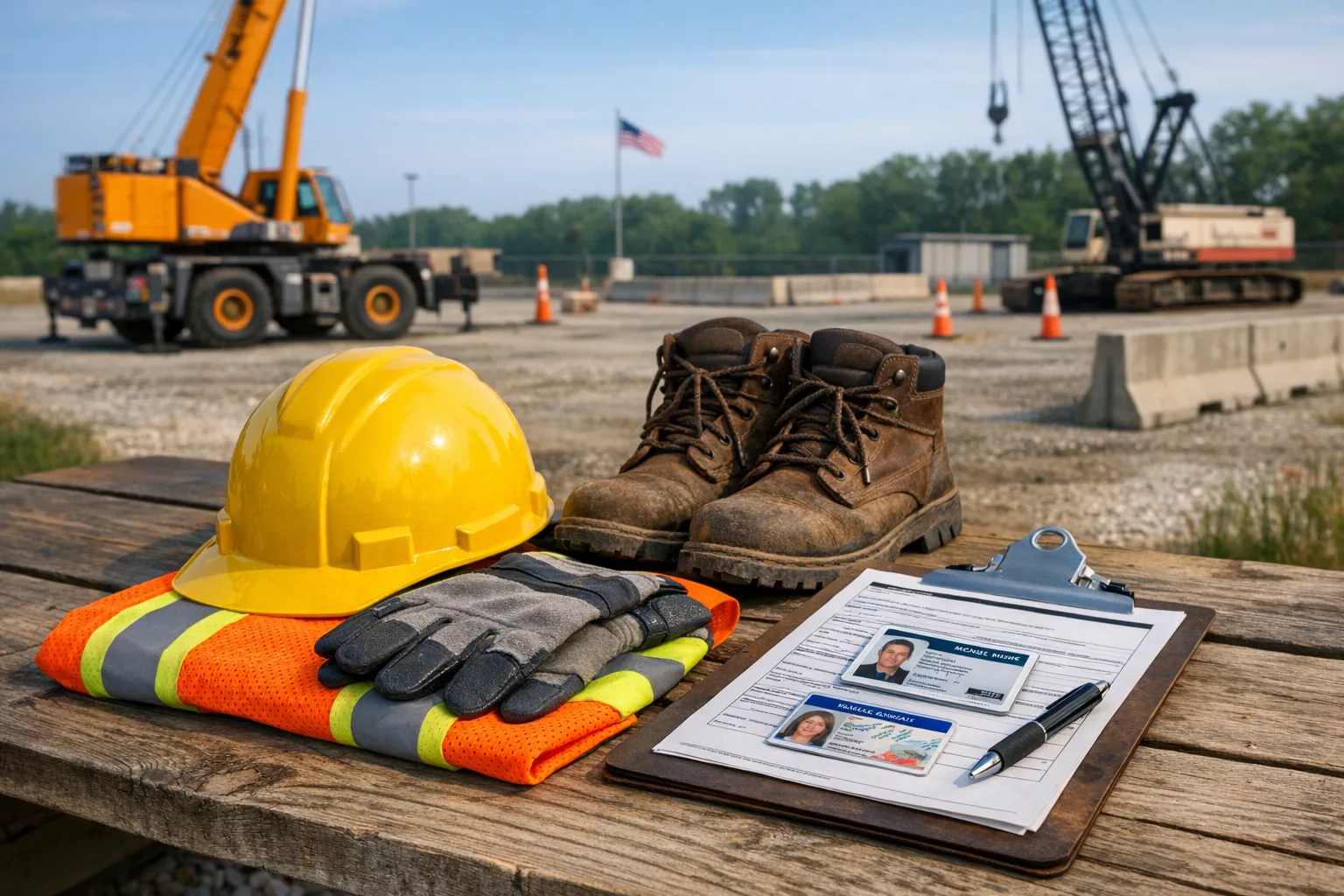
For field or yard training, ask in advance what PPE is required. A practical, safety-first list often includes:
- Work boots appropriate for a training yard
- Long pants
- High-visibility clothing if requested
- Hard hat if required by the training environment
- Work gloves if recommended
- Weather-appropriate outerwear for Indiana conditions
Do not assume training conditions will be comfortable or purely classroom-based. If part of your program includes equipment familiarization, signal review, or yard-based practical preparation, dress for a real industrial setting. Indiana weather changes quickly, and that matters for outdoor instruction.
What not to bring or rely on
Students sometimes create problems by bringing the wrong things or relying on assumptions:
- Do not rely on your phone battery for all confirmations
- Do not assume a photo of your ID will substitute for your physical ID
- Do not wear casual shoes that are unsafe for a work-zone setting
- Do not arrive without knowing whether your session includes practical yard time
If you are also adding crane rigging certification training or crane signal person certification training, ask whether class materials or PPE expectations differ by course.
What to Bring on Written Exam Day
Your written exam day is not the time to guess. Bring exactly what you need, and verify details before you leave home.
Your must-have items
For written testing, your checklist should include:
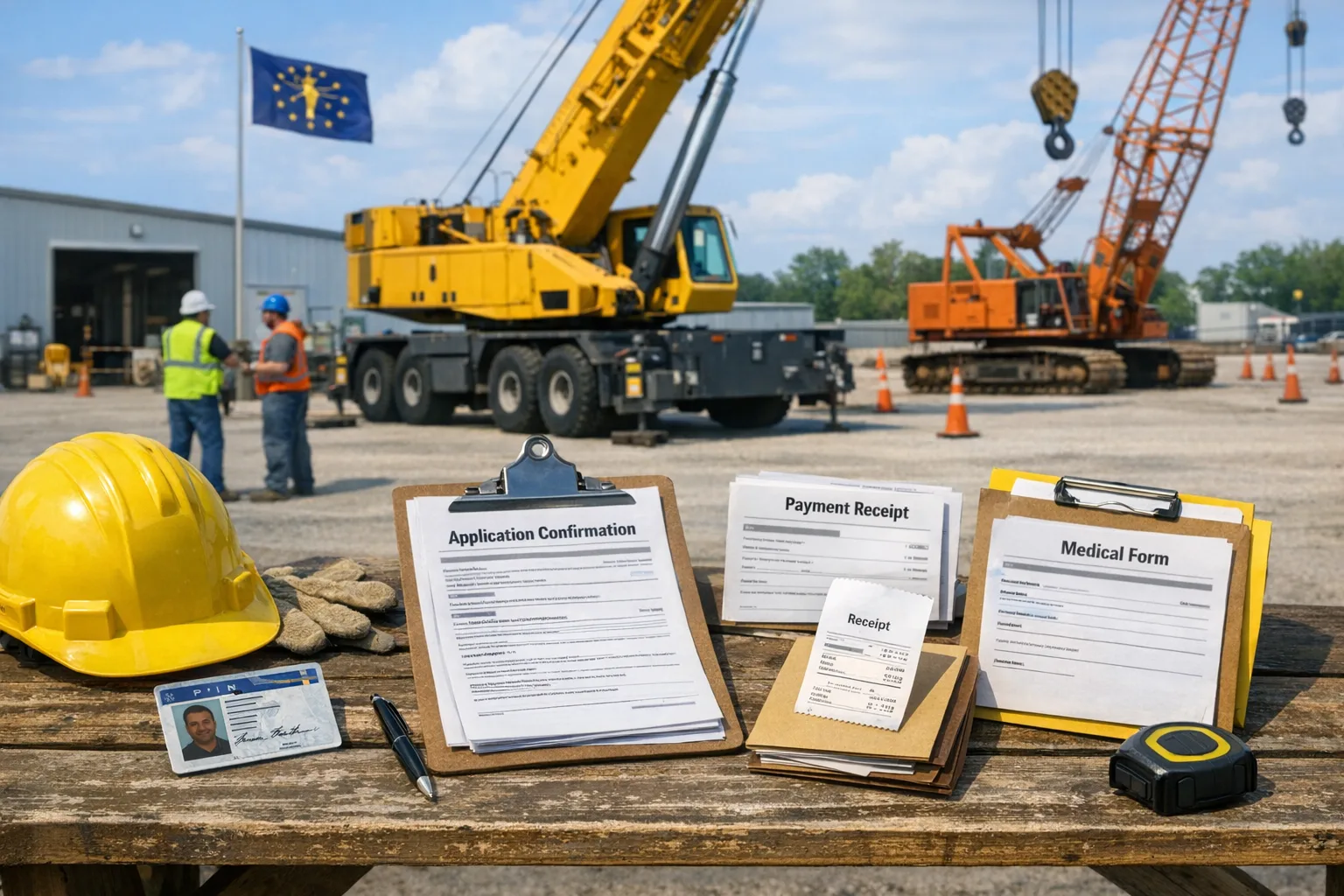
- Valid government-issued photo identification
- Your exam confirmation or admission details
- Any approved documentation specifically required by the testing process
- Prescription glasses if needed for reading
- Any allowed items the testing instructions explicitly permit
Always follow the current candidate instructions for the exact exam you are taking. Policies can differ by testing arrangement, and acceptable IDs or procedures should be confirmed before test day, not argued about at check-in.
What identification and paperwork should you bring?
If you are asking for a practical crane certification documents checklist, start with these categories:
- Primary photo ID that is current and not expired
- Exam registration confirmation
- Any paperwork the provider instructed you to complete beforehand
- Employer authorization if your company arranged the test and asked you to carry documentation
Some students overcomplicate this by bringing stacks of unrelated papers while forgetting the one thing that matters most: valid identification that matches the registration record. Focus on the essentials.
Can you test if you forgot a document, medical form, or payment confirmation?
Sometimes yes, sometimes no, but that is not a risk worth taking. The answer depends on what was forgotten and what the testing rules require. If you forget your photo ID, you may not be able to test. If you forget an email confirmation but your registration can be verified another way, the issue may be easier to resolve. If payment or eligibility is not properly documented, you may face a delay or need to reschedule.
The safe approach is to verify all requirements several days in advance and pack your items the night before. If something is missing, call before you travel.
Test-day habits that help
- Arrive early enough to handle check-in calmly
- Eat before you test unless told otherwise
- Bring directions and parking details if you are unfamiliar with the location
- Review instructions one last time the night before
- Do not assume late arrival will be excused
Written exams go more smoothly when you remove avoidable stress. The test is hard enough without adding a rush, a dead phone, or uncertainty about where to park.
What to Bring on NCCCO Practical Test Day
The practical exam is where preparation mistakes become obvious fast. This is the stage where gear, timing, and mental readiness matter just as much as paperwork.
Practical exam checklist
For NCCCO practical exam preparation and test day itself, plan to bring:
- Your valid photo ID
- Your practical test confirmation details
- Required PPE or clothing specified by the training or test site
- Work boots suitable for the yard or test area
- Weather-appropriate clothing for Indiana conditions
- Any allowed personal essentials for a multi-hour outdoor testing environment
Again, use the provider’s instructions and the applicable testing guidance as your authority. A practical test site is not the place for casual footwear, loose assumptions, or showing up without knowing the rules.
What should you wear and bring for the practical crane exam?
Wear clothing that fits a controlled heavy-equipment environment. Think jobsite-ready, not gym-ready. That usually means:
- Durable pants
- Boots with appropriate support and protection
- Layers if weather is cool or variable
- Rain gear if conditions may be wet
- PPE if directed by the site
Bring only what you need. You want to be focused on the sequence, controls, signals, and timing, not managing a pile of unnecessary personal items.
Why practical readiness is different from written readiness
Some students do well in the classroom and still struggle during the practical because they underestimate how specific the test feels. Practical performance is about controlled movement, composure, following instructions, and being ready for the actual testing format. That is why structured practice matters. If you are pursuing operator training in Indiana, ask exactly how the course prepares you for the practical sequence and where students most often lose points.
What if weather or equipment timing affects the day?
Practical testing depends on site conditions and logistics. Students should be mentally prepared for:
- Waiting periods
- Outdoor conditions
- Schedule adjustments
- The possibility that a missed step means retesting later
This is not a reason to worry. It is a reason to show up organized, rested, and realistic.
Common Mistakes That Can Delay Training or Testing
Most delays do not happen because a student lacks interest. They happen because a few small details were not handled in time.
1. Registering under a name that does not match your ID
If your ID says one thing and your registration says another, fix it early. Do not wait until check-in.
2. Assuming you need licenses you may not actually need yet
A common Indiana training mistake is waiting months because someone told you that you need a CDL or some other extra step before you can even begin. Some jobs may later require additional qualifications, but that does not mean you should delay asking about the actual crane certification path that applies to you.
3. Not confirming which certification path fits your goal
Operator, rigger, and signal person credentials are related but not interchangeable. If you are expanding credentials, be clear about whether you need:
- Operator certification
- Rigging certification
- Signal person certification
- Tower crane training
- A combination based on employer expectations
4. Waiting too long to schedule
If you want a smooth timeline, early planning matters. Last-minute scheduling leaves less room for document corrections, exam prep, or rescheduling if something changes.
5. Underestimating retesting realities
Not everyone passes every portion on the first try. That does not mean the career path is closed. It means you should ask ahead of time what the retest process looks like, what areas tend to give students trouble, and how to prepare better if needed. Practical, realistic planning is better than false confidence.
6. Bringing the wrong clothing or no PPE guidance
Students sometimes prepare for an office setting when part of the process is yard-based and industrial. Ask what to wear. Then dress accordingly.
7. Not keeping your own checklist
Create a simple checklist for each stage:
- Registration
- First class day
- Written exam day
- Practical exam day
A personal checklist reduces confusion, especially if you are balancing work, travel, and family responsibilities.
How to Confirm Your Indiana Training and Test Requirements
If you want the shortest path to a clear answer, ask direct questions before you book your date. This is the step many people skip, and it is usually the step that would have prevented confusion.
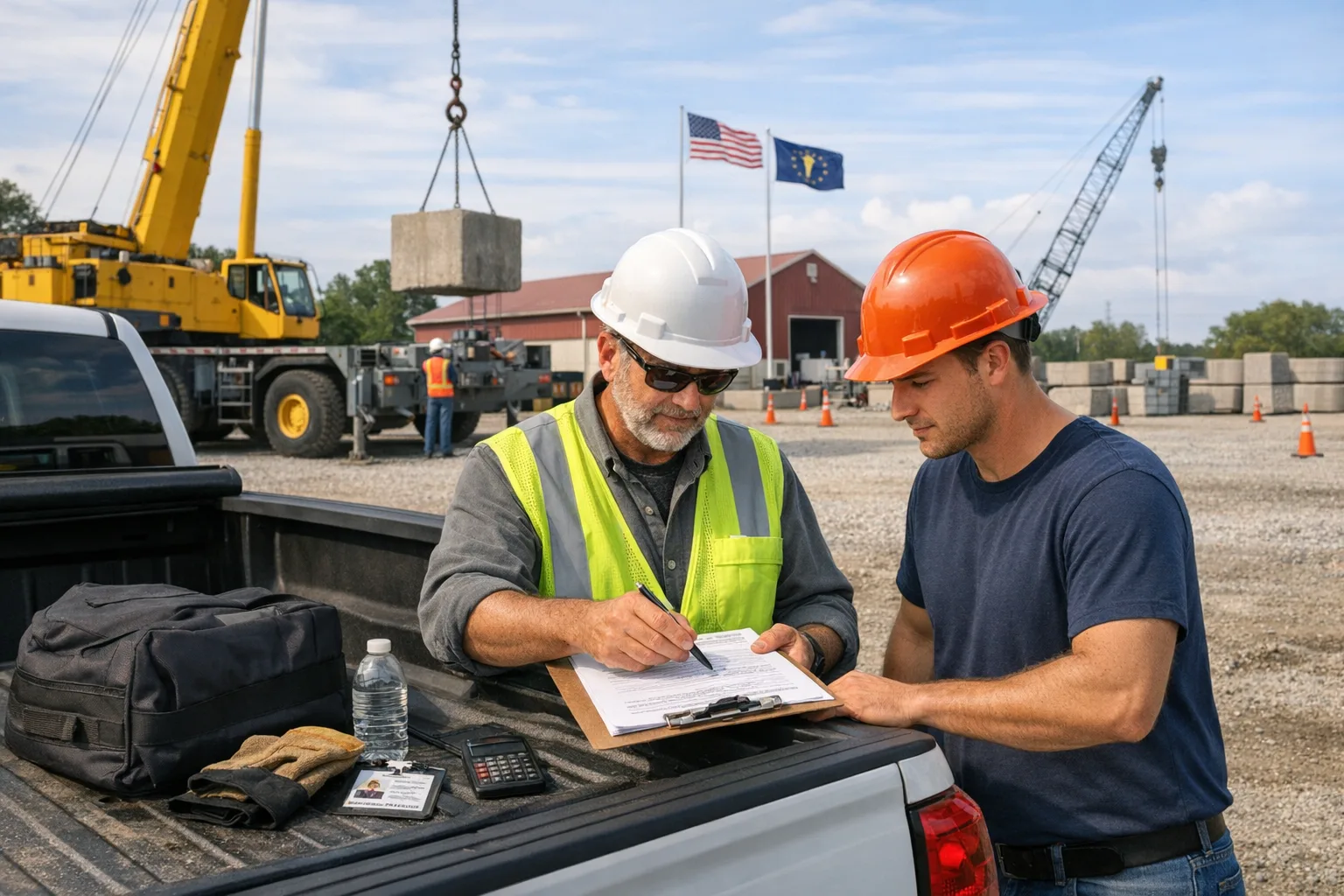
Questions to ask before you enroll
- Which crane operator certification path fits my intended job?
- Do I need any experience before enrolling?
- Do I need a CDL now, later, or not for this path?
- What exact ID is required for class and test day?
- What should I wear for hands-on training and practical testing?
- What happens if I need to reschedule?
- What happens if I need to retest?
- Are there separate requirements for rigging, signal person, or tower crane training?
Where Indiana students should focus
For Indiana readers, the key is not just finding any school. It is finding a training path that explains requirements clearly, prepares you for the actual exam environment, and helps you understand what documents and readiness steps apply to your situation. That is especially useful for people in Indianapolis and nearby areas who are trying to compare classes around current work obligations or a career transition.
If you are speaking with an employer, also ask:
- Which certification do you expect me to earn?
- Do you require additional site-specific qualifications beyond certification?
- Will you reimburse training or testing?
- Do you have a timeline for when I need the credential completed?
This helps you separate employer preferences from the actual certification process.
Use current exam guidance, not rumors
Students get into trouble when they rely on “what somebody on a jobsite said” instead of current training and testing instructions. Policies on ID, admissions, exam procedures, and practical testing expectations should be confirmed through the training provider and current candidate guidance. That is the safest way to avoid showing up with the wrong assumptions.
FAQ: Indiana Crane Certification Preparation
Do I need a CDL or driver license before I start crane operator certification in Indiana?
Not always. A CDL is not the same thing as crane certification. Some employers or job types may involve separate driving requirements, but many students can begin crane operator training and exam preparation without already holding a CDL. Ask what applies to the specific operator path you want.
What identification and paperwork should I bring to NCCCO crane training and testing?
Bring a current government-issued photo ID that matches your registration details, along with class or exam confirmations and any forms specifically requested by the provider. If an employer is coordinating your training, keep those approval details available too.
Can I test if I forgot a document, medical form, or payment confirmation?
It depends on what is missing, but missing required identification or eligibility items can stop you from testing. Do not leave this to chance. Review your checklist several days ahead and call if you are unsure.
What should I wear and bring for the practical crane exam?
Wear work-ready clothing suitable for an industrial training or test environment, including appropriate boots and any required PPE. Bring your ID, your practical test details, and weather-appropriate clothing for Indiana conditions.
How early should I register if I want to train and test without delays?
Earlier is better. Early registration gives you time to fix ID issues, organize payment, prepare for written and practical testing, and work around job or family scheduling conflicts. It also gives you more room if a retest or reschedule becomes necessary.
Conclusion
The path to crane operator certification Indiana students want is usually more manageable than it first appears, but only if you stay organized. The people who move through training most smoothly are not always the ones with the most industry experience. Often, they are the ones who verify requirements early, bring the right documents, dress for the environment, and treat each stage seriously.
If you are comparing NCCCO crane operator certification training options in Indiana, Train For The Crane can help you sort out what applies to your situation before you commit to a class or test date. If you want a practical checklist for registration, class day, written testing, or practical exam day, or you want clarification on which documents, exams, or training path fit your goals in Indianapolis or elsewhere in Indiana, call (317) 385-7190 and ask your question before you book.