

Crane Operator Job Offer Comparison: Per Diem, Overtime, Travel, and Training Expectations
A crane operator job offer can look attractive because of a high hourly rate, a stated per diem, or the possibility of overtime. Before accepting, look past the headline number. A useful comparison separates wages from reimbursed expenses and conditional pay, clarifies whether work is local or travel-based, and identifies the mobile crane operator credentials, practical experience, and onboarding requirements expected before day one.
For aspiring operators, entry-level construction and industrial workers, experienced workers adding credentials, riggers, signal persons, and Indiana employers planning training for their crews, the key question is not simply, “Which company pays more?” A better question is, “Which offer fits my current qualifications, travel limits, schedule needs, and next career step?”
This guide helps Indianapolis and Indiana workers compare crane operator per diem jobs, local assignments, overtime structures, travel expectations, employer-paid training terms, and practical readiness requirements. It is not employment-law advice, and it does not promise earnings, placement, certification, or a particular employer outcome. The goal is to help you identify what is confirmed, what is conditional, and what you still need to verify in writing before accepting an offer.
Why the Highest Hourly Rate Is Not Always the Best Crane Job Offer
The highest hourly rate matters, but it is only one part of a crane operator job offer comparison. A higher hourly rate can come with extended travel, uncertain schedules, unpaid or limited travel arrangements, strict credential requirements, a short-duration project, or expectations for immediate operating experience. A lower rate may involve steadier work near Indianapolis, more predictable shifts, less time away from home, employer-supported training, or a clearer route to adding equipment responsibilities over time.
Neither offer is automatically better. The right decision depends on the complete written terms, your present qualifications, the actual job scope, and whether you can meet the employer’s expectations safely and realistically.
Consider an Indianapolis worker comparing two offers. One role is a local mobile crane assignment serving central Indiana projects. It has no overnight per diem because the employee is expected to return home after the shift. The other role is an out-of-state project with a higher stated rate and a daily allowance. At first glance, the travel role may appear to pay much more. But the worker still needs to know whether lodging is covered separately, whether the allowance applies on weekends and weather days, who pays for travel to the project, what happens when the assignment ends, and whether the promised overtime is tied to a short project phase.
The local assignment may not have a travel allowance, but it may reduce lodging costs, long drives, time away from family, and uncertainty between projects. For some workers, that makes the local role a stronger practical choice even if the initial headline rate is lower.
Another point to clarify is whether the offer is truly an operator role from the first day. A company may hire someone into a related position such as rigger, signal person, oiler, yard support, equipment support, or trainee, with the possibility of advancing into crane operation later. That can be a legitimate career path. However, candidates should not assume they will move into an operator seat unless the employer clearly explains the role, conditions, training expectations, and decision process.
Separate compensation from career readiness
Two offers can differ because one employer expects a fully ready operator while another is prepared to invest in a worker’s development. A company with an immediate operating need may require a specific credential path, documented practical experience, familiarity with certain mobile crane configurations, and the ability to complete site procedures with limited onboarding time.
Another employer may be willing to support training or credential preparation. That support can be valuable, but it should be treated as a specific term of the offer rather than as assumed income. Ask what is covered, when it is covered, whether required training time is paid, whether the employer chooses the provider, and whether reimbursement or continued-employment conditions apply.
Before relying on broad statements such as “company-paid training,” review these employer-paid crane training questions. The phrase can mean different things depending on the employer, the project, the worker’s prior experience, and the credential path involved.
A sound offer comparison considers three separate issues:
- The job you are actually being offered now.
- The qualifications required to begin and remain in that role.
- The training and credentials that may support future opportunities.
This is especially important for entry-level workers who may have construction, industrial, trucking, rigging, or signal-person experience but still need a defined plan before they are ready for operator duties.
Compare the Full Pay Package: Base Rate, Overtime, Per Diem, and Travel
Total compensation differs from hourly pay alone. A practical crane operator job offer comparison separates each part of the package instead of adding everything together as if wages, reimbursements, travel allowances, and conditional payments are the same thing.
Base hourly rate
The base hourly rate is the starting point because it is the clearest recurring pay figure in most offers. Ask whether the rate applies from the first day of work, whether a training or introductory rate applies at the beginning, and whether the stated rate is tied to a particular classification, project, shift, union agreement, equipment assignment, or job location.
It is also reasonable to ask whether the worker will remain in a crane operator classification when crane work is temporarily unavailable or whether the employer may assign related duties. Mobile crane work can change with project sequencing, equipment demand, customer schedules, weather, maintenance, and staffing. Understanding the role’s actual scope helps prevent misunderstandings after you report to the site.
Overtime pay and actual overtime opportunity
Crane operator overtime pay can affect weekly income, but “plenty of overtime” is not the same as a confirmed schedule. Overtime can depend on project phase, customer demand, material deliveries, permit restrictions, equipment availability, staffing levels, plant shutdowns, weather conditions, and the need to coordinate lifts with other trades.
Ask about the current assignment rather than relying only on a recruiter’s description of the busiest week on a past project. Helpful questions include:
- What are the scheduled start and end times for this assignment?
- How many days per week is the crew currently scheduled to work?
- What overtime policy applies, and after what threshold?
- Is weekend work common, rotating, optional, or required?
- Are early starts, night shifts, or short-notice call-outs expected?
- Is a shift differential available for nonstandard hours, if applicable?
- Is overtime expected throughout the project, or only during a particular phase?
- How are weather holds, delayed deliveries, equipment downtime, and customer shutdowns handled?
These questions are not meant to force an employer to predict every week. Their purpose is to distinguish the confirmed base offer from the possibility of overtime that may vary significantly.
Per diem and allowances
Per diem is common in travel-oriented construction and crane assignments, but it should not automatically be treated as ordinary wage income. Depending on the company’s written policy and the assignment, a per diem or allowance may be intended to help cover meals, lodging, incidentals, or other costs associated with working away from a normal home area.
Eligibility rules, payment timing, documentation requirements, lodging arrangements, and covered days can vary by employer and project. A posting that lists an hourly rate plus per diem does not necessarily mean the daily allowance should be divided into an hourly figure and added to the wage rate. The allowance may depend on attendance, distance from home, overnight status, project duration, or other written conditions.
Travel costs and time away from home
Travel can create opportunity as well as expense. A travel crane role may expose an operator to larger projects, different crews, new operating environments, and a broader range of equipment. It may also require long drives, overnight stays, unfamiliar worksites, repeated project transfers, and extended time away from regular household responsibilities.
Before accepting a travel assignment, clarify:
- Where the first project is located and whether the job location may change.
- Whether the company provides lodging, reimburses lodging, offers an allowance, or expects the employee to arrange accommodations.
- How travel to the first project, transfers between projects, and return travel are handled.
- Whether mileage, airfare, rental vehicles, fuel, tolls, parking, and baggage are covered under the company policy.
- Whether travel days are paid, partially paid, reimbursed, or handled another way.
- Whether the per diem changes if you return home on weekends.
- What happens to the lodging and allowance arrangement if a project pauses, ends early, or moves to another location.
Federal wage-and-hour questions can be fact-specific, and company policies can add their own conditions. If a travel-pay issue affects whether you can accept a job, request the employer’s written policy and seek appropriate professional guidance when needed. Do not rely only on a verbal summary from a recruiter or a coworker.
A practical worksheet for comparing two offers
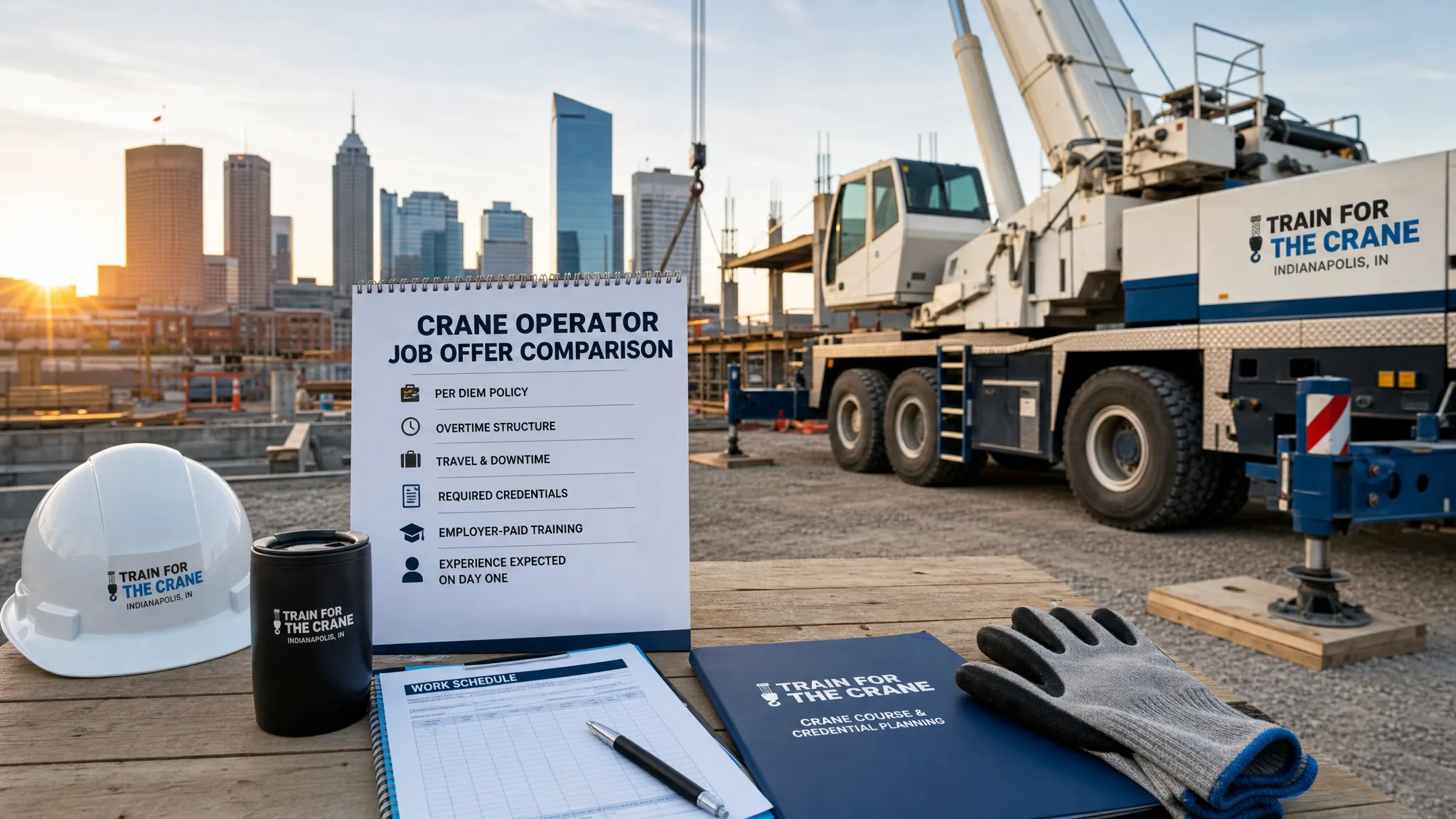
Use a written worksheet instead of relying on memory or verbal summaries. For each offer, list the base wage separately from overtime, travel allowances, reimbursements, bonuses, training support, and potential future raises. Then mark each item as confirmed, conditional, or unknown.
| Offer Item | Questions to Record | Why It Matters |
|---|---|---|
| Base hourly wage | Starting rate, job classification, shift, location, and assignment | Provides the clearest recurring pay comparison. |
| Overtime | Rate, threshold, current schedule, and project dependency | Expected overtime can change when project conditions change. |
| Per diem | Daily amount, eligible days, lodging arrangement, and conditions | May offset travel expenses rather than function as ordinary wages. |
| Travel | Project location, transportation, travel-day policy, and return trips | Travel affects both out-of-pocket cost and personal time. |
| Training support | Covered costs, paid training time, repayment terms, and required credentials | Can affect what you must invest before and after accepting. |
| Project duration | Expected start, current phase, likely delays, and next assignment | Places short-term higher pay in the right context. |
Per Diem Questions to Ask Before You Count It as Take-Home Pay
Crane operator per diem jobs can be appealing to workers who are willing and able to travel. Still, per diem language deserves careful review. In many arrangements, per diem is connected to expenses associated with work away from home rather than being a replacement for the base hourly rate.
Do not assume every calendar day receives the same allowance, that every project uses the same policy, or that an allowance remains in place if the work location changes. Confirm the details in writing before building a household budget around it.
Questions to ask about per diem
- What expenses is the per diem intended to cover? Ask whether it is for meals, lodging, incidentals, or a combination of expenses.
- Is lodging provided separately? A daily allowance has a different practical value when the employee must secure and pay for lodging independently.
- Which days qualify? Determine whether it applies on workdays only, travel days, weekends, weather days, holidays, or temporary site shutdowns.
- What attendance or distance rules apply? Some policies may depend on working a scheduled shift, maintaining an approved residence away from the project, or meeting a distance requirement.
- How and when is it paid? Confirm whether it is paid with payroll, reimbursed after receipts are submitted, advanced before travel, or handled through another process.
- Can the amount or policy change? Ask whether the allowance is tied to a customer contract, jobsite, lodging arrangement, or specific project phase.
- What happens at the end of the assignment? Clarify the return-travel arrangement and whether the next available assignment could be in a different city or state.
For an Indianapolis operator considering work outside Indiana, these answers can be just as important as the posted hourly rate. A job may include an allowance but require substantial out-of-pocket spending before reimbursement. That arrangement may work for one employee and not another. Workers with ongoing housing costs, family responsibilities, or limited ability to cover travel expenses in advance should be especially direct about payment timing and lodging arrangements.
Keep wages and reimbursements in separate columns
When comparing offers, create separate columns labeled “wages,” “conditional pay,” and “travel expenses or allowances.” Wages compensate you for work under the employer’s pay structure. Reimbursements and allowances may help offset project costs, but they can carry separate eligibility rules.
Keeping these figures separate prevents an inflated picture of regular income. It also makes comparisons clearer when choosing between local Indiana crane operator jobs and travel assignments. A local Indianapolis-area job may offer no per diem because overnight travel is not required. That does not automatically make it less competitive once travel time, lodging costs, unpredictable assignment lengths, and time away from home are considered.
Overtime, Weather Delays, and Schedule Expectations to Review
Crane work is highly dependent on the project schedule and safe operating conditions. Lifts can depend on site access, ground conditions, rigging readiness, inspections, deliveries, crew coordination, equipment maintenance, customer sequencing, wind, weather, and the availability of other trades.
A hiring manager may accurately describe a project as busy, but field conditions can still change the available work hours. That does not make overtime discussions unhelpful. It means candidates should ask precise questions about the current schedule and how schedule variability is handled.
Review the normal workweek, not just the busiest week
Ask what the crew has recently been scheduled to work, what the current project phase requires, and whether that schedule is expected to continue. A project in a heavy-lift phase may look very different from one that is mobilizing, waiting on materials, paused for access issues, or nearing completion.
Ask whether the job is:
- A fixed daytime shift or a rotating schedule.
- Primarily weekday work or regularly scheduled weekend work.
- Dependent on dispatch, emergency work, maintenance outages, or short-notice call-outs.
- Likely to include early starts, nights, or work around traffic and plant operations.
- Expected to slow during weather events, customer shutdowns, or seasonal changes.
- Part of a short-duration project, an ongoing maintenance contract, or a local fleet assignment.
Weather delays are a safety issue and a planning issue
Weather can affect safe crane operation, jobsite access, lift planning, ground conditions, visibility, and project timing. Workers should never view weather-related limitations as something to work around. The employer’s lift plans, site procedures, equipment instructions, applicable standards, and supervisor direction govern the work.
From an offer-comparison perspective, the practical questions are how weather and other delays affect reporting expectations, alternate assignments, communication, per diem eligibility, and the pay process. Ask whether employees report to the site when conditions are questionable, whether alternate duties are available when lifts are paused, and how the company communicates schedule changes.
If you are considering a travel assignment, ask whether lodging and per diem policies continue during weather downtime or temporary project interruptions. Do not assume that a travel allowance continues automatically when a site stops work.
Understand onboarding before estimating your first paycheck
New-hire onboarding can involve orientation, site-specific safety procedures, documentation review, equipment familiarization, drug and alcohol testing where applicable, personal protective equipment expectations, background requirements, competency evaluations, and customer-specific access rules. The requirements vary by employer, site, assignment, and job classification.

Ask what must be completed before you can report to the crane or perform assigned work. Also ask whether the company requires original credential documents, a current medical qualification where applicable, a driver’s license class for the position, previous operator logs, documented operating experience, or other records.
Before resigning from another role, booking travel, or reserving training, make sure you understand the conditions attached to the start date. An offer may be contingent on credentials, site approval, project timing, background steps, drug screening, equipment evaluation, or other onboarding requirements.
Training, Certification, and Practical Experience: What the Employer Expects
Crane operator training requirements are not identical across employers or jobsites. Construction employers must address applicable operator qualification and certification obligations, including requirements under OSHA’s Cranes and Derricks in Construction standard. Employers may also establish additional hiring, equipment-familiarization, practical-experience, customer-access, and site-specific expectations based on the work they perform.
That means a crane job offer may specify one or more of the following:
- A current certification path relevant to the equipment and role.
- Preparation for NCCCO examinations or another credential process identified by the employer.
- Documented practical operating experience.
- Familiarity with certain mobile crane configurations, controls, or work environments.
- Rigger or signal person knowledge for employees assigned those duties.
- Additional internal evaluation, orientation, or familiarization before operating company equipment.
Certification preparation and readiness for a particular employer’s job are related but not interchangeable. A credential can be an important part of a crane career path, while the employer may still need to evaluate whether an operator is qualified for assigned equipment, the specific jobsite, and the work being performed.
Candidates should describe their background accurately. Training attendance, exam preparation, a future test date, and related construction experience should not be represented as the same thing as a completed credential or documented operating background.
How practical operating time fits into an offer decision
Practical training can help candidates build familiarity with operating controls, equipment setup concepts, communication, lift planning principles, work-zone awareness, and safe operating habits in a supervised learning setting. It can also help a worker identify where more practice is needed before accepting a position that expects day-one readiness.
When comparing Indianapolis crane schools or preparation options, ask exactly what practical equipment access is included, what skill areas are covered, and how the course schedule fits your possible employment start date. This guide to crane operator school practical training questions can help you compare classroom instruction, equipment access, and practical preparation without assuming every provider offers the same type or amount of operating time.
A worker who has been a rigger, signal person, laborer, truck driver, mechanic, or equipment support employee may have valuable jobsite knowledge. However, related experience should not be assumed to meet every operator expectation. Explain your actual work history and ask the employer which capabilities, credentials, and evaluations apply to the position being offered.
When rigger, signal person, or tower crane preparation may matter
Not every crane-related job requires the same supporting credentials. A mobile crane operator position, tower crane assignment, rigging role, and signal person role can involve different responsibilities and employer expectations.
If an offer refers broadly to “crane certification,” ask what that phrase means for the specific role. Is the employer seeking a mobile crane operator credential path? Does the job include rigger or signal person duties? Is a tower crane-related qualification relevant to the equipment and assignment? Is the employer looking for an operator who already has experience in a particular type of work, such as industrial maintenance, commercial construction, road work, or plant operations?
Clarifying these points early can prevent spending time and money on training that does not fit the job. It can also prevent candidates from agreeing to a start date they cannot reasonably meet.
Evaluate employer-paid training carefully
An employer may offer to cover course fees, exams, travel, wages during training, or only selected parts of the credential path. Some arrangements may require prior approval, attendance at a particular provider, successful completion of internal milestones, continued employment for a stated period, or repayment under certain circumstances.
The only reliable answer comes from the employer’s written terms. It may make sense to accept a lower hourly rate when the company pays for required crane training, but compare the full arrangement. Consider the cost you would otherwise pay, the practical value of the training, the schedule, the payment conditions, the role you are actually accepting, and whether the preparation supports your long-term plan.
If you are planning training independently, use this mobile crane operator training cost and planning guide to identify questions that affect the full training path. Course costs, payment arrangements, exam needs, travel, practical time, and add-on credentials should be confirmed directly with the provider and any prospective employer.
A Side-by-Side Crane Operator Job Offer Comparison Checklist
Use this checklist for every offer, recruiter call, and employer interview. It is useful for comparing local Indianapolis work, statewide Indiana projects, and crane operator travel jobs. A complete answer is more useful than a fast answer.
1. Job scope and equipment
- What is the actual job title and primary classification?
- Will I be hired as an operator, trainee, rigger, signal person, support worker, or another role?
- What kind of crane work is expected on the initial assignment?
- What equipment categories, configurations, and operating conditions are involved?
- Will I have related duties when crane work is unavailable?
- What happens when the current project is complete?
2. Credentials and experience
- Which mobile crane operator credentials are required before the start date?
- Does the employer require a particular certification path, examination status, or equipment category?
- Is practical operating experience required? If so, what kind and how should it be documented?
- Are rigger, signal person, tower crane, CDL, or other related qualifications required?
- Will the employer conduct an internal evaluation or equipment familiarization process?
3. Base pay and overtime
- What is the base hourly wage for this exact assignment?
- Is the stated rate effective immediately, or does it change after training, probation, or a project milestone?
- What overtime policy applies to the position?
- What schedule is currently planned, and what has the crew recently been working?
- Are weekends, night shifts, call-outs, or holiday shifts expected?
- How are weather holds and work interruptions handled?
4. Per diem, lodging, and travel
- Is the assignment local, regional, or travel-based?
- Is per diem available, and what is it intended to cover?
- Which days qualify for the allowance?
- Who arranges and pays for lodging?
- How are initial travel, project transfers, and return travel handled?
- What happens to travel support if work is paused or the assignment ends early?
5. Training and onboarding terms
- What training, testing, orientation, or evaluation must occur before work begins?
- Who pays for each part of training, certification preparation, examinations, travel, and lodging?
- Is required training time paid, and under what company policy?
- Are there reimbursement, repayment, or continued-employment conditions?
- Can the employer provide these terms in writing before I accept?
6. Project stability and next-step planning
- What is the expected project duration?
- What factors could change the schedule or staffing needs?
- Is there likely work after the initial assignment, and where might it be?
- Who is the direct supervisor or field contact for assignment questions?
- What is the process if the duties differ from the original offer discussion?
Not every employer will have a final answer to every question before a project is fully mobilized. That is normal. The point is to identify what is confirmed, what is conditional, and what remains unknown. If a key issue affects your ability to accept the role, such as required credentials, travel reimbursement, per diem eligibility, or the start date, ask for clarification before making a commitment.
Choosing a Training Path Before You Commit to a Start Date
A crane operator offer can create urgency, especially when a project needs people quickly. Do not let urgency push you into choosing the first available class or assuming that one credential will satisfy every employer requirement.
Start with the job description, the employer’s written expectations, your documented background, and the date by which you need to be ready. Then determine what kind of crane course and credential planning actually fits the opportunity.

Start with the offer’s real requirements
Ask the employer to identify requirements in clear terms. “Must be certified” may not be enough information. You need to understand the relevant equipment category, the credential or examination path if one is specified, the role of practical operating experience, any required rigger or signal person knowledge, and the employer’s own qualification or familiarization process.
Then compare those requirements with your present background:
- New to crane work: You may need an operator-focused foundation, certification preparation, and practical equipment exposure before pursuing a job that expects immediate operating capability.
- Construction or industrial worker with related experience: You may have useful site awareness and trade knowledge but still need operator preparation and practical training.
- Experienced operator adding credentials: You may need targeted preparation for a different equipment category, updated testing needs, or related credentials connected to the new assignment.
- Rigger or signal person moving toward operation: Your current knowledge can support the transition, but it does not remove the need to meet the operator requirements for the equipment and role.
Allow realistic time for preparation
The time needed for crane training and certification preparation depends on your previous experience, course format, credentials involved, class availability, examination scheduling, documentation needs, practical operating-time needs, and employer onboarding process. There is no responsible one-size-fits-all timeline.
Before agreeing to a start date, ask whether the date is firm or contingent on credential completion and onboarding. Then discuss your situation with a training provider. Be direct about the job type, equipment involved, employer expectations, current experience, deadline, and budget.
That conversation can help identify whether you need broader mobile crane operator training, targeted examination preparation, practical operating time, rigger training, signal person preparation, tower crane preparation, or a combination of options.
Workers evaluating job postings that mention “paid training” should also read paid crane operator training in Indiana. The phrase can mean different things in job advertisements, apprenticeship structures, employer reimbursement arrangements, and internal company programs. Confirm the actual structure instead of assuming the listing includes all course costs, paid class time, examinations, practical training, and placement into an operator role.
Plan the full cost, not just tuition
If you will pay for preparation yourself, account for the full path rather than focusing only on a course tuition figure. Depending on the program and your situation, planning may involve testing-related costs, travel to training, lodging, time away from work, work gear, practical preparation, and related credentials.
If an employer will cover part of the process, document what remains your responsibility. For example, a company may pay for a course but not travel, may reimburse costs only after completion, or may expect you to hold certain credentials before being considered for the job.
For Indiana employers arranging training for employees, the same planning process applies at a larger scale. Match each worker’s existing role and experience with the actual task expectations of the project. Avoid enrolling every employee in the same course by default when different workers may need operator, rigger, signal person, tower crane, or practical-preparation options.
Frequently Asked Questions About Crane Operator Offers
Is per diem part of a crane operator’s pay, or is it only meant to cover travel expenses?
Per diem is commonly used to help address expenses associated with working away from a normal home area, such as meals, lodging, or incidentals. It is not automatically the same as the base hourly wage. The employer’s policy determines what it covers, who qualifies, which days are eligible, and how it is paid. Ask for the written per diem and lodging policy before treating it as part of your expected take-home budget.
What should I ask about overtime when comparing two crane operator job offers?
Ask about the overtime policy, the threshold at which it applies, the current normal schedule, weekend and night-shift expectations, and whether overtime is tied to a specific project phase. Also ask how weather delays, equipment downtime, customer shutdowns, delayed deliveries, and changing jobsite schedules affect work hours. Compare confirmed base schedules separately from possible overtime.
Can an employer require crane certification or practical operating experience before my first day?
Yes. Employers may establish credential, experience, onboarding, equipment-familiarization, and site-access requirements for a role. Applicable crane standards also place responsibilities on employers related to operator qualification and certification. Ask the employer exactly what is required before your first day, what can be completed during onboarding, and whether practical operating experience must be documented.
Should I accept a lower hourly rate if the company pays for required crane training?
Possibly, but compare the complete arrangement instead of relying on the phrase “training is covered.” Confirm which course, preparation, practical time, exams, travel, wages during training, and related credentials are included. Review any reimbursement or continued-employment terms. Then compare that support with the hourly rate, schedule, travel demands, job scope, and your longer-term career plan.
How much time should I allow for crane training and certification preparation before a new job starts?
Allow enough time to complete preparation that fits your background and the employer’s actual requirements, plus time for class scheduling, examinations where applicable, documentation, practical preparation, and onboarding. The right timeline varies by experience level, course format, credential path, practical operating needs, and provider availability. Do not assume a quick start date is realistic until you have confirmed requirements with both the employer and the training provider.
Helpful Sources for Verifying Requirements
When comparing job offers, use the employer’s written terms as the source for that specific role. For broader safety, credential, travel-time, and occupation context, the following resources can help you ask better questions:
- OSHA Cranes and Derricks in Construction, 29 CFR 1926 Subpart CC for federal construction crane requirements and operator qualification context.
- NCCCO Candidate Handbooks for information about certification examination processes and candidate preparation.
- U.S. Department of Labor Travel Time Guidance for general federal travel-time context. This resource is not a substitute for individualized legal advice.
- U.S. Bureau of Labor Statistics Construction and Extraction Occupations for broad occupational information, not local wage or job-placement guarantees.
Make the Offer Decision With a Clear Credential Plan
The best crane operator job offer is not always the one with the largest hourly number or the most eye-catching per diem. It is the offer you can evaluate clearly: the base rate is defined, overtime expectations are realistic, travel terms are understood, per diem rules are confirmed, onboarding requirements are known, and your training and credential plan matches the work you are being asked to perform.
For Indianapolis and Indiana workers, that often means comparing nearby work with a travel assignment, deciding whether employer-paid training terms are truly workable, and identifying whether practical operating time or an added credential is needed before a possible start date. For employers, it means matching each employee’s training plan to the equipment, jobsite, and qualification expectations of the project.
Before reserving a training seat or accepting an offer, contact Train For The Crane at (317) 385-7190 to talk through the prospective employer’s expectations and compare the course, credential path, practical operating-time needs, schedule, and total cost that fit your situation. That conversation is designed to help you choose between realistic options before committing based only on an hourly rate, overtime estimate, or travel allowance.