

Crane Training Costs, Financing, and Employer Sponsorship for Small Crews
For an employer arranging crane operator training in Indianapolis, Indiana, the lowest number on a quote is not automatically the lowest total cost. A per-student enrollment can be a practical choice for a few employees who can attend an existing course date. A coordinated group quote can be worth comparing when several workers need training, practical equipment time, examination preparation, or a schedule that works around active projects.
The useful question is not simply, “What is tuition?” It is, “What does this training plan include, what does it require from our crew, and what will the complete cost look like once testing, travel, employee downtime, scheduling, and possible retesting are considered?” This guide helps Indianapolis employers and crew leads compare options without relying on unverified price ranges or assumptions about what a course includes.
Train For The Crane provides crane operator training and certification preparation guidance for workers and employers who need to sort through mobile crane operator training, rigger training, signal person training, practical preparation, and credential planning. Pricing can vary by course scope, crew size, equipment needs, location, and scheduling. That is why a quote should be evaluated as a full training plan rather than as one isolated number.
Why Small-Crew Training Quotes Are Not Always Directly Comparable
Two quotes may both be described as crane training, yet cover very different services. One may list per-student tuition for an open-enrollment course with established dates. Another may provide a group crane operator training quote for several employees. A third may include classroom instruction and exam preparation but list practical equipment access, testing, travel, or instructor travel separately.
Those are not necessarily bad quote structures. They are simply different structures, and employers need enough detail to compare them fairly. A small company can make an expensive mistake by multiplying a per-student number by four employees and assuming that result is directly comparable to a group option. The first option may include some items that the second treats separately, or the group quote may include planning and coordination that individual enrollments do not address.
For Indianapolis construction, industrial, utility, maintenance, and material-handling employers, local logistics can change the comparison quickly. A course may be reasonably priced but require employees to travel farther, miss more work time, or attend practical sessions on dates that conflict with an active project. Another option may have a higher tuition line item but reduce travel, simplify scheduling, or better match the duties of several workers.
Start by comparing scope before comparing the total. Every quote should help answer the following questions:
- How many employees are included, and how many seats are actually reserved?
- What course or combination of courses is being quoted?
- Which employees need operator preparation, rigger training, signal person training, or another training component?
- Is the quote for mobile crane operator training, a different crane category, or general crane-related instruction?
- Does the course include practical equipment time, and which employees will receive that time?
- Does the course include written examination preparation, practical examination preparation, or both?
- Are examination-related expenses included in tuition, estimated separately, or paid directly by the candidate or employer?
- Where will classroom and practical training take place?
- What additional costs could arise from travel, paid work hours, jobsite coverage, lodging, or retesting?
- What date commitments, deposits, cancellation terms, and attendance requirements apply?
A company with three employees may find that open enrollment is the cleanest path if all three need similar training, can attend the same dates, and can work around the course schedule. That same company may benefit from comparing a group format if one employee needs operator preparation, another primarily needs rigger training, and another needs signal person training. The group conversation may help the employer organize the crew by actual duties instead of enrolling every employee in the same course by default.
Training also should not be confused with a guaranteed credential, job placement, wage increase, or return on investment. A course can provide instruction, practical preparation, and support for the applicable examination process. Whether an individual passes an examination, receives a credential, gains experience, or is assigned to a particular job remains dependent on factors beyond a training provider’s control.
For individual and employer planning context, review the mobile crane operator training cost and planning guide. For a closer look at why two quotes may reach very different totals, see why crane license quotes can have different total costs.
Per-Student Pricing vs. Group Training Quotes: The Core Difference
How per-student crane training pricing works
Per-student pricing generally means that each worker enrolls as an individual in a scheduled course. The employer pays for the number of seats needed, along with any separate expenses that apply. This format can be straightforward when one or two people need the same training and can attend existing course dates without creating major scheduling problems.
Per-student enrollment is often worth considering when:
- Only one or two employees need training now.
- The employees need the same course structure and level of preparation.
- Available dates fit the crew’s project calendar.
- The employer does not need a private session or an employer-site format.
- Employees can reasonably travel to the training location without major lodging or coverage costs.
- The company can send workers on different dates if attendance flexibility is needed.
The main advantage is simplicity. The employer can reserve the needed seats and work from an existing schedule. The limitation is that individual enrollment may not coordinate mixed roles especially well. A prospective mobile crane operator, a rigger, and a signal person do not necessarily require identical training content or practical exercises. Separate enrollment paths may be necessary, and the employees may not all attend on the same dates.
How a group crane operator training quote works
A group quote is usually a planned training arrangement for multiple employees. It may account for the number of people attending, their roles, the courses requested, the location, equipment requirements, desired practical time, instructor travel, and the schedule the employer needs to consider.
Group training is not simply “bulk pricing.” It is a scope-and-scheduling decision. A coordinated format may help a small employer plan instruction around workforce coverage, bring related team members through common safety and communication material together, and identify which employees need practical operator preparation versus rigger or signal person instruction.
It can be useful to compare a group quote whenever more than one worker needs training in the same planning window. There is no fixed crew size at which a group format automatically becomes less expensive or more appropriate. For some Indianapolis employers, comparing both options starts with two employees because shared travel, work coverage, and project coordination matter. For others, individual enrollment remains the more practical choice until the crew is larger or the schedule becomes more difficult.
Use the same information when requesting each quote
Quote comparisons are only useful when providers receive similar facts. If one provider is asked to quote operator training for four people and another is asked to quote operator, rigger, signal person, practical preparation, and testing support, the totals cannot be compared fairly.
Prepare a short training request that includes:
- The number of employees who may attend.
- Each person’s current job role and expected future duties.
- The type of crane work or lifting work the crew performs, if known.
- Whether employees need operator training, rigger training, signal person training, or a combination.
- The employees’ general practical experience levels.
- The target date or project schedule driving the training need.
- The employer’s Indianapolis-area location and whether an on-site format is being considered.
- Whether the company needs training for all workers together or can use separate dates.
Providing this information up front improves quote accuracy and helps avoid a common problem: selecting the lowest apparent price only to learn later that practical preparation, an additional credential path, travel, or examination-related expenses were not part of the original scope.
What to Confirm Is Included in Every Crane Training Quote
Before approving crane certification training for employees, ask for a clear written description of the course scope. It does not need to be complicated. It does need to make it possible for a business owner, project manager, safety lead, or office manager to see what is included, what is excluded, and what needs to be planned separately.
Tuition and the actual course scope
Start with tuition. Confirm whether the amount is per student, per group, per day, per training block, or based on another arrangement. Then confirm exactly what training is being provided.
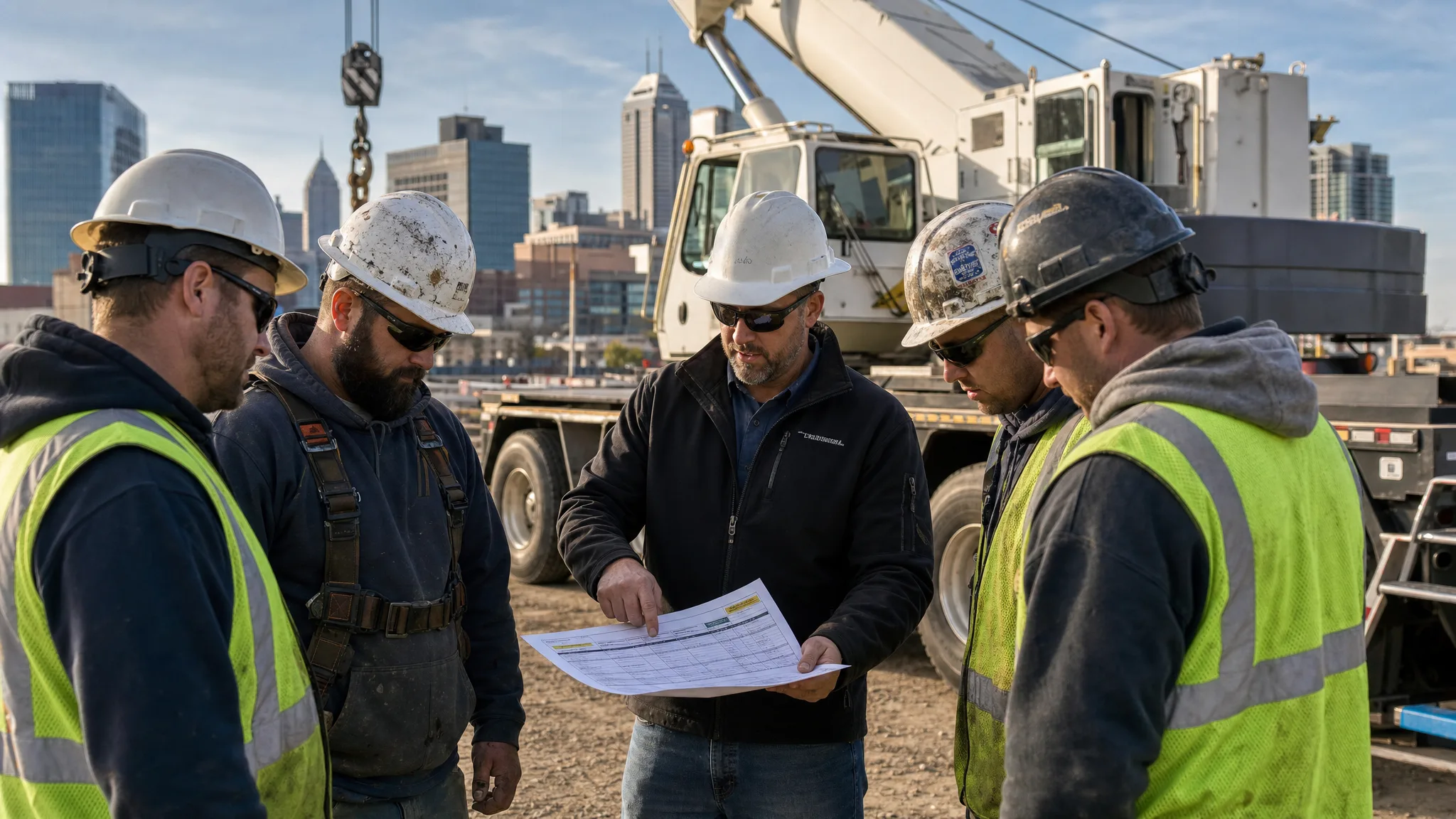
A phrase such as “crane training” can describe many different things, including mobile crane operator training, general safety instruction, practical operator preparation, rigger training, signal person training, written examination review, or practical examination preparation. A quote should identify the specific instruction rather than rely on a broad label.
Ask these questions:
- Is the quote for mobile crane operator training only?
- Does it include rigger or signal person training for designated employees?
- Does it include classroom instruction and practical preparation?
- Are all trainees taking the same course, or is the quote organized by role?
- Are course materials included?
- Are any required items, testing fees, travel expenses, or additional practical sessions excluded?
Practical equipment time and access
Practical time should be discussed in direct, plain language. Employers should know whether trainees will have access to training equipment, what exercises are planned, how practical time is allocated among participants, and whether every operator candidate receives practical preparation as part of the quoted schedule.
Practical equipment time matters because operator candidates need more than a classroom overview of controls, operating tasks, communication, lift planning, and safe work practices. The amount and type of practical preparation needed can vary by a worker’s experience, the course design, the equipment involved, and the duties the employer expects the worker to perform.
A larger group does not automatically mean inadequate practical training. It does mean the employer should ask how students rotate through exercises. If six operator candidates share one practical block, each person’s access may differ from a course designed for two candidates. That difference should be understood before comparing the group total to a per-student tuition amount.
Ask the provider:
- Is practical equipment access included in the quote?
- Which trainees receive practical time?
- How are practical exercises scheduled and rotated?
- What kind of equipment access is planned for the course objectives?
- Is there an additional charge for added practical preparation?
- What happens if weather, equipment availability, or schedule changes affect the practical portion?
- Will the planned format give operator candidates a reasonable opportunity to practice the covered tasks?
Employers can explore this topic further in how to compare practical time and equipment access at a crane school.
Exam preparation and examination-related expenses
Training tuition and examination expenses should be treated as separate line items unless the quote clearly states they are combined. A course may include instruction intended to prepare candidates for written and practical examinations while examination registration, testing fees, practical test arrangements, and retests are billed separately. Another quote may package some of those items together.
Neither approach is automatically better. A bundled quote can be convenient if the inclusions are clearly stated. A separated quote can make it easier to see exactly which costs are course tuition and which are examination-related. What matters is that the employer knows what remains to be paid and scheduled after training ends.
For employees pursuing NCCCO certification preparation, confirm the current candidate requirements and examination pathway directly from the applicable certification organization. The NCCCO certification program information can help employers distinguish between training-provider course costs and credential examination planning.
Questions to ask include:
- Does the course include written examination preparation?
- Does it include practical examination preparation?
- Are examination fees included, separate, or paid through another process?
- Does the provider offer guidance on registration and candidate paperwork?
- Are practical examination arrangements part of the course plan or scheduled separately?
- What retest preparation or retesting costs could apply if a candidate needs another attempt?
Travel, location, and employer-site considerations
Travel can materially affect the mobile crane operator training cost for a small crew. A lower tuition rate may not remain the lower total if employees have to drive long distances, stay overnight, pay for parking, miss extra work hours, or use company vehicles for several days. On the other hand, a coordinated group format may involve instructor travel, site requirements, or additional planning costs.
Confirm where classroom training and practical sessions take place. If training is outside Indianapolis, include employee travel time, mileage, meals, lodging when needed, and work coverage in the calculation. If an employer-site option is being considered, discuss the site, equipment, access, scheduling, and any location-related requirements before assuming that format is available or appropriate.
Deposits, scheduling changes, and substitutions
Small crews usually have little extra staffing flexibility. A project delay, equipment issue, weather event, illness, or customer deadline can change who can attend. Before payment is approved, review the reservation requirements, deposit terms, cancellation policy, substitution process, and what happens if the final attendee count changes.
These details are not merely administrative. They can affect the real cost of training if a reserved seat cannot be used, if a group size changes after scheduling, or if an employee needs to move to another course date. For more employer-focused planning questions, review questions to ask before an employer books crane training.
How Crew Size, Credentials, and Practical Time Affect Total Cost
Pricing varies by course scope, crew size, equipment needs, and scheduling. A training plan that works for one experienced operator candidate may not fit a group that includes a prospective operator, two workers who handle rigging, and a supervisor who gives signals during lifting operations.
The best starting point is to map expected duties before asking for final pricing. This keeps the employer from purchasing too little training for a role or paying to place every employee in the same course when their work responsibilities differ.
Match training to assigned duties
Job titles alone do not always tell the full story. A foreman may regularly provide signals. A laborer may inspect or select rigging. A maintenance worker may be expected to support lifting operations. A person called an operator may need additional preparation before being assigned to different equipment or more complex duties.
A simple crew map might identify:
- Employee A: Expected to operate a mobile crane and needs an operator training and examination-preparation path.
- Employee B: Supports lifts, works with rigging, and needs rigger training appropriate to assigned responsibilities.
- Employee C: Gives signals during lifting operations and needs signal person training.
- Employee D: Has mixed duties and needs a clearer recommendation after the employer defines the role.
One group quote may be able to address operator, rigger, and signal person training for employees of the same company. However, it should specify the training component, intended participants, timing, and examination-related considerations for each role. A broad phrase such as “complete crew training” should not be treated as proof that every required topic, practical component, or credential path is included.

For employers sorting out rigging responsibilities, this resource on basic versus advanced rigger training in Indiana can help frame the discussion.
Crew size changes the schedule, not only the per-person math
Dividing a group quote by the number of participants can help estimate an effective per-person cost. It should not be the only calculation. A larger group can create efficiencies in classroom instruction, shared travel, and coordination. It may also require more instructor planning, longer practical rotations, additional equipment time, or separate sessions for workers who need different preparation.
Ask whether the quote is built for a specific number of attendees or a participant range. Find out what happens if the crew grows, if one worker is removed, or if additional employees need practical operator preparation. The group price may change because the training scope changes, not simply because another name was added to a roster.
Practical preparation has real planning value
Practical equipment time is not a decorative feature added to make a course sound more complete. It gives operator candidates a structured opportunity to work through operating tasks, control familiarity, communication, planning, and safe work practices under instruction. The course is not a guarantee of certification or job readiness for every situation, but practical preparation can be an important part of a training path.
For employers, practical time may affect total cost because:
- More operator candidates may require more planned equipment access.
- Less-experienced workers may need a different preparation discussion than workers with prior operating experience.
- Practical exercises must be coordinated around equipment and training availability.
- Compressed schedules can make it harder for workers to receive the intended preparation.
- Employees pulled back to a jobsite during training may miss part of the course and create rescheduling issues.
The point is not to purchase the longest course by default. It is to choose a course structure that fits the crew’s actual duties, preparation needs, and schedule while clearly identifying what practical instruction is available.
Employer responsibility extends beyond the training quote
A training course is one part of a larger safe-work plan. Employers remain responsible for reviewing applicable job requirements, assigning employees appropriately, evaluating jobsite conditions, maintaining equipment, planning lifts, and providing supervision consistent with the work being performed.
For construction work involving cranes and derricks, employers should review OSHA’s Cranes and Derricks in Construction standard, 29 CFR 1926 Subpart CC. A training quote should not be treated as a substitute for the employer’s own safety responsibilities or for job-specific assessment of workers, equipment, and lifting conditions.
Financing and Employer Sponsorship: Plan the Payment Decision Carefully
When a company pays for crane certification training for employees, the decision is often described as employer sponsorship. In practical terms, that may mean the company pays tuition, reimburses employees, covers examination-related expenses, provides paid training time, or uses a combination of those approaches.
There is no single sponsorship structure that fits every Indianapolis employer. A small contractor may pay the course cost directly and schedule training during a slower period. Another employer may cover tuition but ask employees to submit receipts for approved testing or travel expenses. A larger company may coordinate a group training plan through a safety manager or project administrator.
Before committing to a payment structure, decide what the company is actually sponsoring:
- Tuition only.
- Tuition and examination-related expenses.
- Tuition, testing, employee wages, and travel.
- A group training arrangement with defined participant limits.
- Additional practical preparation if it is recommended and scheduled.
- Potential retesting expenses, if the company chooses to cover them.
It is important not to assume that financing, installment arrangements, reimbursement plans, grants, or employer-paid options are available unless they have been confirmed directly with the provider, employer, or program involved. Ask what payment timing applies, whether a deposit is required, and what expenses are due before training, before testing, or after attendance is confirmed.
Build a complete employer budget
A practical budget separates direct training expenses from operational costs. This creates a clearer internal approval process and makes it easier to compare one training format with another.
| Budget Category | What to Confirm |
|---|---|
| Tuition | Is the amount per student, per group, per day, or based on another course structure? |
| Testing | Are written, practical, registration, or examination-related costs included or separate? |
| Retesting | What additional fees, preparation, travel, and schedule impacts could apply if another attempt is needed? |
| Travel | Include mileage, parking, meals, lodging, vehicle use, and paid travel time where applicable. |
| Employee downtime | Estimate wages, coverage needs, overtime exposure, delayed work, and supervisor coordination time. |
| Practical equipment time | Confirm whether it is included, how it is scheduled, and whether added practical time has a separate cost. |
| Scheduling changes | Review deposits, substitutions, cancellation terms, and the financial effect of changes in crew size. |
Separating these line items helps employers avoid treating a training quote as a complete budget when it covers only tuition. It also helps a company explain the decision internally. The goal is not to force every cost into one bundled number. The goal is to understand the entire commitment before approving a course.
Costs Beyond Tuition: Travel, Downtime, Retesting, and Scheduling
For a small crew, indirect costs can be just as important as tuition. A training option that looks affordable at first may become less favorable when workers must travel, projects need additional coverage, or a course date disrupts a critical work period.
Travel costs
Travel is more than fuel. Employers should consider employee travel time, mileage or company vehicle use, parking, meals, lodging when needed, and the practical question of whether workers can return to Indianapolis after each training day. If multiple employees travel together, the company should also consider whether sending the full crew away creates a jobsite coverage gap.
Travel does not make a course the wrong choice. It simply belongs in the comparison. A course with a lower tuition rate can still have a higher complete cost if the crew needs overnight lodging or loses additional paid hours on the road. For more planning detail, read Crane Training Travel Costs for Indiana Students: How to Budget Beyond Tuition.
Employee downtime and work coverage
Downtime is often overlooked because it does not always appear on the training provider’s invoice. Yet an employer may need to account for wages during training, overtime needed to maintain production, temporary coverage for absent workers, delayed project tasks, and administrative time spent organizing attendance.
A small construction or industrial crew may have no easy replacement for a key worker. If a foreman, operator candidate, rigger, and signal person all attend training at once, the employer needs a plan for current work. A coordinated group format may be useful when the company can train during a slower period. Individual enrollment may be more practical when the crew needs to stagger attendance and preserve daily coverage.
Testing and retest planning
Testing should be treated as its own planning category. Depending on the credential path, there may be written examinations, practical examinations, registration requirements, documentation, and scheduled testing dates. Employers should ask which elements are part of the course and which need separate coordination.

Retesting should also be discussed honestly. No responsible training provider can guarantee an examination outcome. Employers do not need to assume a retest will be required, but they should understand what costs and timing implications may exist if a candidate needs another attempt. This is especially important when a project date is driving the request for credentials.
Scheduling risk
Workers who need credentials for an upcoming job should reserve training as far ahead as practical after their roles and needs are identified. Appropriate lead time can vary based on course dates, crew size, practical equipment needs, testing arrangements, weather considerations, and current seat availability.
Do not assume that any available course can instantly solve a project deadline. Share the target work date during the first conversation. Ask which course dates, practical training arrangements, and examination-related considerations need to be reviewed. A realistic plan is more useful than a rushed decision based only on the next available date.
A Simple Quote Comparison Checklist for Indianapolis Employers
Use one worksheet for every quote. If a detail is missing, mark it as “not confirmed” rather than assuming it is included. This approach helps when the business owner, estimator, project manager, safety lead, and crew supervisor all have input into the training decision.
Training scope checklist
- What course or courses are included?
- Which employees are included by name or work role?
- Is the quote for mobile crane operator training, rigger training, signal person training, or a combination?
- Does the quoted course fit the crew’s actual assigned duties?
- Is classroom instruction included?
- Is practical equipment time included for operator candidates?
- How is practical time shared among participants?
- Does the quote include written examination preparation?
- Does it include practical examination preparation?
Cost checklist
- Tuition: Is it priced per student or as a total group amount?
- Testing: Which examination-related expenses are included, separate, or not yet confirmed?
- Retesting: What costs could apply if a candidate needs another attempt?
- Travel: Who pays for employee travel, lodging, meals, instructor travel, and related expenses?
- Downtime: How many paid work hours will be affected?
- Practical time: Are there equipment, location, or additional training charges?
- Payments: Is a deposit required, and when are remaining amounts due?
- Changes: What are the cancellation, substitution, and crew-size adjustment terms?
Schedule checklist
- What dates are available for the needed course structure?
- Can all workers attend together, or should attendance be staggered?
- Will training conflict with planned lifts, shutdowns, customer commitments, or project deadlines?
- Does the crew need a coordinated group session or can employees attend different course dates?
- Are practical and examination-related dates separate from classroom dates?
- What happens if weather, equipment availability, or a work emergency affects attendance?
Decision checklist
- Does the quote clearly identify what is included and excluded?
- Does it match each employee’s actual role instead of using one generic course label?
- Does it explain practical equipment access in enough detail to evaluate?
- Have tuition, testing, travel, downtime, and retest line items been considered separately?
- Does the schedule fit the employer’s project plan without creating avoidable coverage problems?
- Has the company avoided assuming that a course guarantees certification, employment, or a particular project outcome?
Choosing the Training Format That Fits Your Crew
The right training format is the one that fits the crew’s work, expected responsibilities, schedule, practical preparation needs, and complete budget. For some Indianapolis employers, that means individual seats in a scheduled course. For others, it means discussing a group quote that coordinates multiple roles and training needs.
Choose per-student enrollment when it keeps the plan simple
Per-student enrollment can be a sensible fit when only a small number of employees need similar training, course dates work with the project calendar, and the employer does not need a customized group schedule. It can also be helpful when workers have different availability or need different course types.
Before choosing this path, compare the total cost of individual enrollment, including testing, travel, paid work time, lodging if needed, and any separate practical preparation. A per-student tuition number is useful, but it is not the whole budget.
Choose a group quote when coordination is the larger challenge
A group quote is worth discussing when several employees need training during the same period, when the company needs to organize work coverage around training, or when operator, rigger, and signal person needs should be reviewed together. It can also be helpful when the employer needs a clearer role-by-role training plan before reserving seats.
Even then, verify the details. A group arrangement does not automatically mean every employee needs every module, every employee receives identical practical time, or every examination-related expense is included. Ask for a role-by-role breakdown and compare the full training plan against the company’s needs.
Do not let urgency replace planning
A pending project can make the next available training date look like the only option. But an urgent decision can leave out practical time, testing expenses, travel costs, employee coverage needs, or the fact that different workers require different training components.
Whenever possible, identify credential and training needs before the project schedule becomes inflexible. Map the crew’s duties, define the target credentials or preparation needs, request comparable quote details, and ask how the course sequence fits the work timeline. That process is more likely to produce a useful decision than selecting the first quote that appears to have the lowest upfront number.
Frequently Asked Questions About Small-Crew Crane Training Costs
At what crew size does a group crane training quote usually become worth comparing with per-student pricing?
There is no fixed threshold. It is reasonable to compare a group quote whenever two or more employees need training within the same planning period, especially when shared travel, work coverage, mixed roles, practical equipment time, or project scheduling matter. The decision should be based on the complete scope and total cost, not on crew size alone.
What should an Indianapolis employer ask to confirm a group quote includes practical equipment time and certification preparation?
Ask whether practical equipment access is included, which participants receive it, how exercises are scheduled, how time is shared, and whether additional practical preparation costs extra. Also ask whether written and practical examination preparation are included, what testing expenses remain separate, and what candidates must complete outside the course. Request the details in writing so they can be compared accurately with another quote.
Can one group quote cover crane operator, rigger, and signal person training for the same employees?
It can, depending on the provider’s course structure and the employer’s needs. However, the quote should identify each training component and the employees assigned to it. Operator, rigger, and signal person duties are different. Do not assume that a single group quote covers every role unless its scope clearly states that it does.
Why might a lower training quote cost more once travel, lost work time, or retesting are considered?
A lower tuition figure may exclude examination-related expenses, practical equipment access, employee travel, lodging, instructor travel, or retest preparation. It may also require workers to miss more paid work hours or attend at a time that disrupts a project. Compare tuition, testing, travel, downtime, practical time, and retest exposure before deciding.
How far ahead should a small crew reserve crane training if employees need credentials on a job schedule?
Reserve as far ahead as practical once expected job duties and employee needs are known. Lead time can vary with course dates, group size, practical equipment requirements, examination arrangements, and seat availability. Share the target project date early, but do not assume a course or examination process can guarantee a credential by a specific deadline.
Compare the Full Training Plan Before You Approve a Quote
For small employers in Indianapolis, Indiana, a sound crane training decision starts with the work the crew will actually perform. From there, compare per-student enrollment and group training quotes using the same categories: tuition, examination-related expenses, practical equipment time, travel, employee downtime, retesting, course scope, and scheduling.
The best option may be a straightforward individual enrollment for a few workers with flexible schedules. It may be a coordinated group arrangement that helps the company organize operator, rigger, and signal person needs around active work. The answer depends on the crew, target credentials, timeline, practical preparation needs, and location.
To talk through which option fits your situation, contact Train For The Crane at (317) 385-7190. Describe your crew size, target credentials, timeline, and Indianapolis-area location so the team can help confirm the appropriate training path, course details, total cost considerations, and current seat availability before you approve a training plan.