

Mobile vs. Tower Crane Training: Choosing a Practical Path for Bridge Repair Work
For workers interested in bridge repair, roadway construction, or industrial lifting work, choosing between mobile crane operator training and tower crane training can feel like a major career decision. The best first step depends on the type of equipment used by the employers and projects you are targeting, not simply on which crane looks more complex or which credential sounds broader.
In many bridge repair environments around Indianapolis and across Indiana, mobile cranes are a practical part of the work because they can be brought to changing job locations, positioned near controlled work zones, and used for planned picks involving materials, components, tools, and support equipment. That does not mean mobile crane training automatically qualifies someone for every bridge project. Equipment category, employer authorization, lift planning, site access, practical experience, and project-specific conditions all matter.
This comparison explains where mobile crane experience can be a sensible starting point, how tower crane work differs, and what to confirm before choosing a crane operator training path.
Why Bridge Repair Projects Often Use Mobile Cranes
Bridge work is rarely a single, repeatable jobsite. A repair project may involve limited staging areas, lane closures, uneven or restricted access, overhead concerns, work occurring near existing structures, and changing conditions as phases of the project move forward. A crane solution must fit that environment.
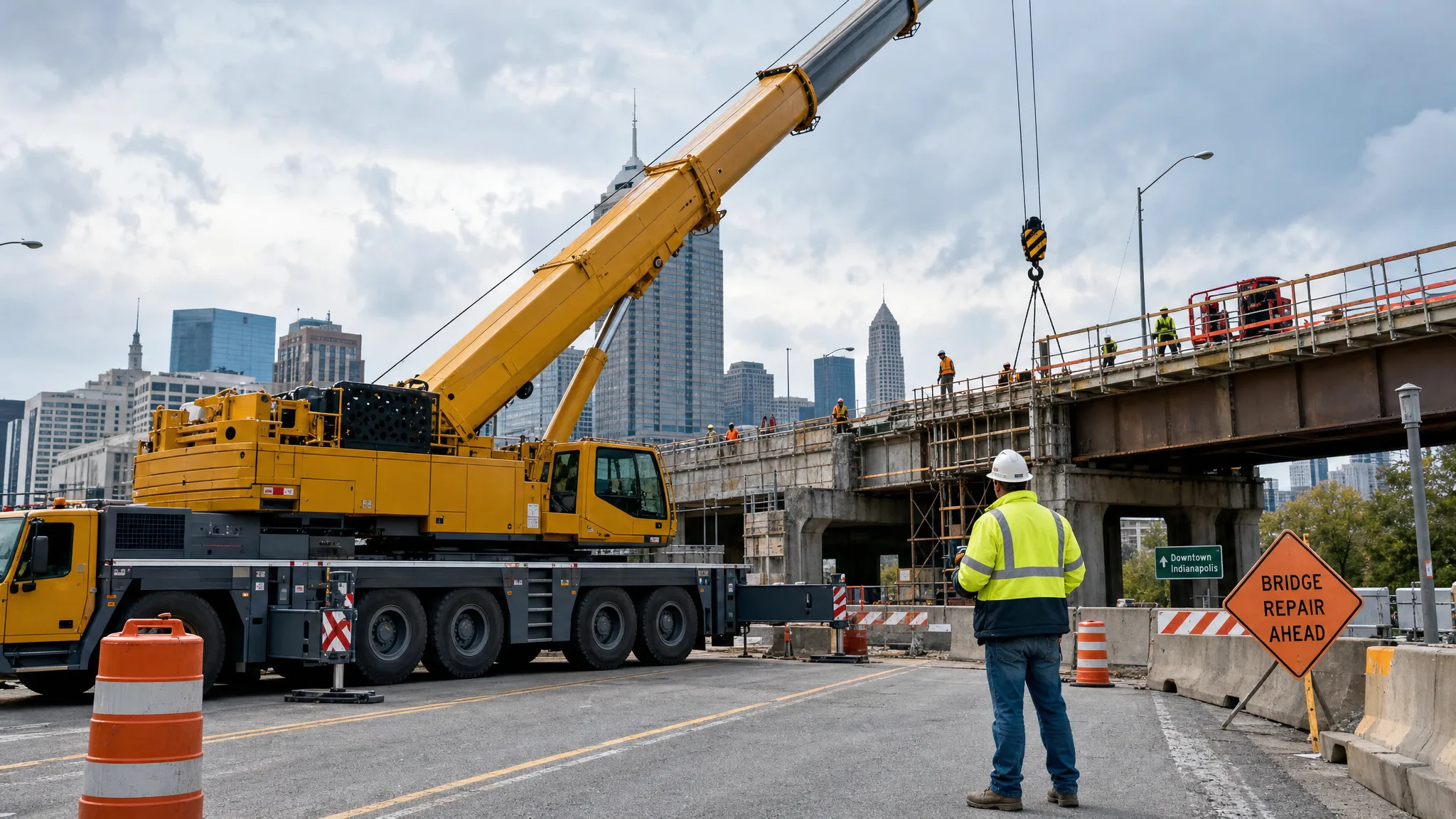
Mobile cranes are often considered for bridge repair and roadway projects because they can be transported to the work area and repositioned as the project requires. Depending on the project scope and the contractor’s fleet, a mobile crane may be used to support picks involving:
- Bridge repair materials and structural components
- Forms, reinforcing materials, or concrete-related equipment
- Work platforms, tools, generators, and support materials
- Preplanned removal or placement tasks near a bridge deck or approach
- Materials that must be lifted from a staging area into a controlled work zone
Those examples describe possible uses, not a universal equipment plan. One bridge contractor may use a particular mobile crane configuration; another may use different equipment, change the setup by project phase, or rely on other material-handling methods. Workers should avoid assuming that every bridge repair assignment needs the same crane type or that every “bridge crane operator” job involves identical duties.
For an Indianapolis worker considering a first course, this is why mobile crane operator training is often worth investigating first. It aligns with equipment commonly associated with temporary construction and roadway work, while giving students a foundation for evaluating the actual crane categories listed in future job descriptions.
Bridge Work Zones Add Coordination Requirements
A bridge repair lift is not defined only by the load. The team also has to account for the working area around the crane. Access routes can be affected by traffic control, barriers, nearby structures, limited room for setup, delivery schedules, other trades, and weather. A roadway project may use closures or restricted lanes, but that does not eliminate the need for careful coordination.
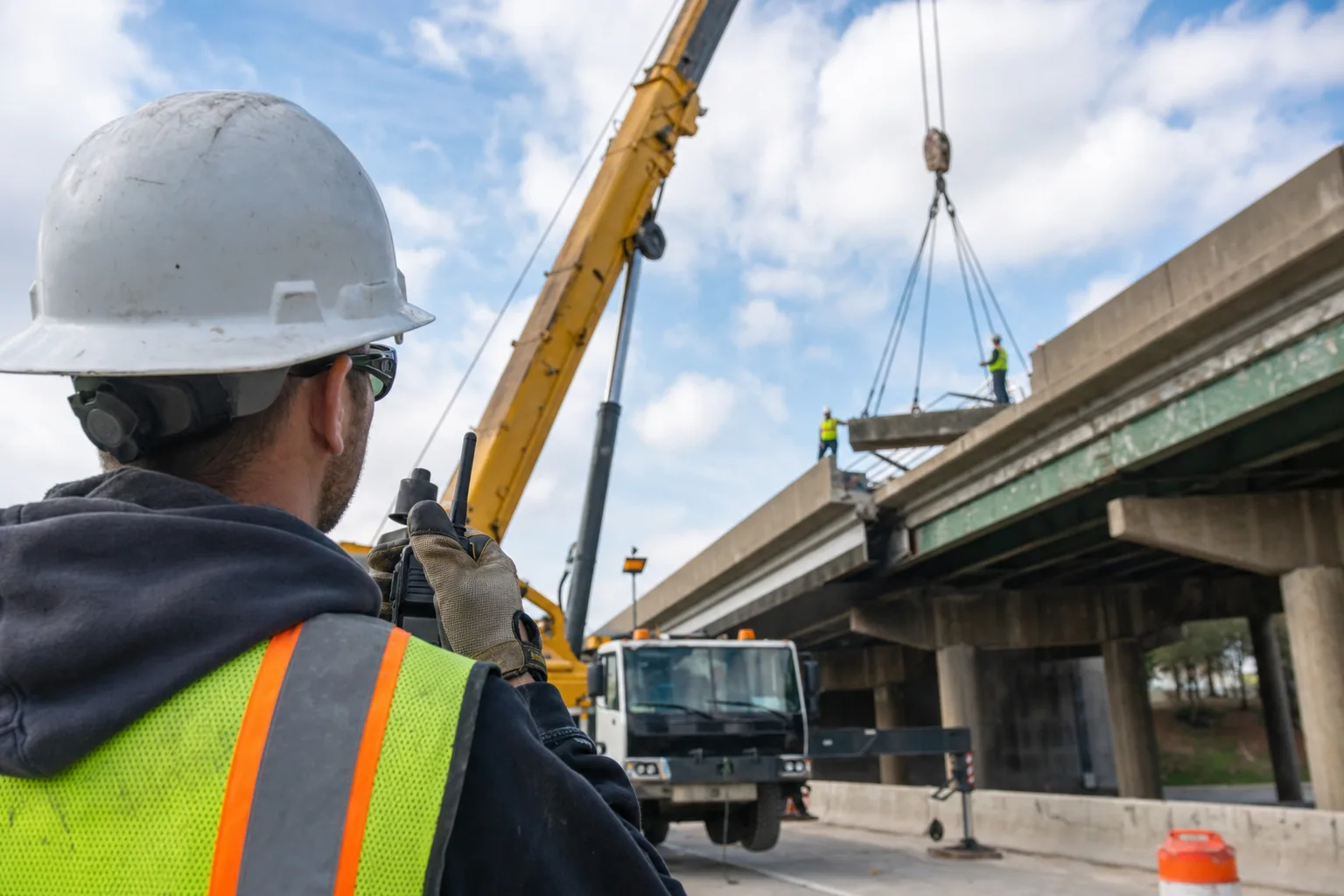
Indiana workers should understand that a controlled work zone is still an active construction environment. The crane operator, lift director or supervisor, rigging personnel, signal person, equipment operators, and nearby crews each have responsibilities. Federal construction crane rules address operator qualification and other safety responsibilities, but workers and employers must apply the requirements that fit the actual work rather than treating a training course as blanket permission to operate any crane on any project. OSHA’s 29 CFR 1926 Subpart CC is an important reference point for construction crane and derrick work.
For bridge and roadway assignments, the first useful question is not, “Which crane credential gets me every job?” It is, “What equipment, work conditions, and crew role does this employer actually need?”
Mobile Crane vs. Tower Crane Work: The Practical Differences
Mobile cranes and tower cranes both involve serious lifting responsibilities, but the work environment, equipment setup, operating controls, jobsite workflow, and training emphasis can be very different. Students should not choose one path based only on the word “crane.”
Mobile Crane Work
Mobile crane work centers on equipment that is moved to the jobsite. The specific crane type and configuration matter, but the overall work often requires attention to site conditions, positioning, setup, load charts, operating radius, ground conditions, travel or relocation considerations, communication, and changing lift locations.
On a bridge repair project, a mobile crane may need to work from a designated area near the structure, from a closed lane, from an approach area, or from another approved location selected through the project’s planning process. The available space may change as materials arrive, work progresses, or traffic control phases shift. The operator needs to understand that being physically close to a load does not automatically make a lift simple. Radius, load path, obstructions, rigging, swing area, ground support, and communication still need attention.
Tower Crane Work
Tower cranes are generally associated with longer-duration vertical construction projects where a crane is erected and remains in place to serve a defined area. The operator’s work may involve repetitive material movement within the crane’s coverage area, coordination with crews at elevation, careful attention to load movement around a structure, and an operating environment that differs significantly from mobile field work.
Tower crane work can be a strong path for someone pursuing high-rise, major vertical construction, or an employer fleet that specifically uses tower cranes. However, the fact that a tower crane is associated with large projects does not make it a universal prerequisite for bridge repair work. Many bridge-related assignments are driven by mobility, access, staging, and project duration rather than by the needs that normally lead a contractor to erect a tower crane.
A Side-by-Side Training Comparison
| Training Consideration | Mobile Crane Path | Tower Crane Path |
|---|---|---|
| Typical jobsite pattern | Temporary, changing, or distributed construction and industrial locations | Longer-duration vertical construction with a crane installed for the project |
| Bridge repair relevance | Often relevant where a project needs equipment brought to the work zone | May be relevant only when the employer or project has a specific tower-crane need |
| Practical focus | Equipment setup, site evaluation, operating radius, load handling, communication, and field conditions | Operation within the tower crane’s configured work area, elevated coordination, and site-specific operating procedures |
| Best first question | What mobile crane category does my target employer use? | Do my target jobs specifically call for tower crane experience or credentials? |
| Common mistake | Assuming one mobile credential covers every machine or employer requirement | Taking tower training first when the intended job market mainly uses mobile equipment |
Both paths require a safety-first mindset. Neither path eliminates the need for employer familiarization, jobsite orientation, company procedures, or an honest assessment of whether the operator has appropriate experience for a particular assignment.
Why Mobile Crane Experience Is Often the Better Starting Point
For a first-time student who is specifically interested in bridge repair, roadwork, utility support, general construction, or industrial jobs around Indianapolis, mobile crane experience can be a more practical starting point because it connects to a broad range of temporary jobsite conditions. It allows a worker to begin learning the operating and planning concepts that arise when cranes must function around access limits, active crews, changing staging areas, and varying lift locations.
That is not an argument that tower crane training lacks value. It is an argument for matching the first course to the work you are realistically seeking. If local job postings, a current employer, or a union pathway clearly point toward tower crane work, then tower training may be appropriate sooner. If the opportunities you see refer to mobile equipment, road and bridge work, rough-terrain or other mobile categories, then a mobile-focused foundation is usually easier to connect to the work environment.
Mobile Training Builds Relevant Decision-Making Habits
A strong mobile crane course should not treat operation as merely moving controls. Students need to understand how to approach the work before a lift begins. Training and practical preparation can include concepts such as reading applicable load information, recognizing the importance of radius, identifying site hazards, communicating with a signal person, considering the load path, and understanding why setup and conditions matter.
In bridge repair settings, these habits are especially useful because the work may take place around existing infrastructure. There may be limited clearance, nearby traffic-control devices, materials staged in tight areas, uneven ground conditions, or work sequencing that changes where the crane can safely operate. The exact details depend on the project, but the planning mindset transfers.
Workers seeking crane training in Indianapolis should ask whether the course addresses practical decision-making in addition to test content. Classroom study is important for certification preparation, but operators also need an organized way to think through equipment, conditions, communication, and the limits of their own authorization.
Start With the Employer Fleet, Not a General Job Title
Job titles can be incomplete. An ad may say “crane operator,” “bridge crew operator,” “heavy equipment operator,” or “lifting specialist” without identifying the equipment category. Before paying for a course, look for more detail.
Ask prospective employers, supervisors, recruiters, or training coordinators questions such as:
- What crane types and categories are used most often?
- Is the work mainly bridge repair, roadway construction, industrial maintenance, commercial construction, or another setting?
- Will the employee operate, assist with setup, rig loads, signal, or perform a combination of roles?
- Does the company require a particular certification path or practical evaluation?
- Does the employer provide equipment-specific familiarization and site orientation?
- Are rigger or signal person credentials expected for crew members?
The answers can prevent an expensive mismatch. A worker whose intended employer has a mobile fleet may be better served by mobile crane operator training and related rigging or signaling preparation than by tower training alone. Conversely, a worker entering a vertical-construction employer with tower crane operations should evaluate that more specialized route.
Plan for the Full Cost, Not Just Tuition
Training decisions should include realistic cost planning. A quoted course price may not answer every financial question a student needs to consider. Depending on the course and provider, students may need to clarify exam-related charges, retesting policies, travel, lodging, meals, time away from work, required documentation, credential add-ons, and any employer-required follow-up.
Review the mobile crane operator training cost planning guide before reserving a seat, then ask for current details directly. Costs and course scope can change, so the most responsible approach is to compare current information rather than rely on an old quote or an assumption based on another school’s package.
What Mobile Experience Transfers to Bridge Repair Jobs—and What Does Not
Mobile crane training can provide useful fundamentals for workers aiming toward bridge-related work. Still, transferable knowledge is not the same thing as automatic qualification. A responsible training decision recognizes both sides.
Skills and Concepts That Can Transfer
Depending on the course scope and the equipment involved, mobile crane training may help a student develop familiarity with important operational concepts, including:
- Understanding that crane capacity depends on configuration and operating conditions rather than a single fixed number.
- Recognizing the relationship between load weight, radius, boom position, and applicable capacity information.
- Using clear communication practices with qualified signal personnel.
- Thinking through load paths, swing areas, nearby obstructions, and exclusion areas.
- Recognizing why ground conditions, setup location, and support conditions require attention.
- Following a deliberate pre-lift process instead of reacting after a load is already in motion.
- Understanding that rigging affects the lift and must be selected, inspected, and used appropriately.
These concepts are useful across many lifting environments because they build judgment. A bridge repair project may involve a pick near an existing structure or from a limited access point. The ability to pause, assess the configuration, understand the planned lift, communicate with the crew, and follow applicable procedures is more valuable than simply recognizing the name of a crane type.
What Does Not Automatically Transfer
Mobile crane experience does not automatically make an operator qualified, authorized, or experienced for every machine, every capacity range, every configuration, or every project environment. It also does not replace site-specific requirements.
A new operator may still need:
- Employer evaluation and authorization for the work assigned.
- Familiarization with the specific crane make, model, configuration, controls, and manuals.
- Instruction on the company’s lift-planning process and reporting procedures.
- Project orientation covering work-zone access, traffic control coordination, restricted areas, and local hazards.
- Additional experience under the employer’s supervision before taking on more demanding assignments.
- Rigger or signal person training if those duties are part of the role.
- Additional training if the job calls for equipment or work practices outside the student’s prior scope.
Certification preparation is also distinct from employment authorization. Preparing for an NCCCO examination or another recognized certification process can be an important career step, but certification testing does not substitute for an employer’s duty to evaluate and authorize operators for their assigned equipment and work. Review the current requirements applicable to the job, employer, and crane category. NCCCO’s mobile crane operator certification information can help students understand the difference between certification pathways and the hands-on, employer-directed experience required in the field.
Bridge Work Requires Site-Specific Thinking
Consider two simplified examples. In one situation, a contractor uses a mobile crane from an approved staging area beside a bridge approach to place materials within a planned work zone. In another, a crew must work near existing structural elements with tight swing clearance, limited access, multiple subcontractors, and changing closure conditions. Both may involve a mobile crane, but the operational demands are not interchangeable.
The first-time operator should not focus only on whether a crane is present. The practical questions are: Where is the crane set up? What is being picked? What is the load path? Who is directing the lift? What equipment configuration is used? What are the site restrictions? What does the employer require before allowing an operator to take the controls?
Training and Credential Factors to Compare Before Enrolling
Choosing a school or course should involve more than comparing the course title and a single price. First-time students, employers arranging crew training, and workers adding credentials should ask for a clear explanation of what the training includes and what remains their employer’s responsibility.
Separate the Four Parts of Career Readiness
A practical crane career path usually has at least four distinct parts:
- Training: Instruction that builds knowledge and, where included, hands-on operating experience.
- Certification preparation and testing: Study and assessment processes designed around the credential being pursued.
- Employer evaluation and authorization: The employer’s process for determining whether an employee can operate assigned equipment safely in the work environment.
- Jobsite-specific requirements: Orientation, lift planning, hazard controls, equipment familiarization, and project procedures for the actual assignment.
These parts support each other, but none should be confused with the others. A course can prepare a worker for an exam and offer practical learning without making that worker automatically authorized for every employer’s bridge project. Similarly, an experienced worker may still need a formal credential, equipment-specific evaluation, or an additional course when taking on a new role.

Questions to Ask About Practical Time
Practical crane operator training is one of the most important subjects to clarify. “Hands-on” can mean different things at different schools. Students should ask what equipment access is actually provided and how practical time is organized.
- Which equipment categories are included in the current course?
- How is practical time scheduled among students?
- Will students have instructor feedback while practicing?
- Does practical training connect to the type of certification or evaluation being pursued?
- What operational tasks and safety topics are addressed during equipment time?
- Are weather, scheduling, equipment availability, or minimum enrollment factors relevant to the course?
For a fuller provider-comparison checklist, review Train For The Crane’s guidance on practical equipment time and exam preparation. The point is not to search for vague promises of “more seat time.” It is to obtain a clear, current explanation of the practical experience included and decide whether it matches your needs.
Questions to Ask About Certification Preparation
Students should also ask what exam preparation covers. A course may include classroom instruction, practice materials, administrative assistance, practical testing preparation, or other elements. Do not assume that every item is included in every course package.
Ask:
- Which written and practical examination components does the course prepare students to pursue?
- Are exam fees included, separate, or subject to change?
- What documents or eligibility steps should students prepare before testing?
- What happens if a student needs additional preparation or a retest?
- Does the school explain the difference between exam preparation and employer authorization?
Clear answers matter because workers frequently use “license,” “certification,” “training,” and “qualification” as if they mean the same thing. They do not always mean the same thing in practice. A school should help students understand the distinctions without overstating what any one class accomplishes.
Consider Rigger and Signal Person Needs
Bridge repair crews may include workers who do more than operate a crane. Depending on the assignment and employer, employees may need to inspect and attach rigging, communicate with the operator, help control loads, or understand signaling responsibilities. The operator should not take on rigging or signal duties without the appropriate training, competence, and employer direction.
Rigger and signal person training can be particularly relevant for workers who expect to support lifting operations before moving into an operator role, for employers building a more versatile crew, or for experienced construction workers who will have multiple lifting-related responsibilities. Learn more about rigger training in Indiana when comparing basic material-handling knowledge with more advanced job responsibilities.
There is no universal rule that every crane operator must hold every possible related credential. The right combination depends on the worker’s duties, the employer’s policies, applicable requirements, and the work being performed. The practical goal is to ensure that every person involved in a lift understands and is prepared for the role they are assigned.
When Tower Crane Training May Make Sense Earlier
Although mobile crane training often fits workers interested in bridge repair and roadway work, tower crane training can make sense earlier in several situations.
You Already Have a Clear Tower Crane Employment Path
If an employer, apprenticeship route, or current job assignment is directly connected to tower crane operation, the training choice may be straightforward. A worker who has a credible opportunity in vertical construction should investigate the tower crane requirements, training scope, and employer expectations instead of taking a mobile course solely because it appears more general.
Your Target Market Is Primarily Vertical Construction
Indianapolis has commercial and institutional construction activity, and some workers may prefer a career focused on projects where tower cranes are part of the planned equipment strategy. In that case, tower crane training can align better with the intended role. The worker should still confirm whether the employer needs prior field experience, a particular certification route, site-specific onboarding, or other qualifications.
Your Employer Uses Both Equipment Types
Some employers work across different project types or maintain relationships with multiple contractors. A worker may ultimately benefit from both mobile and tower crane experience. The useful question is sequencing: which equipment will you realistically encounter first, and which credential helps you contribute safely in your current role?
For a bridge repair-focused worker, starting mobile does not close the door on tower crane training later. It may provide a field-oriented foundation and help the worker understand whether they prefer temporary, changing jobsite assignments or more fixed vertical-construction operations. For a tower-focused worker, starting with tower training does not mean mobile work is irrelevant; it simply means the initial path should match the confirmed employment direction.
Choosing a Training Path in Indianapolis for Your Target Role
The most effective first-training decision is based on a specific target role, not a vague goal of “getting crane certified.” Before enrolling, write down the kind of work you want to pursue in the next stage of your career.
A Practical Decision Process
- Identify your likely work setting. Are you targeting bridge repair, highway construction, industrial maintenance, commercial construction, utility work, or vertical construction?
- Verify the equipment category. Read job descriptions closely and ask employers what cranes they use. Do not rely on the job title alone.
- Define your expected duties. Will you operate, rig, signal, support setup, or move between several responsibilities?
- Compare course scope. Confirm current equipment access, practical training, classroom content, and certification-preparation details.
- Understand what happens after class. Ask how employer familiarization, evaluation, and jobsite authorization fit into your next step.
- Plan the full budget. Include current training costs, examination items, travel, missed work, add-on credentials, and possible retesting rather than comparing tuition alone.
- Choose the route tied to your real opportunity. Select mobile, tower, rigger, signal person, or a combination based on the role you can reasonably pursue.
For many Indianapolis-area workers interested in bridge and roadway projects, a mobile crane path is a logical first conversation because mobile equipment is often compatible with project access and changing work zones. But it is still only a starting point. The worker must verify the actual equipment category, company requirements, and whether related rigger or signal person preparation is needed.
Frequently Asked Questions About Mobile and Tower Crane Training
Is mobile crane operator training enough to prepare me for bridge repair work?
Mobile crane operator training can provide a relevant foundation for bridge repair-related work, particularly when the employer uses mobile equipment. It can help students learn operational concepts, safety awareness, communication, and planning habits that apply to field lifting. However, it does not automatically qualify a worker for every bridge project, every crane configuration, or every employer.
Bridge repair assignments can involve restricted access, planned road closures, picks near structures, staging limitations, and changing project conditions. Employers must still evaluate operators, provide equipment-specific familiarization, and confirm that the employee is authorized for the assigned work.
Why are mobile cranes commonly used on bridge repair and roadway projects?
Mobile cranes can be transported to temporary job locations and positioned to support planned lifting tasks within a project’s available access and staging plan. That mobility can be useful on roadway and bridge projects where the work area changes over time or where a permanent crane installation is not appropriate. The actual equipment choice depends on the load, site, duration, access, contractor fleet, and project plan.
Should I pursue tower crane training before or after mobile crane training?
Start with the equipment path that matches your likely work. If you are pursuing bridge repair, roadwork, general field construction, or an employer known to use mobile cranes, mobile crane training may be the more practical first step. If you have a confirmed opportunity in vertical construction involving tower cranes, tower crane training may make sense earlier.
Neither sequence is automatically right for everyone. Confirm the crane categories named in job postings and ask prospective employers which credentials, evaluations, and practical experience they expect.
Do bridge repair crews also need rigger or signal person training?
They may. A bridge repair crew can include operators, riggers, signal persons, laborers, supervisors, and other trades. Whether an individual worker needs rigger and signal person training depends on the duties assigned, employer policy, applicable requirements, and the lifting work involved. Workers should not assume that crane operator training alone covers every rigging or signaling role.
For a worker planning to assist with lifts while developing an operator career, rigger and signal person training may be a useful addition to discuss with the employer or training provider.
What should an Indianapolis student confirm about practical equipment time, exam preparation, and total course cost?
Confirm the current course equipment categories, how practical training time is scheduled, what instructor guidance is included, and how the course prepares students for the certification path they intend to pursue. Ask whether examination fees, materials, retesting, travel, or other items are separate. Also ask what the school provides and what remains the employer’s responsibility after training.
A complete answer should be specific enough for you to compare options. If a provider cannot clearly describe the current course scope, practical equipment access, testing details, and cost items, ask more questions before placing a deposit.
Choose the Training Path That Matches the Work You Want to Do
Mobile and tower crane training build important lifting knowledge, but they are not interchangeable paths. If your goal is bridge repair, roadway construction, utility work, or other projects where crews move between temporary work zones, mobile crane operator training is often the more practical starting point. Mobile cranes are commonly used when a project has limited access, lane closures, changing setup locations, picks near bridge structures, or short-duration work that does not justify installing a tower crane.
That does not mean mobile crane training alone qualifies someone for every bridge repair assignment. A course can help prepare you for crane certification requirements and give you a foundation in inspections, setup considerations, load handling, operating principles, and safe communication. Your employer still determines whether you are authorized to operate a specific crane, and each project may introduce jobsite-specific requirements involving ground conditions, traffic control, work-zone access, lift planning, proximity to structures, rigging arrangements, or local site rules.
Before enrolling, start with the job you are trying to prepare for rather than choosing a course based only on a crane title. Ask yourself whether you expect to work with mobile hydraulic cranes, boom trucks, crawler cranes, tower cranes, or a combination of equipment. Consider whether your intended role is primarily operating, rigging loads, signaling operators, assisting with lifts, or moving toward a broader lifting-and-hoisting role. Those answers can help determine whether you should begin with mobile crane training, add certification preparation, or include rigger and signal person instruction in your plan.
Use Bridge-Work Scenarios to Compare Your Options
For example, a worker interested in bridge repair crane work may need to understand how mobile equipment is used around restricted approaches, road closures, active traffic lanes, uneven ground, and picks near beams, decks, barriers, or other structures. Mobile-crane experience can provide transferable fundamentals such as reading capacity information, understanding load movement, recognizing setup concerns, communicating during lifts, and working within a planned lift process.
However, those transferable skills do not eliminate the need for equipment-specific training and employer evaluation. A worker moving from one mobile crane type to another may need additional familiarization. Someone changing from mobile cranes to tower cranes needs training focused on the different equipment, operating environment, controls, access procedures, and site conditions involved. Likewise, bridge crews may need personnel who understand rigging selection, hitch configurations, load control, and standardized signaling—not just an operator who can run the crane.
If you are pursuing a tower crane role, tower crane training may make sense earlier when your target employers primarily work on high-rise, long-term commercial, or industrial projects where tower cranes are part of the normal fleet. If your near-term opportunities involve highway, bridge, plant, utility, precast, or general construction work, mobile training may better align with the equipment you are likely to encounter first. The right answer depends on the employer, the project type, and the equipment you will actually be expected to work around.
Confirm the Details That Affect Your Next Step
Before reserving a seat, get clear answers about the practical side of the course. Ask how much hands-on or practical equipment time is included, which crane categories are covered, what the current certification-preparation scope includes, and whether testing is part of the training schedule or arranged separately. Review practical equipment time and exam preparation so you can compare classroom instruction, operating practice, and examination readiness instead of assuming every program offers the same balance.
It is also worth confirming the full cost before you commit. Tuition may not be the only factor if your path includes testing, retesting, study materials, travel, additional equipment time, or separate rigger and signal person courses. The mobile crane operator training cost planning guide can help you organize the questions to ask and compare the total investment against your target role and hiring timeline.
Workers headed toward bridge and roadway crews should also ask whether rigger or signal person preparation is appropriate for their responsibilities. Operators need reliable communication and properly prepared loads, while riggers and signal persons have their own duties and competency expectations. If you expect to assist with load connection, direct lifts, or work as part of a lifting crew, review rigger training in Indiana alongside your operator training options.
Talk Through the Training Mix Before You Reserve a Seat
Train For The Crane can help you compare the training path that fits your intended work: mobile crane operator training for bridge, roadway, construction, or industrial opportunities; certification preparation for the credentials you are pursuing; and rigger or signal person training for the crew responsibilities you may also need to perform. For students and employers planning in the area, explore crane training in Indianapolis and then call (317) 385-7190 to discuss your target role, timeline, current experience, and the equipment you expect to work with.
During that conversation, confirm the current course scope, practical equipment time, testing details, available dates, and total costs before reserving a seat. That gives you a clearer way to choose between mobile crane, tower crane, certification-prep, rigger, and signal person options—and to build a training plan that supports the work you want to pursue rather than a credential that does not match the job.