

Searching for crane operator training near me sounds simple. If you are in Indianapolis or elsewhere in Indiana, the first instinct is usually to pick the closest class, save driving time, and get enrolled quickly. That approach feels efficient, but it can create expensive problems if the program does not actually fit your certification goal, your work background, or the type of exam preparation you need.
For aspiring operators, riggers, signal persons, career changers, and construction workers moving into crane work, convenience matters. But convenience alone should not decide where you train. The better question is whether the program gives you the right preparation for the certification path you are pursuing, realistic support for written and practical testing, and enough hands-on exposure to help you perform safely and confidently.
This guide breaks down how to compare crane training Indianapolis options with a practical mindset so you can avoid common mistakes and choose training that actually fits your next step.
Why Choosing the Closest Crane Training Option Can Backfire
The nearest school may be fine. The problem is assuming that “near me” automatically means “right for me.” In crane training, that assumption can lead to enrolling in a course that is too general, too rushed, or focused on a different credential than the one you need.
In the Indianapolis market, students often come from different starting points:
- A laborer wants to move into crane operation.
- An experienced construction worker needs structured NCCCO crane operator certification training.
- A rigger needs a separate credential path from operator training.
- A signal person needs OSHA-aligned training information and a program that covers the actual role clearly.
- A career changer wants to understand whether crane work is a realistic skilled-trades path before paying for training.
Those are not the same situation, and they should not be treated as the same buying decision.
One class might focus heavily on test orientation but provide minimal equipment time. Another may include practical exposure but not enough explanation of exam structure. Another may advertise broadly as crane training but leave students unclear about whether they are preparing for operator, rigger, or signal person certification. That confusion matters because the wrong class can cost you more than the original tuition once you add travel, missed work, retesting, or the need to take another course later.
Choosing the closest program can also backfire when students ignore how they actually learn. Some people need more repetition with load control, signaling, setup awareness, and practical sequence. Others need extra help understanding exam language, certification categories, or test expectations. If a provider cannot explain how training is delivered and what support is included, proximity does not solve the real problem.
For local students in Indianapolis, the practical goal is not just to find a nearby class. It is to find training that matches the crane path you are trying to enter and prepares you to move forward without unnecessary delays.
Mistake 1: Not Checking Whether the Program Matches Your Certification Goal
This is one of the biggest mistakes first-time students make. They search for “crane school,” “crane class,” or “crane operator training near me,” then assume every provider is offering the same thing. They are not.

Operator, rigger, and signal person training are not interchangeable
A crane operator track is different from a rigging track, and both are different from signal person training. If you need operator preparation, a general lifting-safety class is not enough. If you need rigger knowledge, operator-only prep may not address your actual work role. If you need signal person training, you should be looking for focused instruction on signaling requirements and jobsite communication responsibilities.
That is why students should first identify the path they are pursuing:
- Crane operator certification preparation for individuals moving toward operator qualification and testing.
- Rigging certification training for workers involved in load handling and rigging practices.
- Signal person certification training for workers responsible for crane communication and signaling.
If you are still sorting that out, review how to get a crane license and become a crane operator to understand the difference between career direction and course selection.
NCCCO training does not mean the same thing in every ad
Students often see “NCCCO” in marketing and assume the provider includes full test preparation, practical familiarity, paperwork guidance, and role-specific instruction. That may or may not be true. You need to ask what the training is actually designed to do.
A useful training conversation should answer questions like:
- Which certification path is this course preparing me for?
- Is this focused on operator preparation, rigging, signal person training, or a combination?
- Does the program explain the written and practical testing process?
- Is the course appropriate for first-time trainees, experienced workers, or both?
This is especially important for Indianapolis-area students comparing multiple options online. A provider should be able to explain the difference clearly, not leave you guessing after you have already paid.
What NCCCO-related training does and does not include
Good training can help you understand exam structure, improve your readiness, build familiarity with the material, and prepare for practical expectations. It does not erase the need to meet testing requirements or make someone automatically qualified just because they attended a class.
That distinction matters. Serious providers explain the purpose of the training honestly. They do not blur the line between preparation and the actual certification process. If a program sounds vague about that difference, treat it as a warning sign.
Mistake 2: Comparing Price Without Comparing What Is Included
It is reasonable to ask about crane operator certification cost Indiana. Cost matters, especially for workers paying out of pocket, career changers trying to budget carefully, or employers sending a crew member for training. But price only helps you make a good decision when you know what is inside the package.
The cheapest class is not always the lowest total cost
A lower advertised number can become a higher total expense if key parts are not included. For example, students sometimes focus on tuition but overlook:

- Whether exam preparation is part of the course or extra.
- Whether practical review is included.
- Whether there is support for understanding testing steps.
- Whether travel and hotel costs offset a lower class price.
- Whether schedule gaps force missed workdays.
- Whether retesting becomes more likely because preparation was too thin.
When you compare options near Indianapolis, think in terms of total training value and total commitment, not just the first number you hear.
Ask for a plain-language breakdown
If you are evaluating crane license preparation Indianapolis options, ask each provider to explain in straightforward terms:
- What instruction is included?
- What exam prep is included?
- What practical preparation is included?
- What materials or study support are included?
- What fees, if any, are separate from training?
- What role-specific paths are available?
You do not need complicated sales language. You need enough detail to compare one program against another fairly.
Watch for apples-to-oranges comparisons
One course may quote a lower price because it is only a classroom review. Another may include broader exam orientation or more practical focus. One may be aimed at a worker with prior crane exposure. Another may be better for a beginner who needs a stronger foundation.
That is why “What should be included in the price of crane operator certification training?” is such an important question. At minimum, you should know whether the program addresses the certification path you need, whether it includes meaningful exam prep, and whether it offers enough practical support to justify the cost.
For workers also considering related credentials, compare role-specific options such as crane rigging certification or crane signal certification instead of assuming a general crane class will cover everything.
Mistake 3: Overlooking Hands-On Practice and Practical Exam Preparation
This is where many “near me” decisions fall apart. A program can sound convenient, affordable, and professionally presented, but if equipment time is limited or practical preparation is weak, students may leave without the level of readiness they expected.
Hands-on time matters because crane work is not learned by brochure
Crane training is not purely academic. Written preparation matters, but so does controlled exposure to the practical side of operation. Students need to understand not only concepts, but also how those concepts show up in real equipment handling, movement awareness, sequence, and precision.
If a training option near Indianapolis offers very limited equipment access, that should be weighed carefully. A short commute does not make up for weak hands-on preparation.
Ask exactly how practical preparation works
Do not settle for a general answer like “we cover the practical.” Ask specific questions:

- How much of the program is devoted to practical exam preparation?
- Will students have structured practice, observation only, or both?
- How is practical performance explained and corrected?
- Are first-time students given clear instruction on test sequence and expectations?
- What does the provider do to help students understand common practical mistakes?
These questions help answer a major FAQ: How do I know whether a crane training program near Indianapolis actually prepares me for NCCCO testing? A serious provider should be able to describe the preparation process in a practical way, not just repeat that the course is “for certification.”
Warning signs related to weak practical prep
- The provider is vague about how much equipment exposure students receive.
- The course seems heavily classroom-based without explaining practical readiness.
- You cannot get a clear answer on how students prepare for the practical exam portion.
- The provider cannot explain what first-time trainees usually struggle with.
- The emphasis is on getting you signed up quickly rather than checking whether you are ready for that training level.
If your goal includes NCCCO practical exam preparation, these details are not optional. They are central to the value of the course.
Is the nearest crane school a good choice if it offers limited hands-on equipment time?
Usually, that should make you pause. The nearest option might still work if you already have substantial operator experience and only need focused review. But for first-time students, inexperienced workers, or anyone who is not fully comfortable with the practical side, limited hands-on time can become a major weakness.
When deciding between a shorter drive and stronger training, remember the purpose of the class: to help you move toward safe, test-ready performance. If the closer option does not support that, it may not be the better value.
Mistake 4: Ignoring Instructor Experience, Testing Support, and Pass-Readiness
Training quality is not just about curriculum. It is also about how the material is taught, how clearly questions are answered, and whether the instructors understand where students commonly get stuck.
Good instructors do more than read slides
Students comparing crane training near Indianapolis should look for instructors who can connect real work expectations to certification preparation. That includes explaining:
- How the exam content relates to jobsite responsibilities.
- Where beginners misunderstand terminology or test format.
- How practical errors happen and how to correct them.
- What separates general awareness from actual test readiness.
Instructor quality matters even more for career changers and first-time trainees. If you are entering the trade from another field, you may need plain-language explanations, not assumptions that you already know crane industry terminology.
Testing support should be clear, not mysterious
Students often overlook the administrative side of preparation. Even if a training program covers content well, weak communication around testing steps can create confusion. Ask whether the provider helps students understand the certification process, scheduling expectations, and what to prepare before exam day.
You are not asking for shortcuts. You are asking for clear guidance so you can move through the process correctly.
What pass-readiness really means
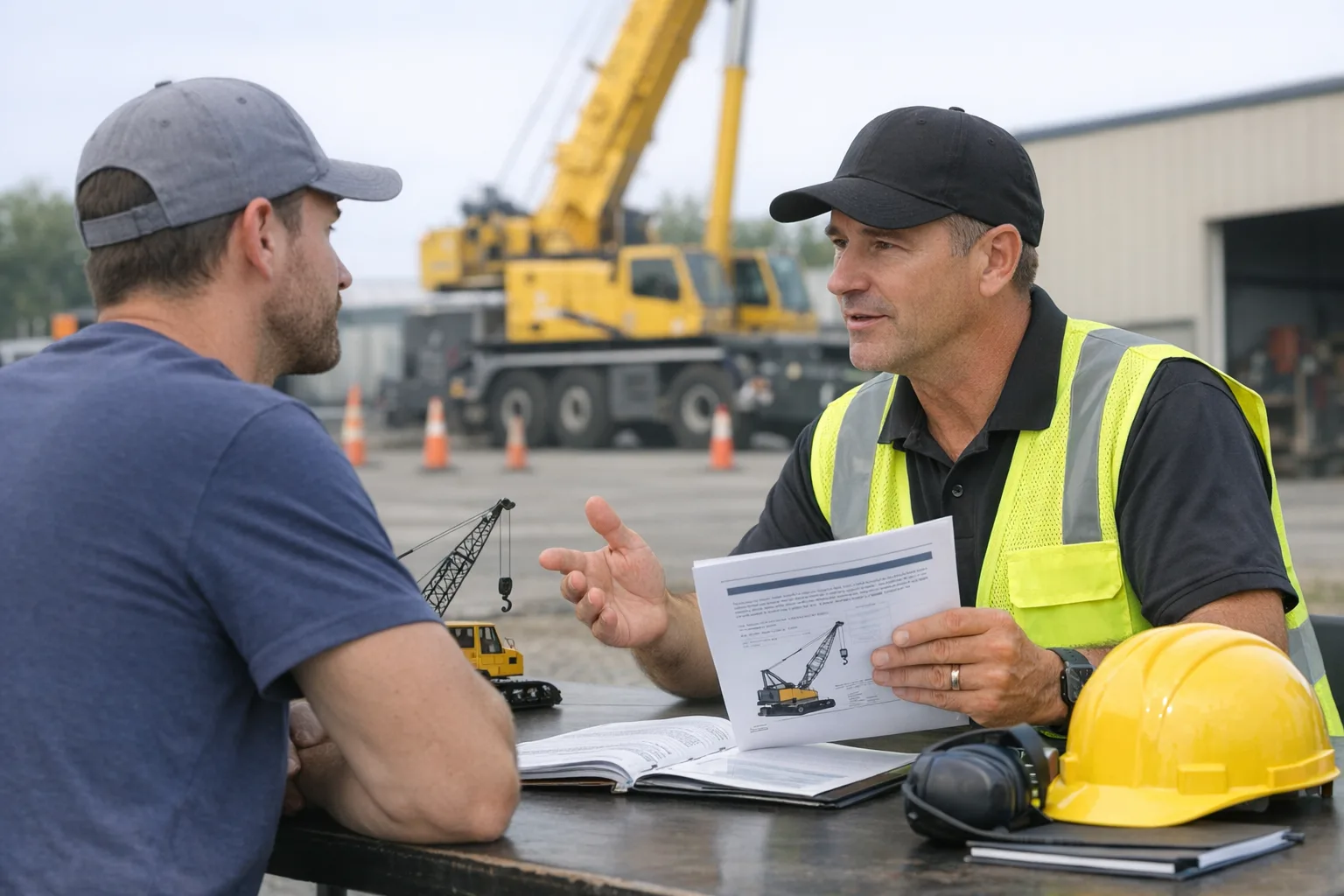
Pass-readiness is not hype. It means the training is built to identify whether a student understands the material well enough to move forward responsibly. A provider should be able to explain how the course helps students gauge readiness rather than simply assuming attendance equals preparation.
Warning signs include:
- Little discussion of common written or practical trouble spots.
- No clear process for reviewing weak areas.
- Overly broad promises without specific explanation of preparation methods.
- Pressure to enroll before your certification goal is even clarified.
For Indianapolis-area students balancing work, cost, and training quality, this is critical. If the program cannot explain how it helps people become more prepared, you may be paying for access to a class rather than meaningful preparation.
Mistake 5: Failing to Compare Scheduling, Travel, and Total Time Commitment
Convenience still matters. The mistake is not caring about convenience. The mistake is caring about convenience only at the beginning instead of evaluating the full time commitment from start to finish.
Travel is more than miles on a map
If you live in Indianapolis, a nearby class may look easier at first. But compare the whole picture:
- Does the course schedule work with your job?
- Will you need to miss additional days because of how the program is structured?
- Does the provider offer a format that matches your availability?
- Does a longer drive buy you more complete preparation and fewer follow-up issues?
Sometimes a slightly farther training option is the better decision because it saves you from repeating the process later.
How far should you be willing to travel for better crane operator training in Indiana?
There is no universal mileage answer. The better way to think about it is this: if a program offers stronger alignment with your certification goal, better practical preparation, clearer instruction, and a schedule that reduces disruption, some additional travel may be worth it.
On the other hand, long travel is not automatically better either. You still need to compare what is actually included. The point is to measure convenience against training fit, not against marketing claims.
Time lost can cost more than tuition
Workers often underestimate the cost of a poor scheduling fit. If a class requires awkward travel, extra overnight stays, multiple missed shifts, or repeated attendance because the initial prep was thin, the “quick” option was not really quick.
In the Indianapolis market, that matters for workers balancing construction schedules, family responsibilities, and budget constraints. Before enrolling, map out:
- Training days
- Commute time
- Time away from work
- Testing steps
- Any possible return trips
That gives you a more realistic picture of total commitment.
A Smart Checklist for Comparing Crane Training Near Indianapolis
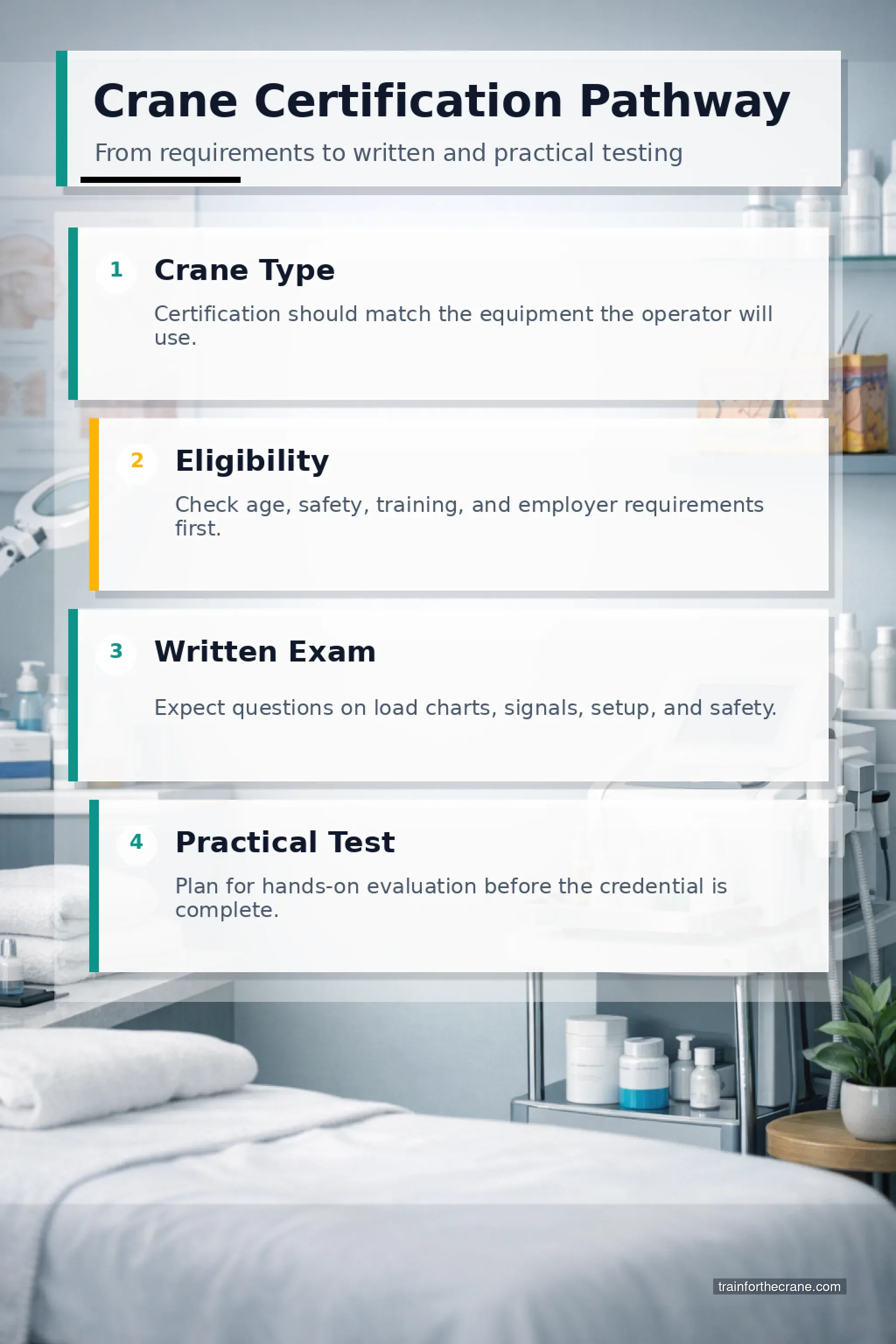
If you are trying to sort through options without wasting time, use this checklist. It is designed for practical comparison, not sales language.
1. Confirm your actual goal first
- Am I preparing for crane operator training, rigging, signal person training, or more than one role?
- Do I need entry-level guidance, or do I already have field experience?
- Is this course matched to that goal?
2. Ask what type of NCCCO-related preparation is being provided
- Which certification path does the training support?
- How are written topics covered?
- How is practical preparation handled?
- What does the provider do to help students understand testing expectations?
3. Compare what is included in the price
- Instruction hours
- Study materials or review support
- Practical exam preparation
- Any separate fees you need to plan for
- Any travel-related costs the low advertised price does not show
4. Evaluate hands-on opportunity honestly
- How much equipment exposure is built into the program?
- Is it structured practice or mostly observation?
- Would this amount of hands-on time be enough for my current experience level?
5. Ask about instructor approach
- Can they explain material clearly to beginners?
- Do they understand common testing mistakes?
- Can they explain the difference between course attendance and actual readiness?
6. Review the schedule like a working adult
- Can I realistically attend without disrupting work beyond what I can manage?
- Will the schedule force extra lodging or repeated travel?
- Does the timing make this a practical fit for my life?
7. Look for warning signs students often miss
- Vague answers about practical training
- Unclear description of what the course includes
- Pressure to register before your role is clarified
- No plain explanation of testing preparation
- Marketing that emphasizes convenience but not training depth
8. Think about job-readiness, not just enrollment
The goal is not merely to sit in a class. The goal is to move closer to safe, informed, test-ready crane work. A course that fits your actual needs is usually more valuable than the one that simply appears first in a search result.
What Questions Should You Ask Before Paying for a Crane Certification Course?
Use these questions when comparing providers in Indianapolis or elsewhere in Indiana:
- What certification path is this training designed to support?
- Is this course right for a beginner, or is it intended for workers with prior crane experience?
- What written exam preparation is included?
- What practical exam preparation is included?
- How much hands-on time should I expect?
- What common problems do students have, and how does the course address them?
- What costs are included, and what costs are separate?
- What does the schedule look like from training through testing steps?
- If I am unsure whether I need operator, rigger, or signal person training, can you help clarify that before I enroll?
If a provider answers these clearly, that is a good sign. If the answers stay vague, overly scripted, or focused only on immediate signup, keep comparing.
When to Take the Next Step and What to Ask Before Enrolling
If you are still early in the process, do not rush because a class is geographically close. Take the next step when you can clearly answer three questions:
- What certification path am I trying to pursue?
- Does this training specifically support that path?
- Does the provider offer the level of exam prep, hands-on preparation, and scheduling fit I actually need?
That is the right point to speak with a training provider.
For many students around Indianapolis, the real issue is not a lack of nearby options. It is a lack of clarity about which option fits their goal. That problem gets worse when students pay first and sort out the details later. A short diagnostic conversation can prevent that. It can help determine whether you need operator preparation, practical exam support, rigging training, signal person training, or a more foundational discussion about entering the trade.
Train For The Crane works with people who want direct, certification-driven guidance instead of guesswork. If you are comparing crane operator training near me and do not want to waste money on the nearest class without checking the fit, call (317) 385-7190 and ask the practical questions first. Review your requirements, verify what the program includes, and make sure the training path matches your role before you pay for a seat.
That kind of evaluation is especially important if you are unsure about NCCCO crane operator certification training, trying to compare crane operator certification cost Indiana, or deciding whether more travel is worth better NCCCO practical exam preparation. The right next step is not blind enrollment. It is getting the training need diagnosed clearly so you can choose the program that actually prepares you for the work and the testing process.