

NCCCO Crane Operator Certification Training FAQ: How Long Does a Crane Operator Training Program Take in Indiana?
If you are comparing a crane operator training program in Indiana, the real question is usually not just “How long is the class?” It is “How long will the full process take if I need classroom instruction, hands-on practice, and NCCCO practical exam preparation too?” That is the right question to ask. For many students in Indianapolis and across Indiana, the total timeline depends on experience level, the certification goal, testing readiness, and how the training schedule is set up.
This guide explains how a mobile crane operator course length is usually shaped, what adds time, what can shorten the process, and how to choose a schedule that fits your work life and certification goal without creating avoidable delays.
If you are still comparing local options, you can also review Crane Training Indiana and Crane Training Indianapolis for more Indiana-specific context.
How Long a Mobile Crane Operator Course Usually Takes
A mobile crane operator course length can vary because training is not only about seat time in a classroom. A complete crane operator training program often involves several parts:
- Enrollment and determining the right certification path
- Classroom instruction on crane operation, load charts, setup, safety, and exam topics
- Hands-on equipment familiarization and operating practice
- NCCCO practical exam preparation
- Written and practical testing scheduling
For some students, these parts happen in a tighter sequence. For others, they are spread out because of work schedules, travel needs, or the need for more practice before testing. That is why asking only for the “course length” can be misleading. The better question is how long the process takes from enrollment through testing.
In practical terms, many students find that the overall mobile crane certification timeline depends on whether they are:
- Starting from scratch with no crane operating background
- Coming from construction or heavy equipment work but new to crane testing
- Already around lifting operations and needing focused exam prep
- Trying to fit training around a full-time job
Beginners usually need more time because they are learning both the subject matter and the rhythm of the practical test. Experienced workers may move faster in some areas, but experience alone does not always shorten the process as much as people expect. Someone can be comfortable around jobsites and still need significant help with load chart questions, pre-operation procedures, test sequence control, or the precision required during practical exam events.
That is especially true in Indiana, where many students come from construction, industrial, utility, or warehouse-related backgrounds. Those skills help, but certification prep still needs to be specific. If your goal is a recognized operator credential path, the timeline should be based on readiness, not just confidence.
Typical Timeline From Enrollment Through Testing
While exact durations vary by student and schedule format, the process usually includes these stages:
- Initial planning: identifying your certification goal, current experience level, and schedule limits
- Training days: classroom and practical instruction
- Practice and review: additional time to reinforce procedures and test flow
- Testing coordination: written and practical exam timing
- Follow-up if needed: additional preparation if a student is not yet ready for testing on the first planned date
That is why students comparing crane school schedule options in Indiana should look at the full path, not just the advertised training days.
What Adds Time When You Also Need Practical Exam Prep
The biggest reason a training timeline grows is practical exam preparation. Many students assume that if they understand crane basics, they are ready for the practical. In reality, the practical exam demands more than general familiarity. It requires a repeatable sequence, measured control, and comfort performing under test conditions.
NCCCO practical exam preparation often adds time because students need to learn how to:

- Follow the exact order of practical tasks
- Control the crane smoothly and accurately
- Manage time during test events
- Avoid common deductions caused by rushed movements or missed steps
- Stay composed during an observed evaluation
For new operators, this can be the most important part of the entire crane operator training program. A student may understand safety rules in the classroom and still need extra repetition before feeling prepared for the practical exam environment.
Practical exam prep for crane operators also adds time when the student needs:
- More seat time to build control and consistency
- Extra review of crane setup and inspection steps
- Additional coaching on hand-eye coordination and task sequence
- Help connecting written concepts to hands-on operation
This is one reason schedule comparisons matter. A shorter-looking course is not always the shorter path if it leaves too little time for practical exam preparation and leads to delays later.
Why Practical Prep Feels Different From General Training
General training teaches what a safe operator needs to know. Practical exam prep teaches how to demonstrate that knowledge and control during a formal test. Those are related, but they are not identical.
For example, a student may understand:
- basic crane terminology,
- site safety principles,
- signaling awareness, and
- the importance of load handling discipline.
But the practical exam still requires that student to perform specific tasks in a controlled testing format. That testing format is where many candidates need focused preparation. If you know ahead of time that you want strong practical exam prep, you can choose a program schedule that gives that part enough room.
What Can Shorten or Extend Your Training Schedule
No two students follow the same mobile crane certification timeline. Several factors can shorten or extend the schedule.
Factors That May Shorten the Timeline
- Relevant experience: Students with prior exposure to cranes, rigging, signaling, or heavy equipment may absorb concepts more quickly.
- Flexible availability: If you can attend consecutive training days instead of spreading them out, the process is often smoother.
- Strong study habits: Students who review terminology, procedures, and test expectations between sessions usually progress faster.
- Clear certification goal: Knowing exactly what credential path you are pursuing helps avoid scheduling confusion.
- Prompt test planning: If testing is coordinated efficiently, there is less downtime between training and exam dates.
Factors That May Extend the Timeline
- No prior operating background: Beginners often need more repetition before they are comfortable.
- Limited schedule availability: Night work, rotating shifts, or seasonal construction demands can stretch training out.
- Travel logistics: Students coming from outside Indianapolis may need to plan around commute time, lodging, or missed work.
- Needing more practical repetition: Some students simply need more hands-on time before they are test-ready.
- Delayed paperwork or planning: Waiting too long to confirm goals, dates, or test steps can create unnecessary gaps.
This is why realistic expectations matter. A student with years around jobsites may still need more focused practical exam prep than expected. Another student with less direct field experience may progress quickly because they follow instruction well and prepare consistently between sessions.
Can You Finish Faster If You Already Have Equipment Experience?
Sometimes, yes. But not automatically.
Heavy equipment experience can help with machine awareness, worksite discipline, and comfort around controls. That background may shorten the learning curve in parts of the program. However, crane operation and crane certification testing have their own procedures, safety expectations, and exam structure.
So the honest answer is this: experience may shorten your training schedule, but it does not replace crane-specific instruction or practical exam prep. If you are comparing timelines, ask whether your existing experience actually matches the certification goal you are pursuing.
If you are still exploring the career path itself, these pages may help frame the next step: How to get a crane license and Become a crane operator.
How Classroom, Hands-On Practice, and Testing Fit Together
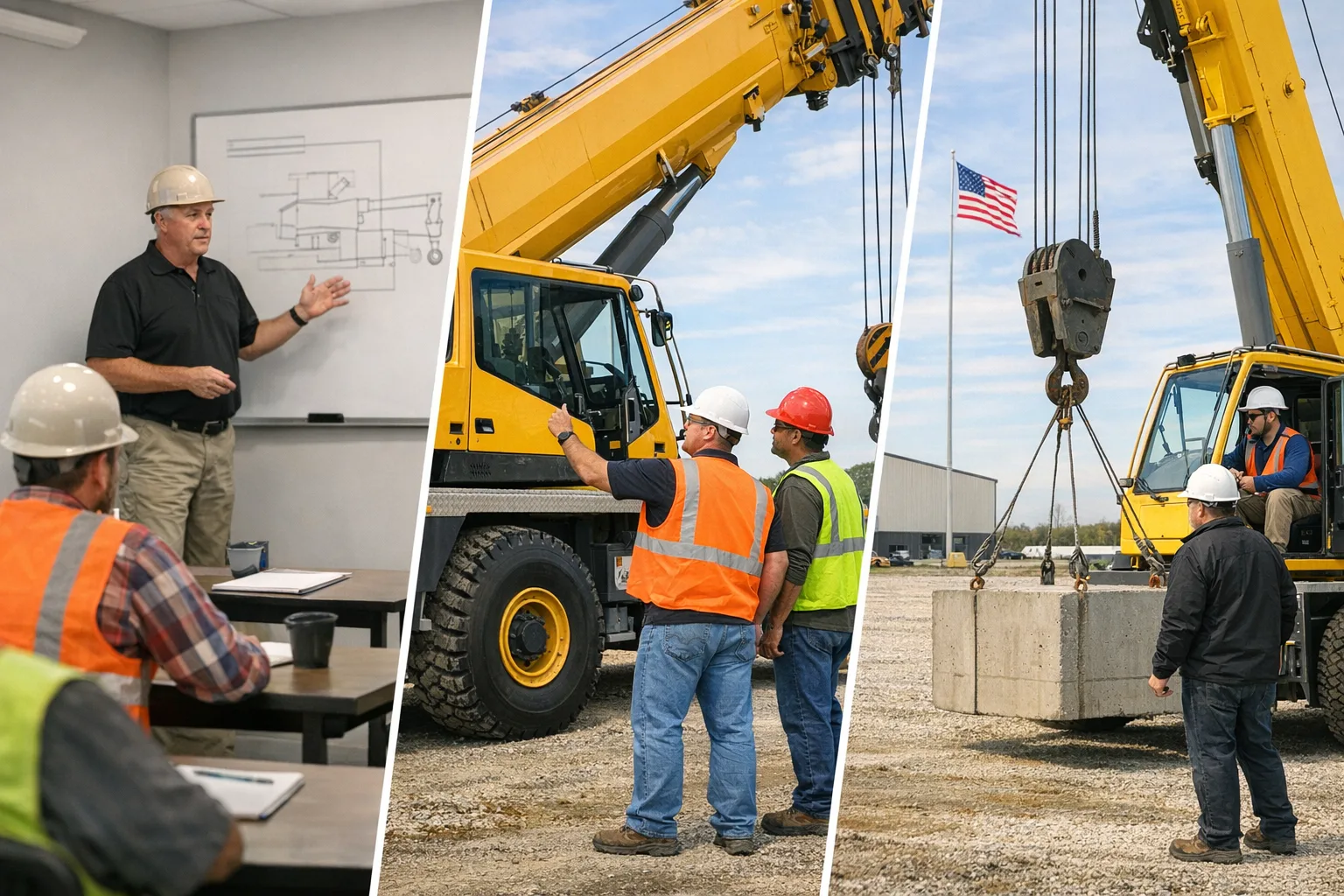
One of the most common misunderstandings about Indiana crane training is thinking of classroom instruction, practical practice, and testing as separate issues. In a good program, they should build on each other.
Classroom Instruction
The classroom side typically covers the knowledge base needed for safe operation and certification preparation. This may include:
- crane terminology,
- site safety awareness,
- basic operating principles,
- load-related concepts,
- inspection and setup topics, and
- test-oriented review.
For some students, classroom time is the easier part. For others, especially career changers entering the trades for the first time, this is where the foundation is built. If the classroom side is rushed, the practical side can become harder because the student is trying to operate while still struggling with core concepts.
Hands-On Practice
Hands-on training is where students connect the concepts to actual crane operation. This is also where instructors can identify whether a student needs more repetition before testing. Practical exam prep for crane operators is not just “getting on the machine.” It is learning to operate with purpose, follow a sequence, and avoid preventable errors.
Students often discover that hands-on practice is the part that most affects confidence. If a schedule offers too little practical time, students may feel rushed. If the schedule allows enough repetition, they usually have a better understanding of what to expect on test day.
Testing
Testing is its own stage, and it should not be treated like an afterthought. Even when the training itself is complete, there may still be planning required for the written and practical portions. This is one reason the total crane school schedule options should be reviewed carefully before you commit.
Ask how training and testing are sequenced. A practical training schedule makes more sense when:
- classroom learning supports the practical work,
- hands-on practice prepares students for the practical exam format, and
- testing is planned close enough to training that skills stay fresh.
What Usually Takes the Most Time?
For many students, the most time-sensitive part is not classroom instruction. It is becoming truly ready for the practical exam and aligning the schedule so training and testing happen in a workable sequence.
That does not mean classroom work is minor. It means the hands-on and testing portion often determines whether the full timeline feels efficient or stretched out.
What Indiana Students Should Ask Before Choosing a Program
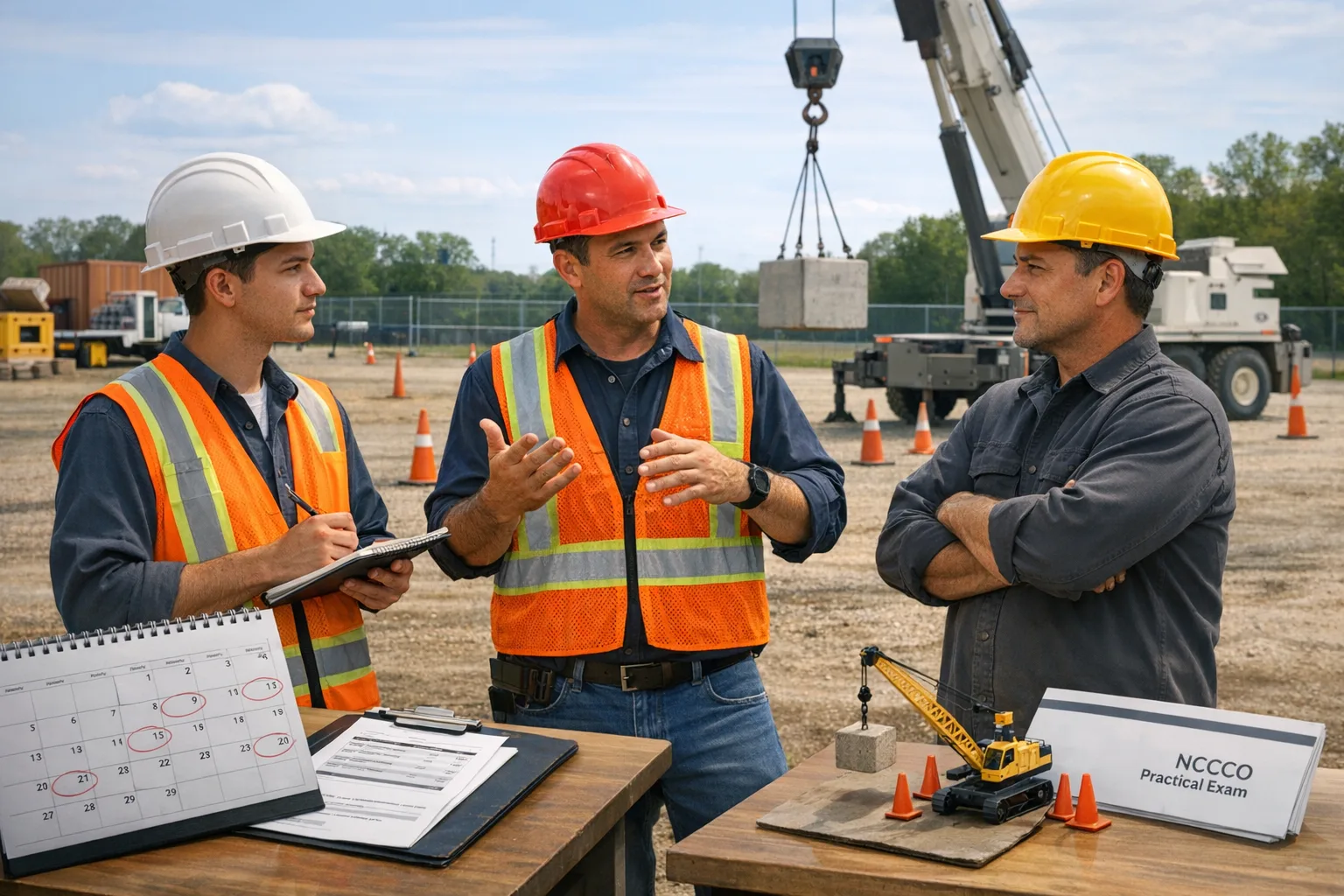
If you are evaluating Indiana crane training options, ask questions that help you understand the real schedule, not just the promotional summary.
Questions That Matter
- How is the training broken up between classroom instruction, hands-on practice, and testing?
- How much of the schedule is dedicated to NCCCO practical exam preparation?
- Is the program better suited for beginners, experienced operators, or both?
- What happens if I need more practical repetition before testing?
- Are there full-time, accelerated, or staggered schedule formats?
- How should I plan work and travel around the training days?
- How far apart are training completion and test dates likely to be?
These questions are especially important for students in Indianapolis and surrounding Indiana markets who are balancing work, family obligations, and commuting. A program that looks shorter on paper may actually be harder to complete if the schedule does not fit your real availability.
Full-Time, Accelerated, and Staggered Formats
When comparing crane school schedule options, think in terms of format:
- Full-time format: Usually a more concentrated schedule. This can help students stay immersed in the material and move from training into testing with less downtime.
- Accelerated format: Useful for students who already have relevant experience and want a tighter path, but only if they are truly ready for the pace.
- Staggered format: Better for working adults who cannot block out consecutive days. This can be practical, but it may stretch the total timeline if too much time passes between training sessions.
The right schedule depends on your availability, travel distance, current skill level, and how much practical exam prep you need.
Common Timing Mistakes That Delay Certification
Many delays are preventable. Students often lose time not because the training is poor, but because they underestimate what the process requires.
Mistake 1: Looking Only at the Advertised Course Days
A short listed course length does not tell you the full story. You need to ask about the time from enrollment through testing, including practical exam prep.
Mistake 2: Overestimating Transferable Experience
Being comfortable with construction equipment or jobsite work is helpful, but crane certification still requires crane-specific preparation. Experience helps, but it does not remove the need for structured training and testing readiness.
Mistake 3: Underplanning Work and Travel
Indiana students often need to plan around shift work, project deadlines, or travel into the Indianapolis area. If you do not account for commute time, missed work, and recovery between training days, your schedule can become harder to maintain.
Mistake 4: Waiting Too Long to Ask About Practical Prep
Some students focus only on written preparation and assume practical readiness will come naturally. That can create delays later. Ask early how practical exam prep is handled and whether you should expect extra repetition.
Mistake 5: Choosing a Pace That Does Not Match Your Background
A very fast format may sound appealing, but if you are a beginner, it can create more stress than progress. On the other hand, a schedule that is too spread out may make it harder to retain skills. The right pace is the one that fits your actual readiness level.
How to Decide the Right Schedule for Your Situation
The right crane operator training program is not just the shortest one. It is the one that gives you a realistic path to complete the training and be prepared for testing.
Choose Based on Your Starting Point
If you are brand new to crane operation, look for a program that gives enough time for both instruction and practical repetition. If you already work around cranes, rigging, or lift operations, you may be able to move more efficiently, but you should still confirm how much test-specific preparation is included.

Choose Based on Your Availability
Be honest about your weekly schedule. If taking several consecutive days off is impossible, a staggered format may make more sense. If you can set aside concentrated time, a tighter format may help you progress with fewer interruptions.
Choose Based on Testing Readiness, Not Just Training Completion
Finishing the course and being ready for the exam are not always the same thing. Ask whether the schedule is designed to help you move from learning into testing without losing momentum.
Choose Based on Practical Support
If your main concern is the practical exam, prioritize a provider that treats practical exam prep for crane operators as a core part of the process rather than an add-on after the fact.
FAQ: Straight Answers About Course Length and Scheduling
How long does a mobile crane operator course usually take if I also need practical exam prep?
It depends on your background, your schedule, and how much hands-on repetition you need. The total timeline is usually longer than the classroom portion alone because it includes practical exam preparation and testing coordination. The best way to compare options is to ask for the timeline from enrollment through testing, not just the training days.
Can I finish crane operator training faster if I already have equipment experience?
You may be able to move faster in some parts of the process, especially if you are already comfortable around heavy equipment or lifting operations. But prior experience does not automatically mean you are ready for crane-specific written and practical testing. Most experienced workers still need focused certification prep.
What parts of the process take the most time: classroom work, hands-on practice, or testing?
For many students, hands-on practice and practical exam readiness take the most attention. Classroom instruction builds the foundation, but the practical side often determines whether a student is truly ready to test on schedule.
Does the training timeline change if I need help getting ready for the NCCCO practical exam?
Yes. If you need extra coaching, more repetition, or more time to become comfortable with the test format, that can extend the total schedule. That is normal and often worthwhile, because practical preparation can prevent avoidable delays later.
What should I compare between crane schools in Indiana before picking a schedule?
Compare the balance of classroom and hands-on training, the amount of practical exam prep included, whether the format suits beginners or experienced workers, how testing fits into the overall process, and how realistic the schedule is for your work and travel situation.
Conclusion: Focus on the Full Timeline, Not Just the Course Label
When students ask about mobile crane operator course length, they are usually trying to solve a bigger planning problem: how to fit training, practical preparation, and testing into real life without losing time or momentum. The right answer depends on your experience, your availability, and how much support you need with the practical exam.
For Indiana students, especially those around Indianapolis balancing work and career change decisions, the most useful next step is to ask for a direct timeline estimate based on your own situation. That gives you a better way to compare full-time, accelerated, and staggered options and choose a path that matches your certification goal.
If you want a direct answer about your likely training path, call Train For The Crane at (317) 385-7190 and ask this question: based on my experience level, certification goal, and availability, what training timeline makes the most sense for me?