

If you want to become a crane operator in Indiana, the process is more straightforward when you understand the order of steps. You need to know what type of crane work you want to do, what certification path fits that work, how written and practical testing usually works, and what employers expect after certification. This guide breaks that down in plain language for workers in Indianapolis and throughout Indiana who are comparing training options, costs, and job-ready next steps.
Train For The Crane helps Indiana students prepare for NCCCO crane operator certification training, practical exam preparation, and related paths such as rigging and signal person certification. If you are trying to sort out which training route makes sense before you spend money or time on the wrong program, this article is built for that decision.
What It Takes to Become a Crane Operator in Indiana
To become a crane operator in Indiana, most people move through a practical sequence:
- Confirm you meet basic work-readiness requirements.
- Choose the crane type or certification path that matches the work you want.
- Complete training focused on safety, load handling, crane setup, operations, and exam content.
- Prepare for the written and practical certification exams.
- Pass the required exams and complete the certification process.
- Use that certification to pursue operator work, apprenticeship opportunities, or advancement in construction and material handling roles.
That sounds simple on paper, but many Indiana students lose time because they start with the wrong question. Instead of asking only, “How do I get crane certified?” the better question is, “What kind of crane work am I actually preparing for?” Mobile crane work, tower crane work, rigging, and signal person roles are related, but they are not the same path.
Another point that matters in Indiana: avoid overstating the licensing issue. People often search for “crane operator license” or “Indiana crane operator requirements,” but in practice, jobsite qualification and nationally recognized certification requirements are often the real focus. Employers, contractors, and projects may require operator certification tied to the crane type and the work being performed. That is why certification-driven training matters.
For many beginners, the goal is not just passing a test. The real goal is becoming employable and safer on the job. That means learning terminology, operational judgment, load chart awareness, hand signals, inspection habits, and test-day skills in the right sequence.
Basic Requirements: Age, Fitness, Safety Awareness, and Job Readiness
If you are researching how to get crane certified in Indiana, start with the basics. A training provider can help you with exam prep and path selection, but you still need to be realistic about your readiness for crane work.
Age and entry-level expectations
Most students asking how to become a crane operator in Indiana are either entering construction for the first time, moving up from laborer or equipment roles, or changing careers. At the entry level, employers and training programs generally expect adult workers who can follow safety procedures, handle structured instruction, and work in physically active environments.
If you are young and planning a trade career, it helps to build basic construction habits early: showing up on time, following direction, wearing required PPE, and treating jobsite communication seriously. Crane operation is not casual equipment work. It is high-consequence work around people, loads, and structures.
Physical condition and medical readiness
Crane operation requires attention, coordination, visual awareness, and the ability to work safely around active jobsites. Exact medical and employer requirements can vary, but common expectations include the ability to perform safely in construction conditions and demonstrate the alertness needed for operating heavy equipment.
Students sometimes focus only on the written test and forget that employers care about real-world readiness. If you have concerns about vision, physical restrictions, or your ability to work in climbing, outdoor, or industrial conditions, it is smart to ask those questions before choosing a training path.
Safety awareness matters from day one
One of the biggest differences between successful students and struggling students is safety mindset. A crane operator is responsible for more than moving a load. Safe operation depends on planning, communication, understanding the lift environment, recognizing hazards, and refusing shortcuts.
That is also why some Indiana workers start with supporting credentials first. If your current role is closer to rigging or signaling than full equipment operation, you may benefit from adding focused training such as crane rigging certification training or crane signal person certification while you build toward operator responsibilities.

Job readiness for Indiana construction work
Indianapolis and surrounding Indiana markets include commercial construction, industrial sites, infrastructure work, and projects where crane-related skills can support advancement. Employers are usually looking for workers who can combine certification with dependable behavior, situational awareness, and understanding of jobsite roles.
That means job readiness includes:
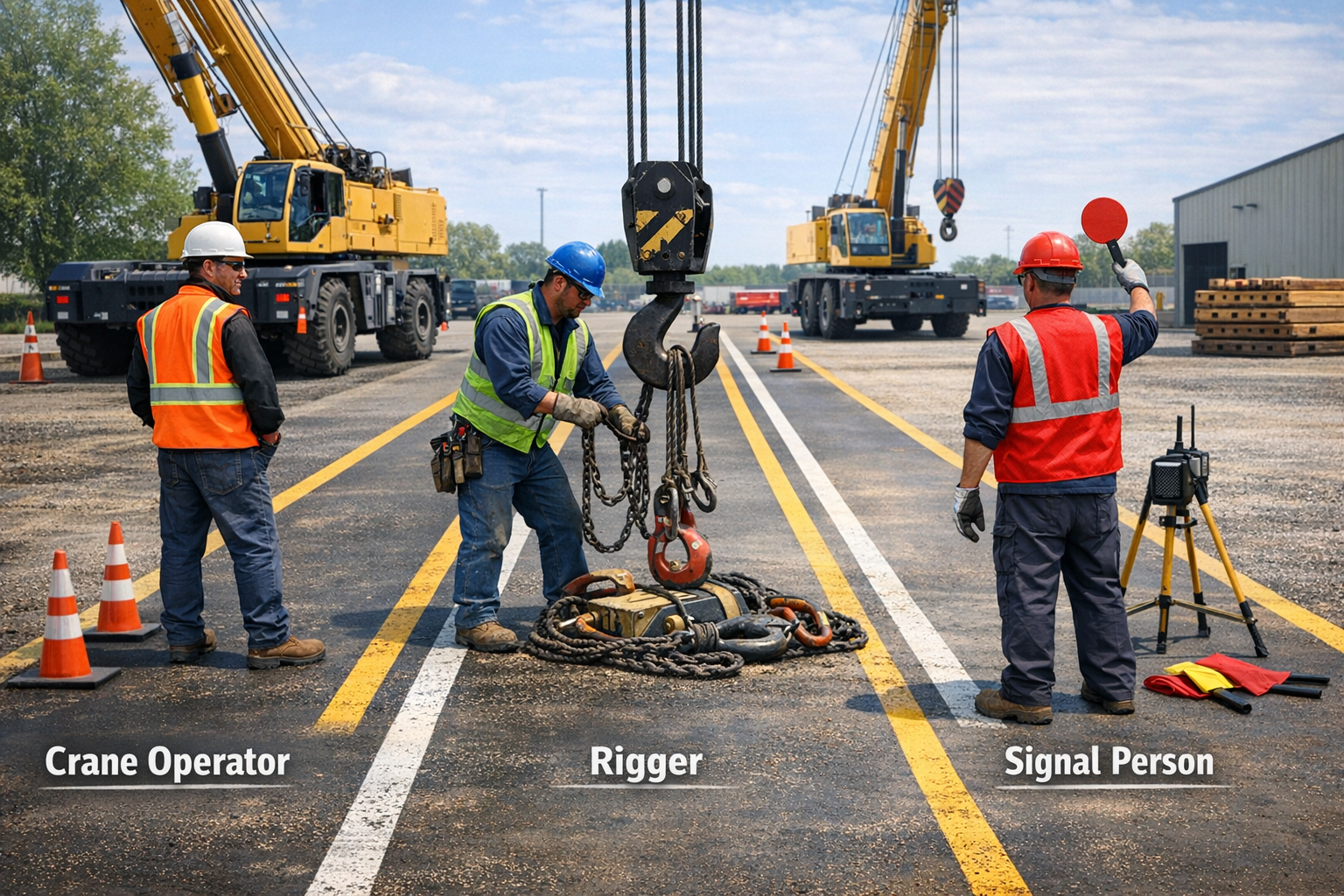
- Knowing the difference between operator, rigger, and signal person duties
- Understanding that certification is part of qualification, not the entire story
- Being ready for both classroom learning and hands-on performance testing
- Taking safety rules seriously instead of treating the process like a quick box to check
Choose the Right Crane Type and Certification Path
One of the most important steps in crane operator training in Indiana is choosing the right path before enrollment. This affects your training content, exam preparation, likely job target, and overall cost.
Mobile crane operator path
For many students, mobile crane training is the most common entry point into operator certification. If you want to work with cranes used across a range of construction and lifting environments, a mobile crane-related certification path may be the right place to focus. This is often what people mean when they search for “crane operator school Indiana” or “NCCCO crane certification Indiana.”
This path usually fits:
- Construction workers moving into crane operation
- Equipment operators expanding their qualifications
- Career changers looking for a skilled trade path tied to lifting operations
Tower crane operator path
If your intended work is on large vertical construction projects, tower crane training may be more relevant. Not every student needs this first. It depends on the jobs you are targeting and the type of equipment used on those jobs. If you are comparing paths, reviewing topics like tower crane operator training cost can help you understand how specialized training may differ from more general operator preparation.
Rigger and signal person paths
Not everyone should start by pursuing operator certification first. If your current duties already involve attaching loads, understanding lift planning, or directing crane movement, the rigger or signal person route may be the better immediate fit.
That can make sense if:
- You work around cranes but are not operating them yet
- Your employer needs certified support personnel on lifts
- You want a more gradual path into crane-related work
- You need OSHA-aligned signal person knowledge for current duties
Choosing correctly can save money and time. A student who needs signal person or rigging qualification right now should not automatically pay for the wrong operator course first. On the other hand, a worker aiming directly at crane operation should not delay by choosing a path that does not support the intended role.
How beginners should decide
If you are brand new and unsure where to begin, ask these questions:
- What role do I want within the next year: operator, rigger, or signal person?
- What type of jobs am I targeting in Indianapolis or elsewhere in Indiana?
- Does my employer want a specific certification path?
- Am I preparing for a mobile crane environment, tower crane environment, or general crane support role?
- Do I need full operator certification now, or should I build supporting credentials first?
This is where direct guidance helps. A good training conversation should narrow the path instead of pushing every student into the same class.
How Training and NCCCO Exam Prep Typically Work
When people search for NCCCO exam prep Indiana, they often want to know what training actually looks like. The answer depends on the certification type, but most strong preparation follows a pattern: classroom instruction, review of exam topics, hands-on familiarity where applicable, and deliberate practical test preparation.
Step 1: Learn the safety and operations foundation
Before practical testing makes sense, students need a working understanding of crane terminology, components, operating principles, site hazards, communication methods, load handling concepts, and inspection awareness. This is not busy work. The written exam expects you to understand how safe crane operations function in real conditions.
For a beginner, this stage is where the job starts to make sense. You learn why hand signals matter, why setup conditions affect safety, why capacity is not a guess, and why operator decisions must stay inside established procedures.
Step 2: Focus on the certification exam structure
NCCCO crane certification Indiana searches are usually driven by one practical concern: “What exactly do I have to pass?” Good exam prep should explain the structure of the written and practical requirements in plain language so you know what content to study and what performance standards to expect.
This is where students benefit from organized prep rather than piecing information together from scattered internet searches. Training should help reduce confusion about terminology, task order, and test expectations.
Step 3: Practice test-oriented skills without losing jobsite context
Passing the exam matters, but training should still stay connected to actual work. Students need to understand not just what the test asks, but why those skills matter on an Indiana jobsite. For example, practical preparation is not only about course completion. It is also about control, accuracy, awareness, and disciplined operation.
That balance matters because employers do not hire a score alone. They hire someone who can bring a safer, more prepared mindset to the field.
Step 4: Prepare for enrollment and scheduling questions
Many prospective students hesitate because they do not know what enrollment looks like or what to do first. A practical training provider should be able to explain:
- Which certification path fits your current role
- Whether you should begin with operator, rigger, or signal person training
- What written and practical prep involves
- What documents or scheduling steps may be involved
- How to think about training costs versus exam-related costs
If you are comparing programs in Indiana, do not compare only by headline price. Compare by fit, relevance to your target work, and how clearly the provider explains the full certification path.
What the Written and Practical Exams Involve
Anyone serious about how to get crane certified in Indiana needs a realistic view of testing. The written and practical exams measure different things, and both matter.
Written exam expectations
The written portion typically evaluates your understanding of crane operation principles, safety practices, load-related concepts, crane setup considerations, inspection awareness, and jobsite procedures relevant to the credential you are pursuing. Students who struggle often do so because they try to memorize fragments instead of understanding the logic behind safe crane work.
Better written exam preparation usually includes:
- Review of key crane terms and concepts
- Understanding safety rules and operating limits
- Clarifying common test-topic confusion
- Practicing how questions are asked, not just what the answer is
Practical exam expectations
The practical exam is where students must demonstrate controlled operation and task performance. This is often the most stressful part for beginners because it combines equipment handling with test pressure. That is why dedicated practical exam preparation matters.

Good practical prep helps students understand:
- The sequence of tasks they may be required to perform
- How accuracy and control affect performance
- How small mistakes can turn into larger test issues
- How to stay calm and methodical under evaluation
Students often ask whether practical difficulty means they are not cut out for crane work. Usually, the issue is not fit. It is unfamiliarity, nerves, or lack of structured preparation. With the right instruction, many candidates improve significantly because they stop guessing and start understanding the expected method.
Why both parts matter for job readiness
The written exam checks understanding. The practical exam checks execution. Together, they help show whether a candidate is moving beyond interest and into measurable readiness. If you want to become a crane operator in Indiana, you should expect both mental preparation and physical task discipline.
What Happens After You Pass Certification
Passing the exams is a major milestone, but it is not the finish line. A lot of new operators ask what happens next, especially if they are entering the field for the first time.
Certification supports qualification and hiring conversations
Once you earn the appropriate certification, you are in a stronger position to pursue crane-related roles, discuss qualification with employers, and move into more specialized work. For someone already employed in construction, certification can support advancement into equipment responsibilities or make you more useful on projects involving lifts.
You still need to build field credibility
Certification does not replace judgment gained from supervised work, repetition, and jobsite exposure. New operators still need to build real-world confidence, communication habits, and awareness around planning and execution. Employers may look for a combination of certification, reliability, teachability, and safe work behavior.
Additional credentials may still matter
Depending on your role, you may need more than operator certification alone. Some workers strengthen their position by adding rigging or signal person credentials so they understand the full lift team environment. That can be especially useful if you are trying to become more versatile on Indiana jobsites.
Your next move should match your target work
After certification, ask:
- Am I targeting mobile crane work, tower crane work, or broader lifting operations?
- Do I need supporting qualifications in rigging or signaling?
- Am I prepared to explain my certification path clearly to employers?
- Do I need more practical development to be fully job-ready?
This stage is where career guidance matters. A student does not just need a certificate in hand. They need a realistic understanding of how that credential fits the next employment step.
How Long Training Takes and What It May Cost in Indiana
Cost and timing are two of the biggest concerns for anyone comparing crane operator school Indiana options. The honest answer is that training length and total expense can vary based on the certification type, the amount of exam preparation included, the practical training needs, and whether you are pursuing operator training versus rigger or signal person qualification.
Training timelines vary by path and experience
A beginner entering operator training may need more instruction and preparation than an experienced construction worker who already understands equipment environments and site communication. Specialized paths, such as tower crane preparation, may also differ from more general operator routes.
Timeline questions should be framed like this:

- How much preparation do I personally need before testing?
- Am I starting from zero or building on field experience?
- Does the training include practical exam preparation?
- Am I taking one credential or combining operator training with rigging or signal person education?
Anyone promising unrealistically short outcomes without understanding your background should be approached carefully. Practical, certification-driven training is supposed to prepare you, not rush you into avoidable failure.
What cost usually includes
When workers ask about crane operator training Indiana pricing, they often need help separating different categories of cost. Depending on the program, overall expense may involve training instruction, exam prep, practical preparation, testing-related charges, and possibly additional costs tied to the specific certification path.
That is why “How much does it cost?” should really become several questions:
- What part is training cost?
- What part is exam-related cost?
- Is practical preparation included?
- Am I paying for the right path or an unnecessary one?
- Would a rigger or signal person path fit my current role better than full operator training right now?
Train For The Crane provides guidance on training cost and certification cost considerations so students can compare options more realistically instead of relying on vague online claims.
How to compare Indiana training options wisely
When comparing providers, do not focus only on the lowest advertised number or the shortest claimed timeline. Compare based on:
- Whether the program fits your intended role
- Whether it includes real written and practical exam prep
- How clearly the provider explains the certification process
- Whether the training is geared toward job readiness rather than just selling a seat
- Whether you can ask direct questions about Indiana work goals and certification path selection
FAQ: Steps to Become a Crane Operator in Indiana
Do you need a state license to become a crane operator in Indiana?
Indiana workers often search for a state crane operator license, but the more practical issue is usually operator qualification and certification for the work being performed. Requirements can depend on the employer, project, and equipment type. That is why it is important not to oversimplify the rule. If you are unsure what applies to your target role, Train For The Crane can help you sort out the certification path that matches your work goals in Indiana.
What is the fastest path for a beginner to become a crane operator in Indiana?
The most efficient path is not the one that sounds shortest. It is the one that matches your intended job and gives you proper written and practical exam preparation. For some beginners, that means starting directly with operator certification training. For others, especially workers already supporting lifts, it may make more sense to begin with rigging or signal person training and then move into operator preparation.
How do you choose between mobile crane, tower crane, rigging, or signal person training?
Choose based on the role you expect to perform. If you want to operate the crane, operator training is the route. If you attach loads and work around lift setup, rigging may be the better fit. If your role is directing crane movement using approved communication methods, signal person training may be the right starting point. Tower crane training is more specialized and should match the type of projects you want to work on.
How much does crane operator training and certification usually cost?
There is no single honest number for every student because cost depends on the certification path, amount of preparation needed, exam components, and whether practical prep is included. The better approach is to ask for help comparing training cost and certification cost based on your exact goal, not a generic internet average.
What should you do after passing the NCCCO written and practical exams?
After passing, you should use that certification as part of your job-readiness plan. That may include pursuing operator opportunities, discussing qualification with employers, adding rigging or signal person credentials if needed, and continuing to build supervised field experience. Certification opens the door, but long-term success still depends on safe performance and continued skill development.
How to Get Started With Crane Training in Indiana
If you are trying to become a crane operator in Indiana, the most important next step is not guessing your way into the wrong class. It is choosing the right NCCCO training path based on the work you actually want to do. That could mean operator training, written and practical exam prep, or starting with rigging or signal person certification first.
Train For The Crane works with Indiana students who want straight answers about crane operator requirements, certification options, exam preparation, and realistic cost considerations. If you are in Indianapolis or anywhere in Indiana and want help comparing training options, understanding what enrollment looks like, and deciding which path fits your goals, call (317) 385-7190 to request help choosing the right program and preparing for the next step.