

Why Lifting Safety Training Matters for Your Career and Health
Lifting safety training provides the techniques to prevent injuries when handling loads. It covers proper body mechanics, risk assessment, equipment use, and ergonomic principles.
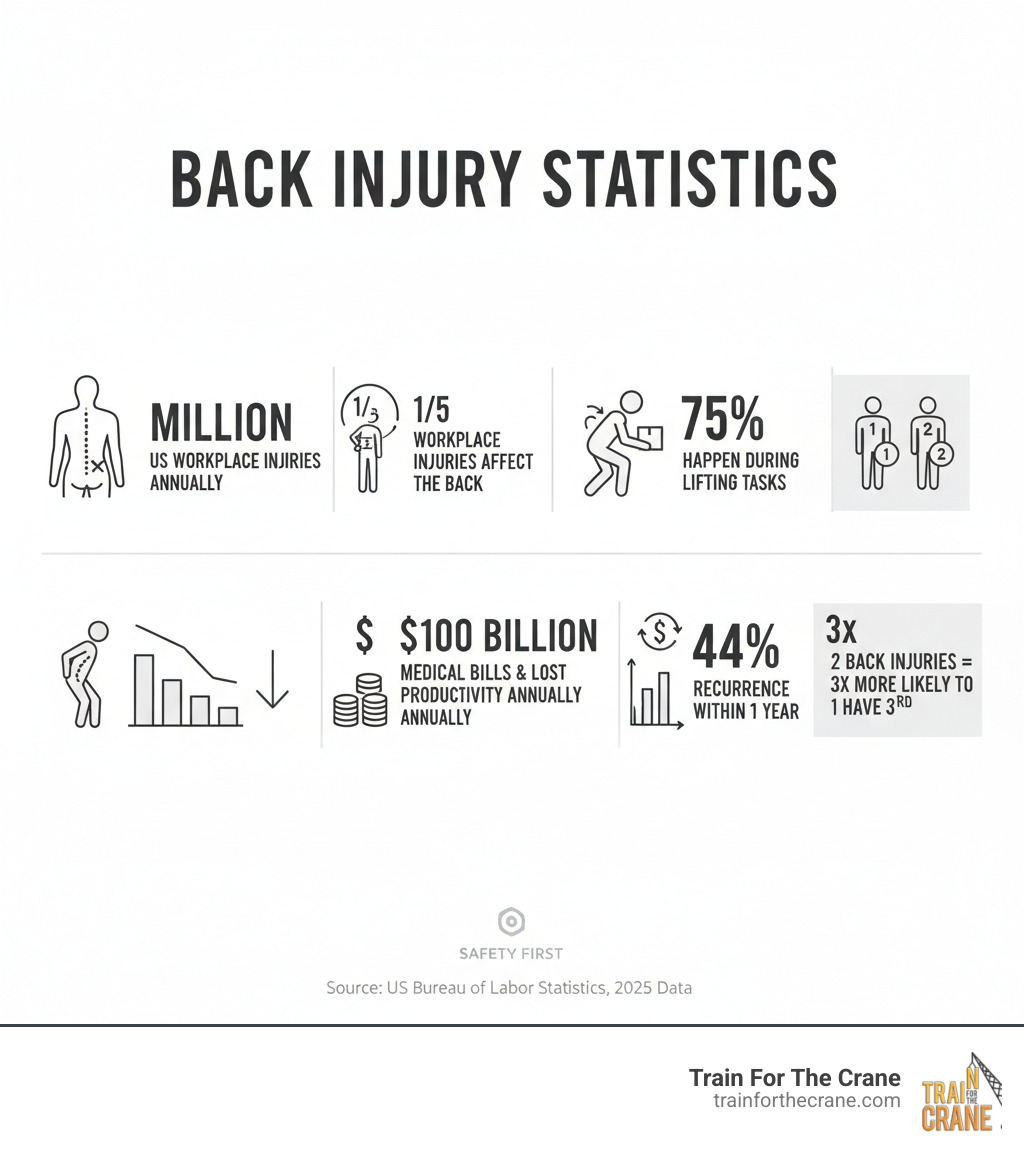
The numbers are staggering. In the U.S., more than one million workers suffer back injuries annually, with one in five workplace injuries affecting the back. A shocking 75% of these occur during lifting tasks, costing businesses over $100 billion each year in medical bills and lost productivity.
These injuries often lead to chronic pain, lost wages, and shortened careers. Up to 44% of workers who recover from a back injury will have a recurrence within a year. The good news? Most of these injuries are preventable through proper training.
Whether you work in construction, manufacturing, or warehousing, understanding safe lifting is essential. It protects your health, ensures regulatory compliance, and makes you a more valuable employee. This guide covers everything from basic techniques to specialized training for high-risk environments.
Understanding the Risks and OSHA’s Role
Incorrect lifting leads to Musculoskeletal Disorders (MSDs), serious injuries that can affect your ability to work and live without pain. These aren’t minor aches; they include herniated discs, muscle strains, and nerve damage.
Back injuries are the most common issue, with three out of four occurring during lifting. Overexertion—lifting, pulling, or pushing something too heavy—strains not only the back but also the shoulders, neck, and limbs.
These problems often result from cumulative trauma. Each improper lift creates microscopic tears in muscles and ligaments. Over time, this damage adds up until a seemingly minor movement triggers a major injury. For about 5% of people, this becomes chronic pain lasting over three months, with a high chance of recurrence.
While OSHA doesn’t have a specific standard for lifting techniques, it holds employers accountable through the General Duty Clause. This clause requires employers to provide a workplace free from recognized hazards likely to cause serious harm, which includes lifting hazards.
This means employer responsibility is a legal requirement. Providing lifting safety training, proper equipment, and safe work practices is mandatory. Protecting workers from lifting hazards is not just about avoiding fines; it’s about preventing life-altering injuries and acknowledging the human cost behind every statistic.
The 4-Stage Method for Every Safe Lift
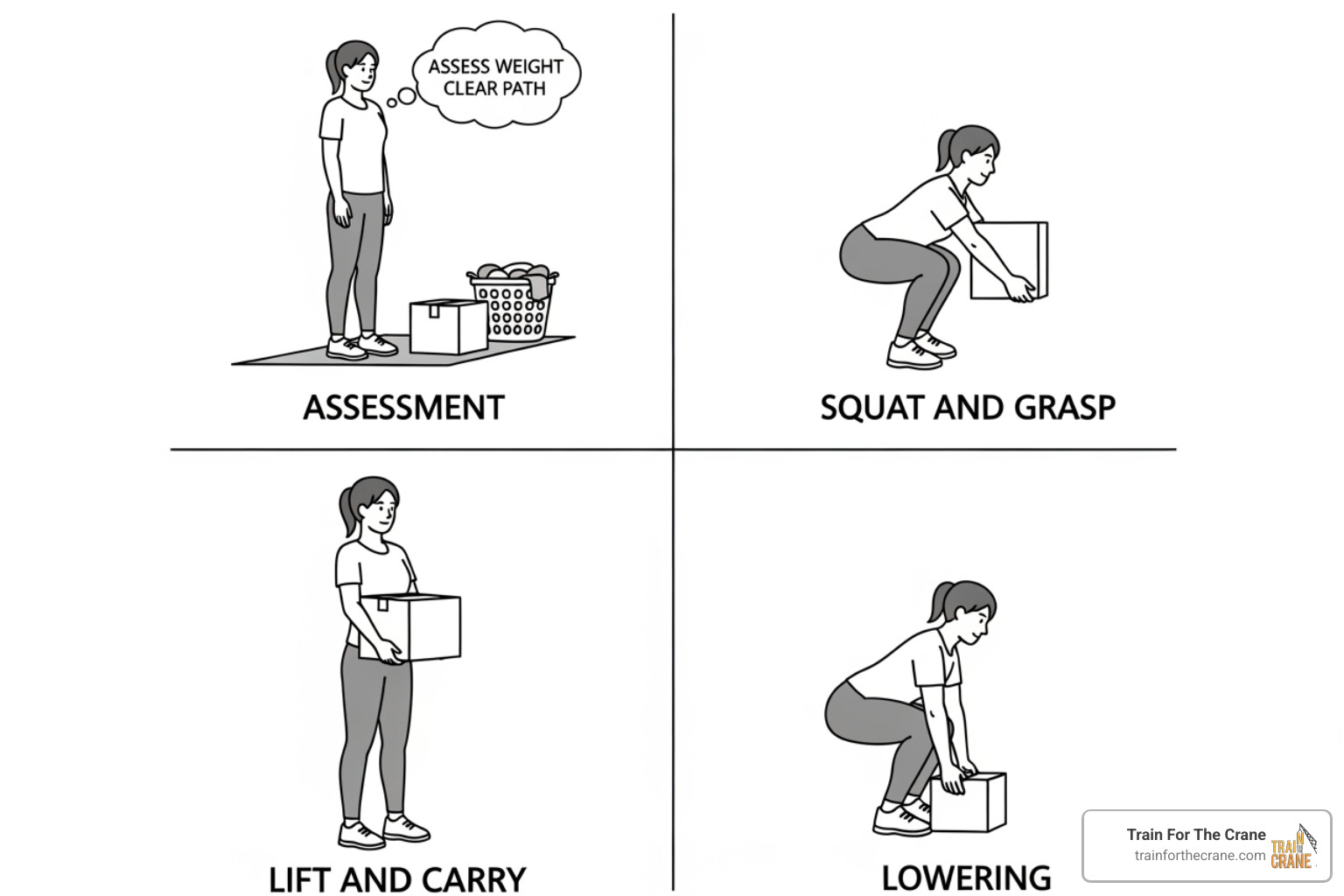
Effective lifting safety training teaches a systematic approach that should become second nature. The 4-stage method breaks every lift into four phases: Plan, Lift, Carry, and Set Down. Following these stages turns lifting into a thoughtful process, building habits that protect you for years.
Stage 1: Preparation Before You Lift
The most important part of a lift happens before you touch the object. Proper preparation prevents most injuries.
- Assess the Load: Is it too heavy, bulky, or unstable? Can it be broken into smaller parts? Don’t overestimate your strength.
- Clear Your Path: Walk the route to remove obstacles, debris, or slip hazards. Ensure you have a clear view while carrying the load.
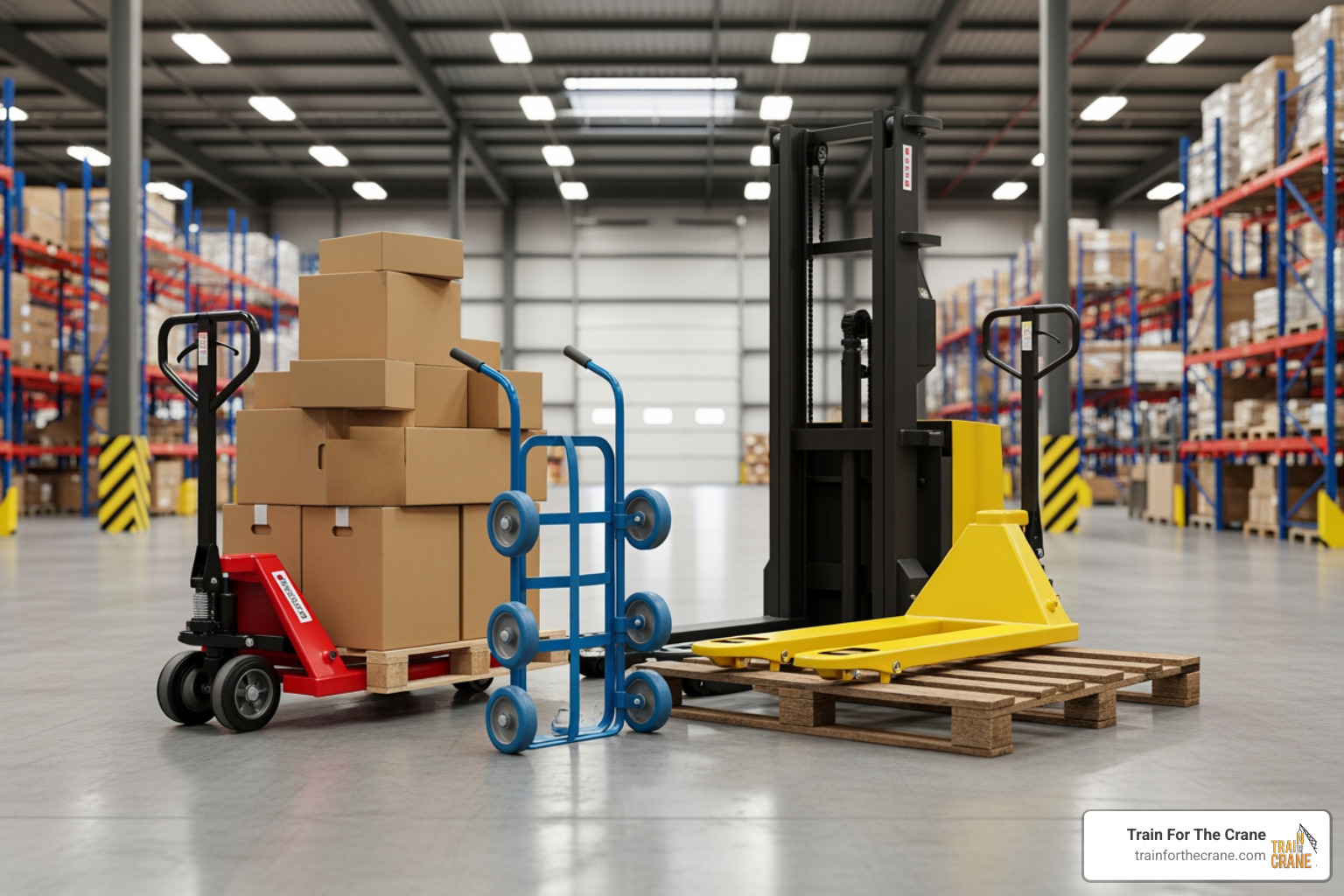
- Get Help When Needed: Decide if you need a coworker (team lifting) or a mechanical aid like a dolly, hand truck, or forklift. Asking for help is a sign of good judgment.
- Prepare Your Body: Perform simple stretches for your back and legs to improve flexibility and blood flow. Mastering these techniques is easier with practice.
- Check Your PPE: Wear gloves for grip and safety shoes with toe protection and non-slip soles. These simple steps can save you from months of pain.
Stage 2 & 3: The Lift and Carry
This is where proper body mechanics are critical. Use your powerful leg muscles, not your back.
- Get Close: Position yourself with the load close to your body, in your “power zone” between your waist and shoulders.
- Plant Your Feet: Take a wide, stable stance with feet shoulder-width apart, one slightly ahead of the other.
- Bend Your Knees, Not Your Waist: Squat down by bending your knees and hips, keeping your back straight and head up. Never round your back.
- Get a Firm Grip: Use both hands to secure the object. Tighten your core muscles to stabilize your spine.
- Lift with Your Legs: Push up smoothly with your legs, breathing out as you lift. Avoid jerky movements.
- Hold it Close: Keep the load at waist or belly button level to maintain balance and reduce back strain.
- Turn with Your Feet: To change direction, pivot your feet. Never twist your torso while holding a load.
Key things to avoid: Bending at the waist with straight legs, twisting your torso, and making sudden movements. Use a step stool to place items on high shelves.
Stage 4: Setting the Load Down Safely
A careless set-down can still cause injury. Finish the lift with the same care you started with.
- Clear the Landing Zone: Ensure the surface is stable and clear of obstacles.
- Reverse the Motion: Squat down by bending your knees and hips, keeping your back straight.
- Lower Smoothly: Use your leg muscles to lower the object with control. Breathe out as you lower.
- Watch Your Fingers: Place the load down securely before releasing your grip, being careful not to pinch your hands. If possible, slide it into its final position.
Essential Components of a Comprehensive Lifting Safety Training Program
Effective lifting safety training is more than a quick video on how to squat. It’s a comprehensive approach that combines smart workplace design, the right equipment, and ongoing education.
The Role of Ergonomics in Injury Prevention
Ergonomics is the science of fitting the job to the worker, not the other way around. It aims to design workspaces and tasks to work with the body, eliminating unnecessary strain.
This means optimizing workspaces by adjusting workbench heights, keeping frequently used items within easy reach, and ensuring storage is at comfortable levels. According to NIOSH, proper ergonomic interventions can significantly reducing the risk of musculoskeletal injuries. Good workstation design, including proper lighting and organized storage, prevents many lifting hazards before they start. For more on this, Indiana University offers practical guidance on Back Safety: Workplace Ergonomics – Protect IU – Indiana University.
The Truth About Back Belts
Many workplaces use back belts, but they are not the magic solution they seem. OSHA’s position is clear: there is no research to suggest that back belts prevent or decrease back injuries related to lifting.
Safety experts are concerned that back belts create a false sense of security, leading workers to lift heavier loads or use poor technique. This can actually increase the risk of injury. Instead of relying on belts, focus on proven methods: comprehensive lifting safety training, ergonomic design, and using mechanical aids.
What Defines Effective Lifting Safety Training?
Old-school training tried to “fix the worker” by teaching a single lifting technique. Modern, effective lifting safety training focuses on risk management and aims to “fix the task and environment” first.
Effective training includes:
- Identifying Risk Factors: Addressing hazards specific to your workplace.
- Using Control Measures: Teaching workers how to use mechanical aids and follow safe work procedures.
- Reporting Hazards: Explaining the process for reporting risks and encouraging early intervention.
This approach aligns with OSHA’s General Duty Clause by actively addressing recognized hazards. It empowers workers to spot problems and use the tools designed to protect them. Training should be provided to all new hires, with refresher training at least annually. Additional training is needed for new tasks, new equipment, or after any incident.
Specialized Training for High-Risk Environments
While basic lifting safety training is a foundation for everyone, some jobs require more advanced skills. Working with heavy machinery, complex lifting operations, or high-value loads raises the stakes and demands specialized training.
Lifting Challenges in Warehouses vs. Offices
Lifting hazards exist in both warehouses and offices, but they look very different.
-
The Warehouse Reality: This dynamic environment involves a wide variety of loads, from small boxes to heavy, awkward equipment. Workers must steer narrow aisles and high storage racks, often with machinery like forklifts operating nearby. Repetitive lifting throughout a shift can lead to cumulative trauma. Forklift operators require specific training on inspections, load stability, and safe maneuvering.
-
The Office Surprise: Office injuries are common because risks are underestimated. Lifting heavy water cooler bottles, boxes of paper, or rearranging furniture without help can cause serious strain. Office workers often lack training in proper lifting techniques. Simple ergonomic improvements and basic training can prevent most of these injuries.
Training must be custom to the specific hazards workers face in their daily tasks.
Advanced Lifting Safety Training: Rigging and Lift Direction
For cranes, hoists, and complex material handling, training becomes critical to prevent catastrophic failures.
Understanding Rigging:
Rigging is the science of connecting a load to lifting equipment using slings, chains, and shackles. Improper rigging is a leading cause of accidents. Specialized riggers must be trained to:
- Inspect equipment for wear and damage.
- Calculate load weights and forces.
- Select the correct rigging gear for the job.
- Understand the rated capacities of all components.
Clear communication, often using standardized hand signals, is vital between the rigger and crane operator. For those seeking expertise, we offer programs from Basic Rigging Training to our Certified Rigger Course and advanced Training Rigger Level I II. You can also review best practices in this comprehensive guide on rigging practices.
The Lift Director Role:
For complex or critical lifts, a Lift Director is required to oversee the entire operation. This individual must be a “competent person” as defined by OSHA, with the knowledge and experience to identify hazards and ensure compliance. The Lift Director’s responsibilities include:
- Developing detailed lift plans.
- Identifying and controlling potential hazards.
- Verifying equipment inspections.
- Coordinating the crane operator, riggers, and signal persons.
- Ensuring the operation complies with OSHA regulations.
We provide thorough Lift Director Training and Training Lift Director programs to equip individuals for this crucial role. If you need on-site expertise, we can also help you Hire a Lift Director. The importance of effective communication during lifting cannot be overstated.
Frequently Asked Questions about Lifting Safety
Here are answers to the most common questions we hear about lifting safety training.
What are the most common mistakes to avoid when lifting?
Most injuries happen when we get rushed, tired, or overconfident. Avoid these common mistakes:
- Poor Posture: Bending at the waist with straight legs puts enormous pressure on your spine.
- Overestimating Strength: Trying to lift a load that is clearly too heavy is a fast track to injury. Your ego heals faster than your back.
- Twisting the Spine: This is one of the most dangerous movements. Always pivot with your feet and turn your whole body as a unit.
- Jerky Movements: Uncontrolled motions can tear muscles and strain ligaments. Lift and lower smoothly and deliberately.
- Not Planning the Lift: Failing to check the weight, clear your path, or know where the load is going sets you up for trouble.
How often should employees receive safe lifting training?
Lifting safety training is not a one-time event. Good habits need reinforcement.
- New Hires: All new employees should receive comprehensive training before handling their first load.
- Annual Refreshers: Essential for all employees to reinforce good habits and cover any new procedures or equipment.
- New Tasks or Equipment: Specific training is necessary when job duties change.
- After an Incident: Immediate retraining is crucial after an injury or a close call to understand what went wrong and prevent it from happening again.
Are there specific weight limits for manual lifting?
There is no universal weight limit like “don’t lift more than 50 pounds.” OSHA doesn’t specify one because what’s safe depends on the individual, the object’s shape, lifting frequency, and other factors.
The NIOSH Lifting Equation is a tool that calculates a Recommended Weight Limit for specific tasks by considering these variables, but it’s too complex for on-the-spot use.
What’s more important is learning to assess each load. If an object feels too heavy, is awkwardly shaped, or requires repetitive lifting, that’s your signal to get help or use mechanical equipment. If you have to wonder whether you can lift something alone, the answer is no. Work smart, not injured.
Conclusion: Make Safety a Habit, Not an Afterthought
We’ve covered everything from injury statistics to the 4-stage method for a safe lift. This knowledge is only valuable when put into practice. Lifting safety training is an ongoing commitment to yourself and your colleagues.
Make safe lifting second nature. When you automatically bend at the knees, check your path, and ask for help, you know safety has become a habit. The millions of back injuries that occur each year are preventable. You now have the knowledge to protect yourself.
Creating a culture of safety requires everyone to participate. Speak up about risks, never rush a lift, and always choose the safest method, like using a dolly or forklift.
For specialized roles involving cranes, rigging, and complex lifts, the stakes are even higher. Advanced, certified training is not optional—it’s essential for preventing catastrophic accidents. For these roles, Train For The Crane offers comprehensive programs to ensure your team operates at the highest standard. With over 30 years of combined experience, our instructors use proven methods to achieve high pass rates. Learn more about our approach at Crane Lifting Safety.
Your health is irreplaceable. Take the time to lift right, every time. Make safety your habit, not an afterthought.