

Mobile Crane Operator Course in Indiana: Is the Website Enough, or Should You Talk to an Instructor First?
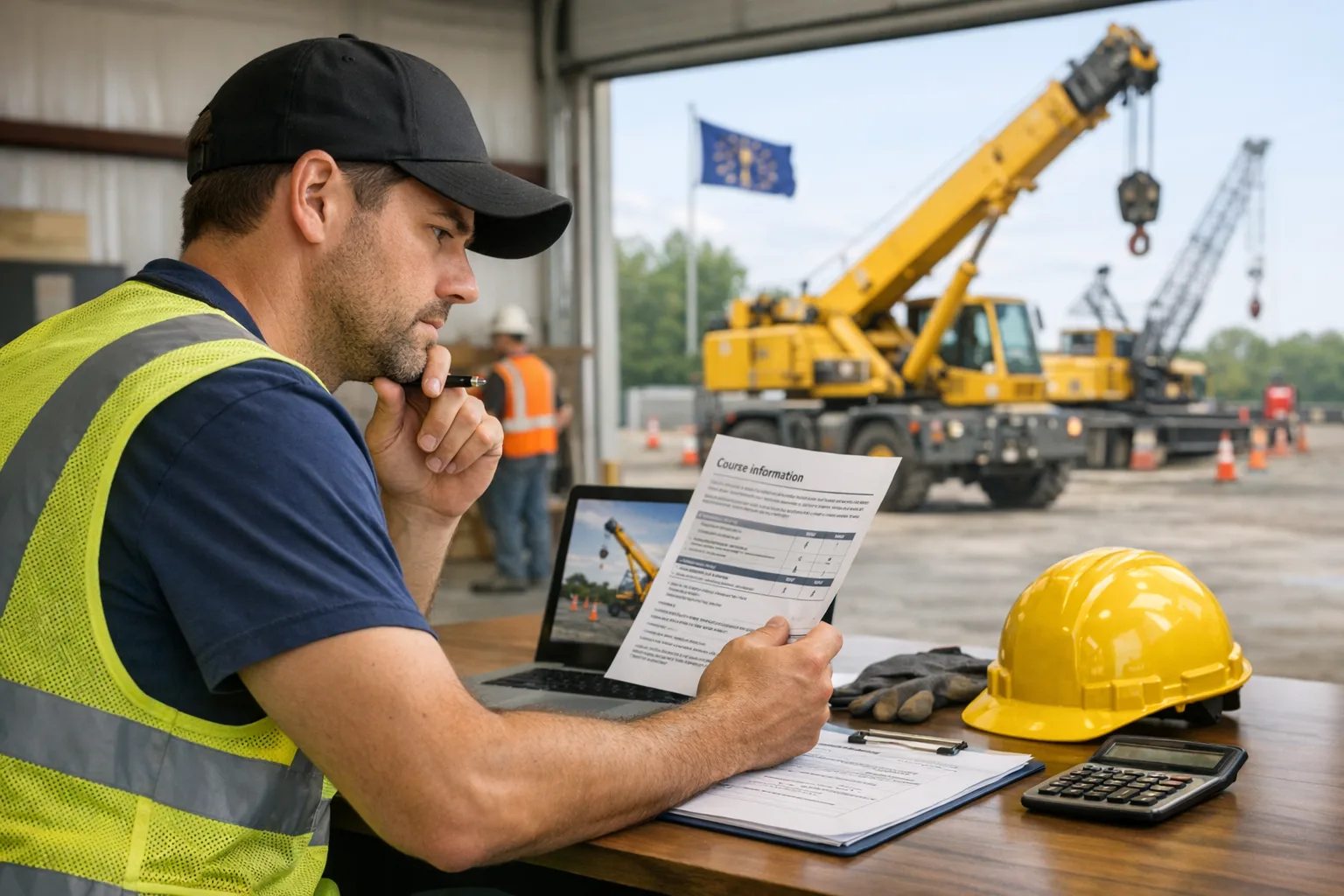
If you are comparing a mobile crane operator course in Indiana, the website can help you narrow your options. It can show you the type of training offered, the general certification path, and whether the provider focuses on crane operators, riggers, or signal persons. But for many students, especially first-time applicants, a homepage alone does not answer the questions that actually decide whether the course fits.
That matters because enrolling in the wrong format can waste time, delay testing, or leave you underprepared for written and practical exams. For workers in Indianapolis and across Indiana who are serious about NCCCO crane operator certification training Indiana, speaking with a real instructor can often clarify the path much faster than trying to piece everything together from broad website copy.
This FAQ-style guide explains what you can learn from a crane training website, what usually requires a direct conversation, and when calling an instructor is the smarter next step before you pay for training.
Why This Question Matters Before You Enroll
Choosing crane training is not like signing up for a basic classroom seminar. A mobile crane course has to match your actual goal. Some students need full operator preparation. Some already work around cranes and mainly need NCCCO practical exam preparation. Others think they need operator certification when rigging or signal person training may be the better first step.
That is why the question matters so much: Can I choose a course from the website alone? Sometimes yes, but often only partly.
For example, an Indiana construction worker might be looking for a path into crane operation after time spent as a laborer, rigger, or oiler. Another person may be changing careers and has no crane background at all. A signal person may be trying to decide whether to move toward operator credentials. All three people are interested in crane training, but they do not need the exact same course structure, coaching level, or testing plan.
A general overview page usually cannot tell you:
- Whether you are a true beginner or better suited for a refresher and exam-prep track
- Whether your work background lines up more naturally with operator training, rigging certification, or signal person certification
- How much practical coaching you may need before a practical exam
- Whether your schedule, travel range, and test timing make one training setup more realistic than another
- What costs are tied to training versus what costs relate to testing or certification steps
If you are still figuring out Become a crane operator options in Indiana, it helps to remember that training and certification are related, but they are not the same thing. Training prepares you. Certification is the credentialing process, which may include written and practical examinations depending on the path. That distinction alone is one reason many students benefit from speaking with an instructor before enrolling.
What a Homepage Can Usually Tell You About a Crane Course
A training website is still useful. In fact, it should be your starting point. A good homepage or service page can usually tell you several important things about a mobile crane certification Indiana training option.
1. Whether the provider actually focuses on crane training
You should be able to see whether the company specializes in crane operator and rigging certification preparation or whether crane training is only one small part of a wider trade school offering. For many students, especially those comparing options in Indianapolis and nearby Indiana markets, specialization matters because crane certification has its own terminology, testing structure, and safety expectations.
2. Whether operator, rigging, and signal person paths are offered
A homepage can often show whether the provider covers:
- NCCCO crane operator certification training
- Crane rigging certification training
- Crane signal person certification training
- Tower crane operator training
- Practical exam preparation
This helps you see if the school can support more than one pathway. That matters when your job role is still evolving or when you want guidance on the right credential sequence.
3. General course purpose
A site should give you a basic idea of whether the training is designed for:
- People entering the trade
- Workers preparing for certification exams
- Operators needing skill review or refresher preparation
- Riggers or signal persons expanding into operator responsibilities
If the wording is too broad, that is often your first sign that a direct conversation is needed.
4. Geography and relevance to Indiana students
If you are looking in this market, local relevance matters. Training logistics, travel time, and practical scheduling are not minor details. A page like Crane training in Indiana or Crane training in Indianapolis can help you confirm whether the training is actually aimed at students in your region.
5. Basic educational content
The website can also help you learn the language of the process. If you are still early in your research, pages such as How to get a crane license can be helpful for understanding the overall path without committing yet.
So yes, a website can help you compare options. But it usually gives you a framework, not a final answer.
What Only a Real Instructor Can Clarify
This is where many Indiana students get stuck. They have read enough to know they want crane training, but not enough to know which course structure fits their background.
Beginner, refresher, or exam-prep only?
This is one of the biggest questions to ask before booking from a general overview page. A real instructor can help you sort your needs into one of three broad categories:
- Beginner training: for students who need a full introduction to crane operation concepts, safety expectations, exam structure, and hands-on preparation
- Refresher training: for workers with related experience who need review, updated exam prep, or structured skill rebuilding
- Exam-prep support: for those who mainly need focused help on written and practical testing requirements
A homepage may use one course label for all three situations. An instructor can usually identify the better fit in a short conversation.
Whether you need operator training, rigging, or signal person certification first
Not everyone asking about a mobile crane operator course is ready for the operator path immediately. Some workers are currently doing rigging tasks or signaling and want to move forward safely and logically. A trainer can help you understand whether your present role and experience level point first toward:

- Operator certification preparation
- Rigging certification training
- Signal person certification training
- A combination path over time
This is especially helpful for workers who are comparing paths rather than only comparing schools.
Practical coaching needs
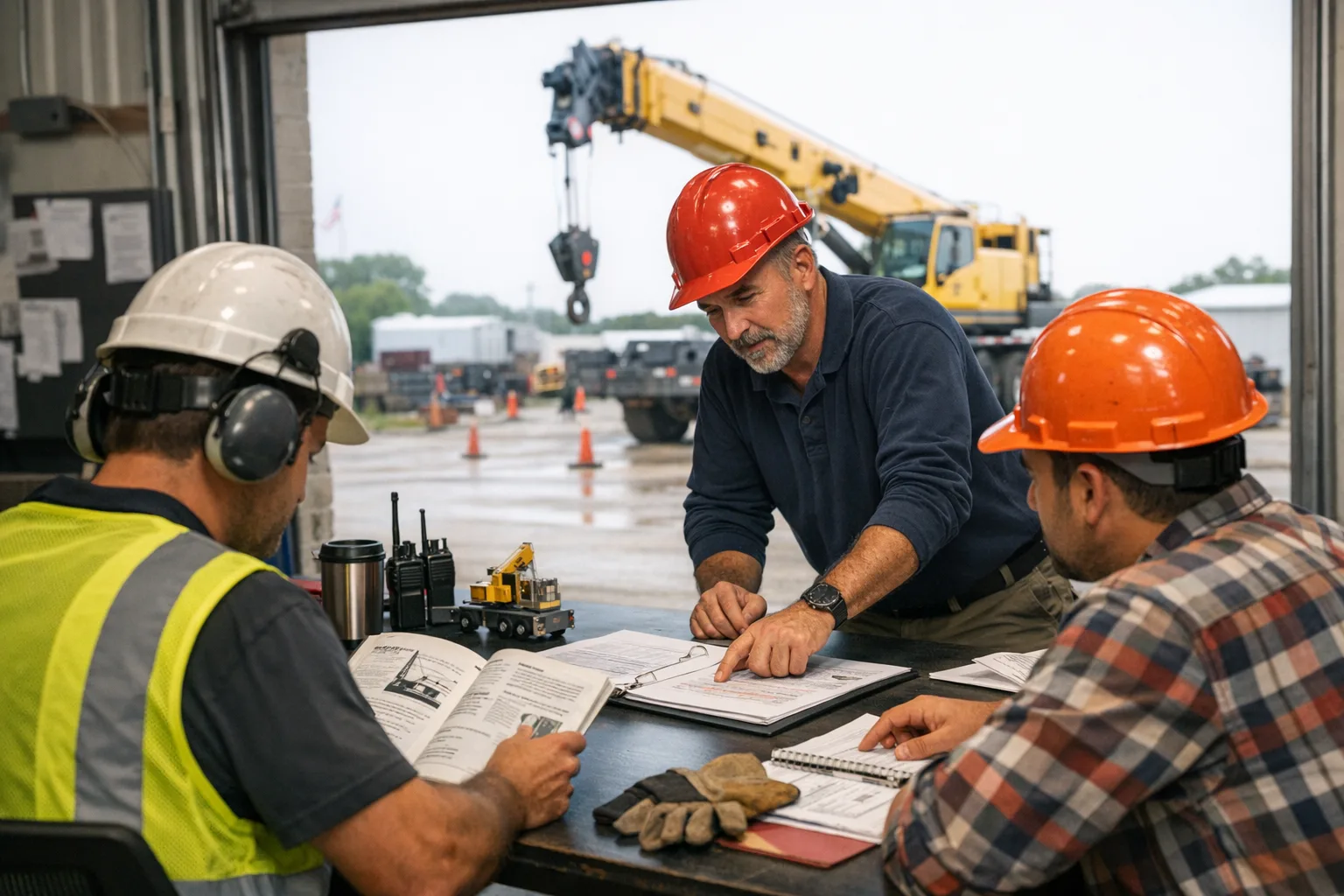
One of the clearest signs you should talk to an instructor is when you are unsure about the practical side of training. Reading a class description will not tell you whether you personally need more hands-on coaching.
You may need practical coaching rather than just a class date if:
- You understand the written material better than the equipment side
- You have construction experience but limited crane control experience
- You are nervous about demonstrating tasks under test conditions
- You have been away from crane-related work for a while
- You are not sure what equipment type your exam preparation should center on
Equipment type and exam relevance
This is another area where a real conversation helps. A website may explain mobile crane training in broad terms, but it may not answer how the instruction lines up with your intended certification route or job setting. An instructor can explain what to clarify about equipment type, testing support, and the training path that makes sense for your goals.
Scheduling and readiness
Students often ask about scheduling as if it is only a calendar issue. In reality, timing affects readiness. If you are trying to coordinate work, travel, and exam preparation in Indiana, the right question is not just, “When is the next class?” It is also, “Am I ready for that class date, or should I enter a different format so I do not rush the process?”
How Indiana Students Should Compare Training Options
If you are comparing providers in Indianapolis or elsewhere in Indiana, use a practical checklist instead of relying on one headline or one sales promise.
Compare the course by decision factors, not just by title
Two programs may both describe themselves as mobile crane operator training, but they may serve different students. Ask yourself:
- Is this designed for beginners, experienced workers, or mixed groups?
- Is there direct support for written and practical exam preparation?
- Can the provider explain the difference between training and certification clearly?
- Will I understand whether I am pursuing operator, rigger, or signal person credentials?
- Is the information relevant to Indiana students rather than generic nationwide copy?
Look for clear cost guidance, not invented numbers
People searching for crane operator course cost Indiana usually want a simple answer, but cost is rarely one single number. You should expect separate discussion around:
- Training charges
- Written testing considerations
- Practical testing considerations
- Scheduling factors that may affect overall planning
- Whether you may need more coaching than you first assumed
A serious provider should be able to explain what training includes and what certification-related expenses may be separate without making unrealistic promises or one-size-fits-all quotes on a broad webpage.
Use Indiana-specific decision points
Indiana students often compare options based on:
- Distance from Indianapolis or nearby work zones
- Ability to fit training around current construction employment
- Whether they are entering the trade from another field
- Whether they need the shortest reasonable path to readiness without skipping essentials
If you are still working through how to become a crane operator in Indiana, compare schools based on how clearly they help you understand the path, not only how brief their website sounds.
Common Mistakes People Make When Choosing a Mobile Crane Operator Course
Many enrollment mistakes come from assuming all crane courses solve the same problem. They do not.
Mistake 1: Assuming a homepage answers eligibility and fit
Websites are built to inform, but they cannot fully assess your work background, comfort level, or exam readiness. If you are unsure whether the course fits your experience level, do not treat a general course page as a personal recommendation.
Mistake 2: Confusing training with certification
This is one of the biggest points of confusion. Training helps prepare you. Certification involves meeting the requirements of the credentialing process. If you do not understand that difference, you may misunderstand cost, timeline, and what the course can realistically do for you.
Mistake 3: Booking based only on the next available date
The next date is not always the best date. If you are not ready for the practical portion, or if your work history suggests you should start with a different track, the fastest booking decision can become the wrong enrollment decision.
Mistake 4: Ignoring the need for practical coaching
Some students are comfortable in classroom-style learning but struggle once practical demonstration is involved. If that sounds like you, website reading will not solve the issue. Direct coaching guidance matters.
Mistake 5: Not asking what support is included
Before enrolling from a general overview page, ask:
- What exactly is covered in the training?
- How is written exam prep handled?
- How is practical exam prep handled?
- What should I already know before attending?
- Who is this course not a good fit for?
That last question is especially valuable. A practical, safety-focused training provider should be able to tell you when another path makes more sense.
When It Makes Sense to Call Before You Commit
Sometimes reading is enough to move forward. Sometimes it is not. You should strongly consider calling before enrolling if any of the following applies to you:
- You are new to cranes and do not know whether the course is truly beginner-friendly
- You work in rigging or signaling and want to know whether operator training is the right next step
- You need to understand total cost categories before committing
- You are unsure how written and practical testing fit into the process
- You need help comparing schedule options with your current job
- You want to know whether you need more hands-on coaching than a standard class overview suggests
- You are trying to avoid enrolling in the wrong format
In other words, if your main question is really about fit, readiness, or sequence, you should talk to a crane instructor before enrolling.
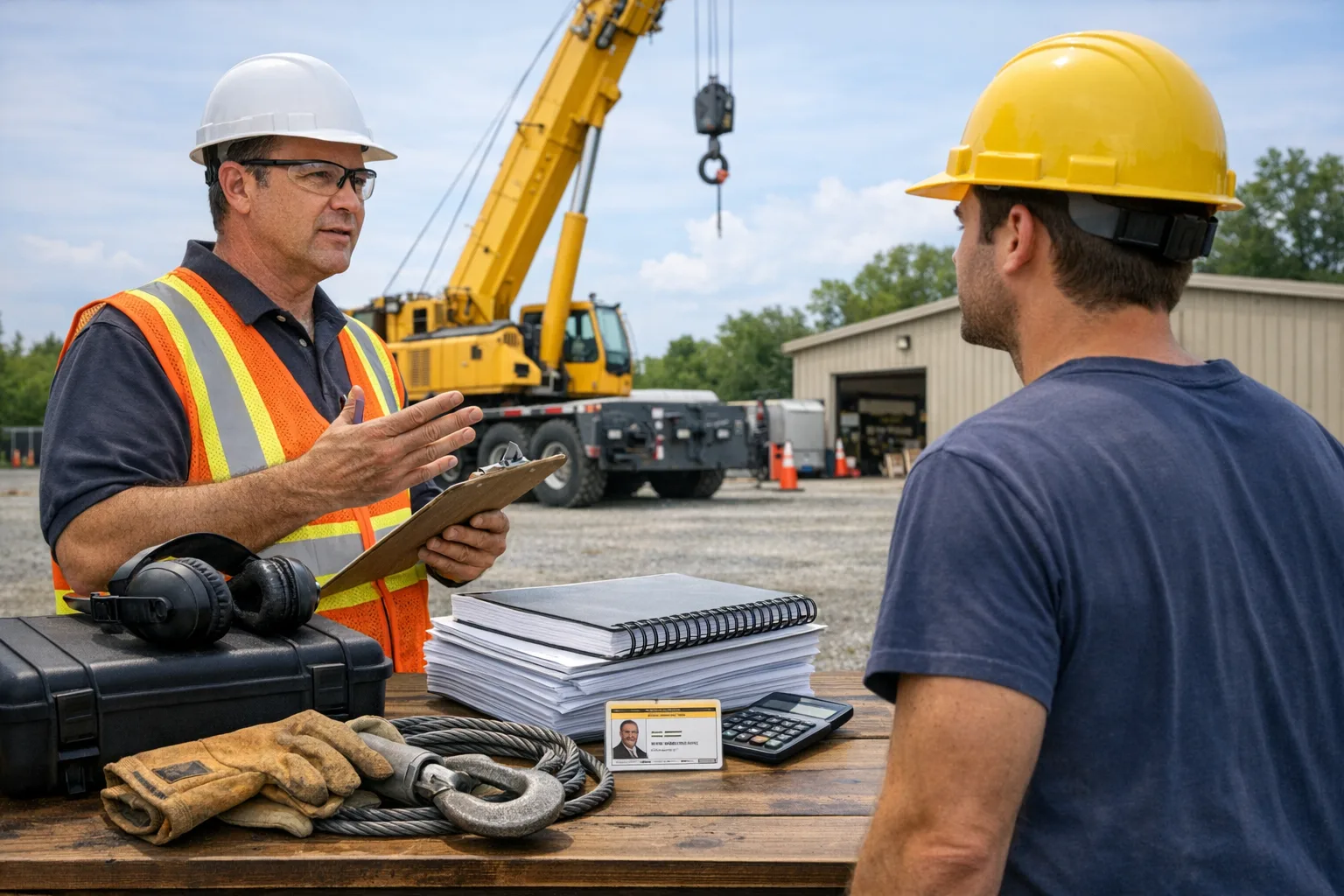
This is not about adding pressure to the process. It is about preventing the common problem of choosing a training option based on broad wording instead of your actual situation.
FAQ: Choosing a Mobile Crane Operator Course in Indiana
Can I choose a mobile crane operator course in Indiana just by reading the website?
You can usually narrow your list by reading the website, but many students cannot make the final decision from the site alone. A homepage can show services, general focus, and location relevance. It usually cannot tell you whether you personally need beginner training, a refresher, or focused exam-prep support.
What questions should I ask a real instructor before paying for NCCCO crane training?
Ask practical questions such as:
- Is this course a fit for my current experience level?
- Do I need full operator training or mainly exam preparation?
- Would rigging or signal person certification make more sense first?
- How is practical exam preparation handled?
- What costs relate to training, and what costs relate to testing or certification steps?
- What should I expect from scheduling and readiness?
How do I know whether I need operator training, rigging training, or signal person certification instead?
Look at your current job duties and your next target role. If you are aiming to operate cranes, operator training may be the path. If your present role centers more on load handling or communication around crane activity, rigging or signal person certification may be the more immediate fit. If you are not sure, that is exactly when speaking with an instructor helps most.
Will talking to an instructor help me understand total cost, testing, and scheduling?
Yes. It can help you understand the difference between training costs and certification-related steps, along with what kind of timeline and preparation level make sense for your situation. That is much more useful than relying on assumptions from a general course summary.
What is the smartest next step if I am serious about crane certification in Indiana?
Read enough to understand the path, then ask direct questions before enrolling. Use the website to narrow your options, but use a conversation with an instructor to confirm fit, preparation level, and realistic next steps.
Next Step If You Want a Direct Answer on Course Fit
If you are still comparing a mobile crane operator course in Indiana and wondering whether the homepage tells you enough, the practical answer is simple: use the website for research, then speak with a real instructor if you still have questions about eligibility, training path, cost categories, scheduling, or exam readiness.
That is especially true if you are in Indianapolis or elsewhere in Indiana and want to avoid signing up for a course that does not match your background. A short conversation can help you sort out whether you need beginner instruction, refresher help, or NCCCO practical exam preparation, and whether operator training is the right move compared with rigging or signal person certification.
If you want a direct answer tailored to your situation, call Train For The Crane at (317) 385-7190 and ask your questions before you commit. If you are unsure about requirements, course fit, timing, or what the full training path looks like in Indiana, speaking with an instructor can give you a clearer next step than a general overview page ever will.