

Mobile vs. Tower Crane Training: Choosing the Right Path for Indiana Industrial Expansion Work
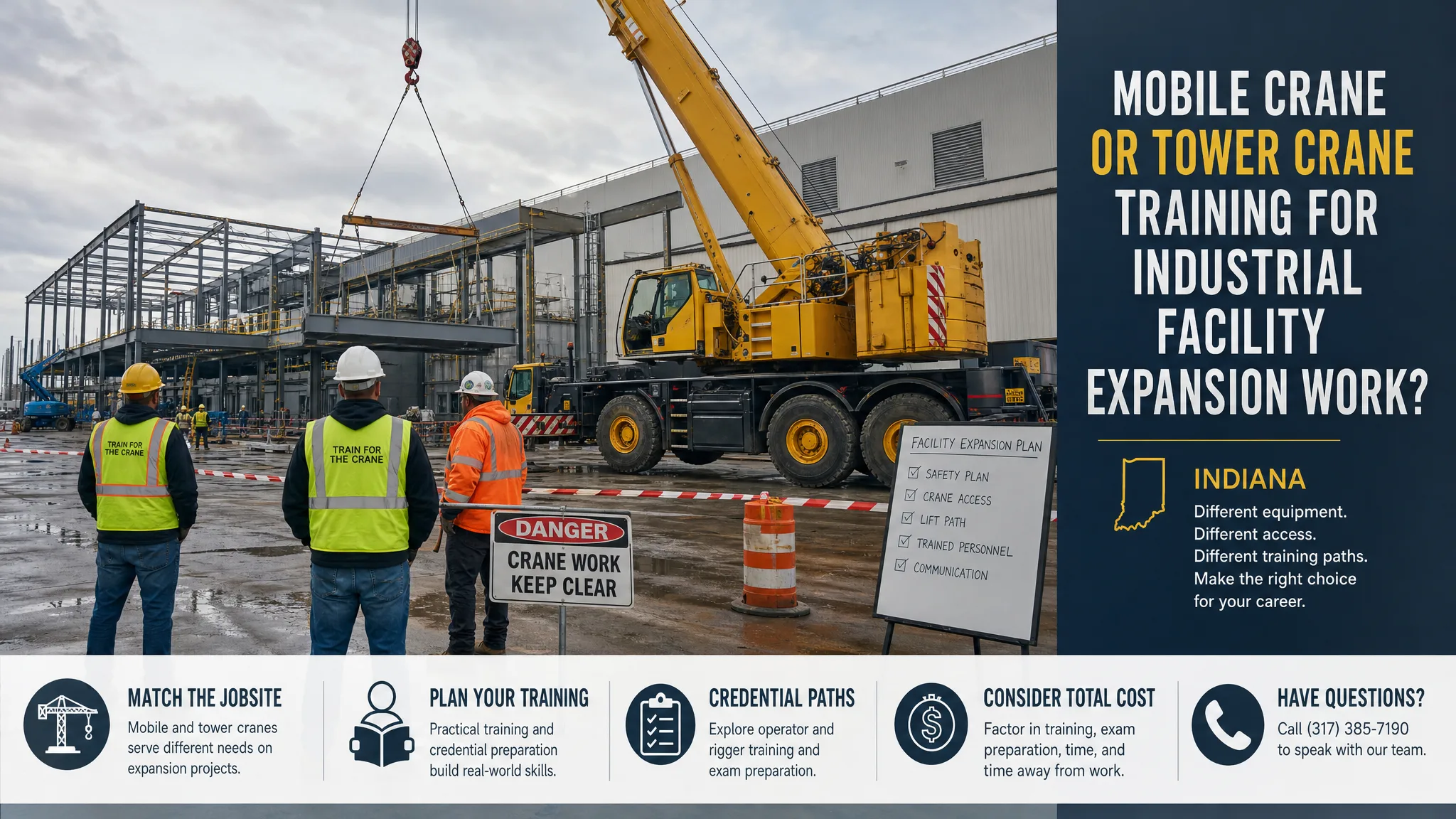
Indiana industrial expansion work can create demand for more than one type of crane operation. A project may need mobile cranes to place structural steel, unload major components, set process equipment, or handle staged deliveries. A tower crane may be used when a long-duration build has a fixed work area, repeated lifts, and enough vertical construction to justify its installation.
For aspiring operators, experienced riggers, signal persons, and construction workers adding credentials, the important question is not which crane is “better.” It is which training path fits the equipment categories and projects you realistically want to pursue. Mobile crane vs tower crane training is a decision about jobsite conditions, practical equipment access, credential preparation, employer expectations, scheduling, and the full expected cost of becoming prepared for the work.
Train For The Crane helps Indianapolis-area and Indiana workers think through those factors before committing to a course. The goal is to build a credible, safety-focused plan—not to suggest that a class, exam result, or credential automatically results in a job offer.
Why Industrial Facility Expansion Work Can Involve Both Crane Types
Industrial facility expansion projects are not all built the same way. The crane selection depends on the nature of the addition, the footprint of the site, the access routes, nearby structures, the lift plan, the duration of the work, and the materials or equipment being handled. A project can also use different crane types during different phases.
For example, a mobile crane may be brought in during early site work or structural installation to make specific lifts and then leave when that phase is complete. Later, another mobile crane configuration may be needed to handle a different lift radius, load, or setup condition. A tower crane may become part of the plan only when a project has a sustained vertical-building component and a repeatable lifting need over a defined area.
That distinction matters for workers in Indianapolis and throughout Indiana. A job posting that simply says “crane operator needed” does not tell you enough. Before choosing a course, find out:
- What type of crane will be used on the specific project?
- Is the role tied to a short-term lifting phase or ongoing production work?
- Will the employer need an operator for a mobile crane, a tower crane, or more than one equipment category?
- What credentials, practical evaluations, site orientation, and prior experience does the employer expect?
- Will the work involve travel between Indiana jobsites, or will it be concentrated at one project location?
- Are rigger or signal person responsibilities part of the role, or separate positions?
It is common for a large construction effort to rely on a mix of equipment. That does not mean one operator automatically performs every crane-related role, nor does it mean a single credential covers every employer requirement. The equipment category, scope of work, lift planning procedures, site rules, and employer evaluation process can all differ.
For an Indiana worker planning a career move, it is usually more practical to begin with the path connected to realistic local job targets. If the employers, contractors, or projects you are pursuing regularly use mobile cranes, mobile crane operator training may be the logical first step. If your target work is specifically connected to tower crane operation on projects where that equipment is expected, tower crane training may deserve closer attention.
Project Duration Changes the Training Conversation
Project duration is one of the clearest practical differences. Mobile cranes are often selected because they can be mobilized for planned lifting activity and repositioned or removed as work changes. That can make mobile crane work relevant across a variety of construction and industrial projects where lift needs occur in stages.
Tower cranes are typically associated with a more sustained, fixed lifting operation. Their use involves a different equipment environment and may require a longer planning horizon for the project itself. For a worker, this can affect where opportunities are located, how long a particular assignment may last, and which skills an employer emphasizes during hiring and site evaluation.
Do not choose solely based on the most visible equipment at a single jobsite. Ask whether the type of crane is regularly used by the contractors and employers you hope to work with over time.
Mobile Crane vs. Tower Crane: The Practical Differences That Matter in Training
Both paths require serious attention to safety, load control, communication, operating limitations, inspection awareness, and jobsite coordination. However, the operating environment and equipment familiarity needed for mobile and tower crane work are not interchangeable.
Mobile Crane Training: Setup, Mobility, and Changing Site Conditions
Mobile crane operator training is centered on equipment that arrives at or moves through a jobsite to perform lifts. Depending on the equipment category and training plan, practical preparation may involve understanding how the crane is configured, how site conditions affect safe setup, how operating conditions change with the lift, and how the operator works with the lift team.
Mobile crane work often places significant attention on topics such as:
- Pre-operation inspection and equipment familiarization
- Ground and setup considerations
- Outrigger or stabilizer-related planning where applicable
- Boom, radius, capacity, and load-chart awareness
- Travel and positioning considerations appropriate to the equipment and site
- Communication with designated signal persons
- Lift planning, changing conditions, and stop-work judgment
- Practical operating control and load-handling discipline
For workers interested in industrial facility expansion crane work, mobile equipment may be relevant when lifts are spread across a large site, when equipment must be delivered and placed at different stages, or when the crane is needed for targeted erection or installation tasks. The exact crane category remains important. “Mobile crane” is not a complete description of every machine or every employer’s qualification expectation.
Tower Crane Training: Fixed Position and Repetitive Vertical Lifting
Tower crane training focuses on a distinctly different operating setting. The crane is installed in a fixed location and serves a defined work area. The operator’s work is closely connected to site logistics, vertical construction sequencing, communication, visibility limitations, load paths, and the coordination required on an active project.
A tower crane operator needs practical familiarity with the way tower crane work is organized, but the exact equipment, cab arrangement, controls, site layout, and project procedures can vary. Training should help a candidate understand the responsibilities and operating principles associated with that equipment category while preparing them to meet the standards and evaluations applicable to the work they seek.
Tower crane work can be appealing to someone who wants to pursue projects with concentrated, ongoing lift activity. Still, it should not be treated as a shortcut or a universal next credential. Availability of tower crane projects varies by market, and a course decision should be tied to real career targets rather than assumptions about demand.
Site Layout Influences the Better-Fit Training Path
Site layout affects crane choice. A spread-out construction area with intermittent lifts may require a different approach than a vertically developing structure with frequent material movement across a concentrated footprint. Access restrictions, nearby structures, work zones, delivery timing, utility considerations, and the distance between lift points all influence the equipment plan.
From a training perspective, this means you should ask not only, “What crane do I want to operate?” but also, “What kind of jobsite do I expect to work on?” Someone seeking work that changes from site to site may find a mobile crane path more aligned with those goals. Someone deliberately targeting projects with fixed, vertical lifting operations may have reason to explore tower crane preparation.
When Mobile Crane Training Is Usually the Better Fit
Mobile crane operator training Indiana workers pursue is often a strong starting point when their target work involves a range of construction, industrial installation, structural, or material-handling projects where cranes are deployed as needed. It can also be a practical direction for workers who want to understand crane operation in a setting where site setup and conditions are central to the work.
Mobile crane training may be the better fit when you:
- Are pursuing Indiana jobs that list mobile crane categories or mobile equipment experience.
- Expect to work across multiple projects rather than one fixed high-rise or vertical construction site.
- Want to build from existing construction, rigging, signaling, equipment, or lift-team experience.
- Are interested in industrial expansion phases that require equipment unloading, placement, erection, or planned heavy lifts.
- Need a credential path that aligns with the actual crane categories local employers are asking about.
- Want practical exposure to operating considerations that involve setup, position, and changing jobsite conditions.
For a current rigger or signal person, the mobile crane path can be a sensible next step when it is connected to a defined operator goal. Rigger and signal person knowledge supports safe lift operations, but it is not the same as operator training. A person moving toward operation should expect to develop operator-specific knowledge and practical control skills rather than assuming that prior lift-team experience replaces that preparation.
Before enrolling, compare the entire plan rather than a tuition figure alone. Review this guide to mobile crane operator training cost and planning in Indianapolis for a closer look at the questions that can affect your budget and preparation timeline.
Mobile Crane Training Does Not Mean “Any Crane” Training
A frequent mistake is assuming that passing a course or preparing for one type of equipment automatically makes a worker ready for all crane assignments. Employers still need to evaluate whether an operator is qualified for the equipment, work, and site conditions involved. Equipment categories, manufacturer controls, capacity ranges, attachments, work practices, and company policies can vary.
Federal construction crane rules include operator qualification and certification provisions, but a certification credential and an employer’s responsibility to assess a worker for a specific assignment are separate matters. The employer must consider the equipment and work being performed. Candidates should use training and credential preparation as part of a larger readiness plan that includes honest discussions about experience and the actual job requirements.
When Tower Crane Training May Make Sense for Your Career Goal
Tower crane training Indiana workers consider may make sense when there is a direct connection between your career goal and projects that use tower cranes. This may include workers targeting particular types of commercial, institutional, or major vertical construction work where a tower crane is part of the construction plan for an extended period.
Tower crane preparation is worth investigating when you can answer “yes” to several practical questions:
- Have you identified employers or contractors that use tower cranes on the kind of projects you want to pursue?
- Does a current or expected project specifically identify tower crane operation as a need?
- Are you prepared for a training and scheduling plan shaped by access to category-specific equipment?
- Do you understand that project-specific hiring, site policies, evaluations, and experience requirements may still apply?
- Have you confirmed whether a tower crane credential is required, preferred, or simply one part of the employer’s hiring criteria?
The tower crane operator credential path should be planned with the same care as any other crane operator route. Candidates should review current certification program materials, including applicable examination categories and requirements, directly with the credentialing organization and their training provider. Program details can change, so it is better to verify current handbook information than rely on old jobsite advice or online comments.
Moving From Mobile Crane Work to Tower Crane Work
Can a mobile crane operator move into tower crane work later? Potentially, yes—but the move should be treated as a separate training and credential-planning decision, not an automatic transfer. A worker may bring valuable foundations from mobile crane operation, including load awareness, lift-team communication, safe operating habits, and an understanding of jobsite responsibilities. Yet tower crane work has category-specific equipment, operating conditions, and employer expectations.
If tower crane work becomes a realistic target after you begin in mobile equipment, identify the credential category and training preparation needed for that new goal. Then ask prospective employers what they expect beyond certification preparation: previous experience, site-specific orientation, documented evaluations, union or contractor requirements, availability for the project schedule, or other qualifications.
Likewise, someone who begins with a tower crane career goal should not assume they can take a mobile crane assignment without the appropriate preparation and evaluation. The right path is based on the task and equipment, not on a broad job title alone.
Credentials, Practical Equipment Time, and Site-Specific Employer Requirements
Training, certification preparation, certification, employer evaluation, and hiring are related but different steps. Keeping those distinctions clear helps workers make better decisions and helps employers plan crews more responsibly.
Training Builds Knowledge and Practical Readiness
A quality training plan should address the equipment category you are pursuing and help you build a practical understanding of safety responsibilities, operating fundamentals, load handling, communication, inspections, and jobsite awareness. Classroom instruction is valuable, especially for concepts that must be understood before practical work begins. It should not be the only factor you compare.
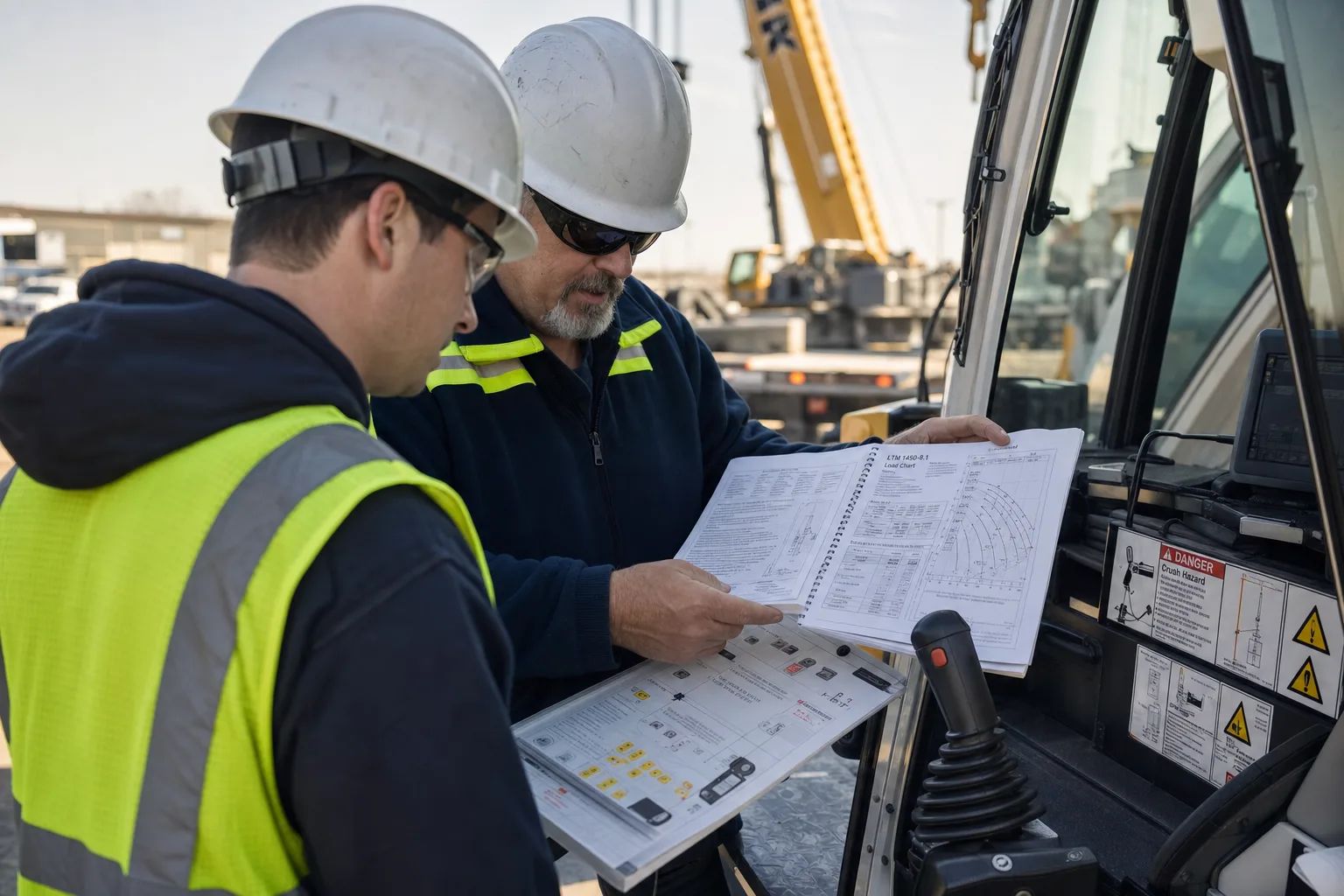
Practical training matters because candidates need an opportunity to connect principles with equipment operation. The amount, format, and conditions of hands-on time can differ between providers and crane categories. Ask direct questions about what is included rather than assuming “practical training” means the same thing everywhere.
For a detailed comparison checklist, read these questions to ask about practical crane training time and equipment access. It can help you identify whether a course gives you meaningful information about equipment access, instructor feedback, practice structure, and what you should prepare for before attending.
Certification Preparation Is Not the Same as Issuing a Credential
NCCCO crane certification preparation can help candidates organize their study and practical exam preparation around the current requirements for the credential they seek. However, a training school preparing a candidate for an exam is not the same entity as the certification organization, and preparation does not guarantee an examination result.
Before committing to a path, verify current candidate requirements, application steps, written and practical examination details, deadlines, and any recertification expectations through the relevant certification program. Keep copies of the current candidate handbook or official program information that applies to your equipment category.
Employer Evaluation and Hiring Decisions Remain Separate
An employer may use certification as one important part of its qualification process, but it may also review practical experience, equipment familiarity, previous work history, physical or site-access requirements, safety record, communication ability, and the needs of a particular project. The employer’s decision to hire or assign an operator is separate from a school’s training role.
This is especially important for industrial facility expansion crews. A contractor may need a skilled operator for a defined equipment category, but it may also require workers who can fit a particular project schedule and follow that site’s lift planning and communication procedures. Do not represent yourself as qualified for a machine or assignment you have not been trained and evaluated to handle.
Questions to Ask About Crane Training Equipment Access
Before selecting mobile or tower crane training, ask the provider:
- Which crane category or categories does this course prepare me to pursue?
- What practical equipment is available during the training?
- How is practical time organized among students?
- What operating tasks and control skills are practiced?
- Does the training include preparation for both written and practical examination components where applicable?
- Are examination fees included, separate, or dependent on the candidate’s plan?
- What happens if weather, equipment availability, or scheduling affects practical instruction?
- What should I bring, study, or complete before arriving?
- Does the course include rigger or signal person material, or would those be separate training options?
Workers who are still comparing roles can review the broader range of crane courses in Indiana for operators, riggers, and signal persons. This is useful if you are deciding whether operator training is the immediate priority or whether a rigger or signal person credential better fits your current responsibilities.
Comparing Training Time, Scheduling, and Total Expected Costs
Course length and cost should be compared carefully, but neither should be reduced to one number. Mobile and tower crane programs can differ because of the equipment category, the practical component, the certification preparation involved, exam scheduling, travel needs, and whether candidates are adding related credentials.
Why Tower Crane Training Can Change the Cost and Schedule
Tower crane training can change the total expected cost and schedule because category-specific practical equipment access may be different from mobile equipment access. The timing of classes, the availability of suitable equipment, the organization of practical training, and the examination plan can all affect the overall process.
This does not mean tower crane training is automatically the more expensive choice in every situation. It means candidates should request a complete explanation of what is included and what may be separate. A lower initial quote is not necessarily a lower total cost if practical time, exams, materials, travel, retesting, or add-on credentials are not included.
Build a Full Cost Checklist Before Comparing Courses
Ask for the full expected cost of your chosen path in writing or in a clear itemized conversation. Your checklist should include:
- Course tuition
- Study materials or required manuals
- Practical training and equipment-use components
- Written examination-related fees, if applicable
- Practical examination-related fees, if applicable
- Application, processing, or credentialing fees that may apply
- Costs for a retest or additional practice, if needed
- Travel, lodging, meals, and time away from work when relevant
- Costs associated with separate rigger or signal person training, if those credentials are part of your plan
- Personal protective equipment or jobsite-required items, if not supplied
For a broader breakdown of the questions that affect a candidate’s full budget, see crane license cost and full certification-path comparisons. The right comparison is not “Which school has the cheapest advertised tuition?” It is “Which plan prepares me for the equipment category I need, with a clear understanding of the total commitments involved?”
Scheduling Should Match Your Actual Career Plan
Workers often need to coordinate training with shift work, overtime, family obligations, travel, or an upcoming project start. Employers planning expansion crews may need to schedule groups while keeping existing operations staffed. These realities make early planning important.
When discussing availability, ask whether the course dates support your desired examination timing and whether the practical component occurs during the same training period or on a separate date. Ask how much study time is expected outside scheduled instruction. If you are trying to align training with a possible project, remember that a projected start date is not the same as a confirmed assignment.
A sound plan leaves room for the actual sequence of training, examination preparation, credential processing where applicable, and employer review. Rushing into a course because of a rumor about upcoming work can lead to choosing the wrong crane category or overlooking costs that matter.

How Indiana Workers Can Choose a Training Path Before Paying a Deposit
The best time to compare mobile and tower crane training is before you pay a deposit or commit to an exam plan. Start by defining the work you want to pursue, then verify what that work actually requires.
Step 1: Identify Your Realistic Job Targets
Write down the Indiana employers, contractors, project types, or geographic areas you are realistically considering. You do not need a promised position to do this. The purpose is to avoid selecting a credential based only on a general internet search.
Look for patterns in job descriptions and direct employer conversations. Are they asking for mobile crane experience? Are they identifying a specific crane category? Are they looking for operators, riggers, or signal persons? Is the work tied to an industrial expansion project with a known scope, or is it broader construction work across multiple sites?
Step 2: Confirm the Equipment Category With the Employer
If an employer says a project needs crane operators, ask focused questions:
- What crane type and category will the operator be assigned to?
- What certification or credential does the company expect for that equipment?
- Does the company require prior time on a particular crane type?
- What additional employer evaluation is required before assignment?
- Are rigger or signal person credentials relevant to the position?
- Is the role for one phase of the project or ongoing throughout construction?
- Are there project-specific orientation, safety, travel, or scheduling requirements?
These questions are not a sign of inexperience. They show that you understand crane work is equipment- and site-specific. They also reduce the risk of investing in a path that does not match the employer’s real need.
Step 3: Compare the Training Provider’s Practical Plan
Ask how the provider will prepare you for the specific category you identified. Confirm what is taught in the classroom, what is covered in practical training, how much equipment access is available, and how exam preparation is handled. If you are comparing a mobile course against a tower-focused path, request enough detail to understand the real differences instead of relying on course titles alone.
For employers sending workers as part of an expansion crew, the same principle applies. Clarify whether the organization needs operator preparation, rigger training, signal person training, practical refresher work, or a combination. Sending a group to a course without confirming the jobsite equipment and role expectations can create gaps later.
Step 4: Review the Complete Budget and Timing
Before paying, verify tuition, examination-related costs, practical training arrangements, materials, potential retest costs, and any travel or schedule impacts. Ask what is included now and what a candidate may need to arrange separately. If a provider cannot clearly explain the training sequence and expected costs, pause and request clarification.
Step 5: Keep Your Plan Honest and Flexible
It is reasonable to begin with the credential path that best matches your immediate job target and add another crane category later if your work direction changes. There is no benefit to collecting credentials without a practical career reason for them. The more useful approach is to build from real work goals, solid preparation, and the equipment expectations of employers you intend to approach.
Frequently Asked Questions About Mobile and Tower Crane Training
Is mobile crane training or tower crane training more useful for industrial facility expansion projects in Indiana?
It depends on the project phase, site layout, and equipment plan. Industrial expansion work can use mobile cranes for planned lifts, equipment placement, structural work, and other tasks where the crane is mobilized to the site. A tower crane may be used when a project has ongoing lifting needs over a fixed, vertically developing work area. Start with the crane category that local employers and the projects you are realistically targeting actually require.
Can a mobile crane operator move into tower crane work later, or is separate training and certification preparation needed?
A mobile crane operator may pursue tower crane work later, but should treat it as a separate category-specific goal. Existing crane experience can be valuable, but tower crane operation involves different equipment and work conditions. Verify the current credential requirements, seek appropriate tower crane training and practical preparation, and confirm the employer’s evaluation and experience expectations before pursuing the assignment.
What should I ask about practical equipment time before choosing a mobile or tower crane course?
Ask which equipment category is available, how practical time is shared, what operating skills are practiced, whether the practical component is included in the quoted cost, and how the course prepares candidates for applicable practical examinations. Also ask how weather, equipment availability, or scheduling changes are handled. The answer should be specific enough for you to understand what hands-on opportunity you are actually receiving.
Why can tower crane training change the total cost and schedule compared with a mobile crane course?
The equipment category and practical access arrangements may change the way training is scheduled and priced. In addition to tuition, candidates should ask about practical training, exam-related fees, study materials, travel, retesting, and separate credentials. Tower crane preparation is not automatically more costly in every case, but it deserves a complete cost review rather than an assumption based on the first number quoted.
If an employer says a project needs crane operators, how do I confirm which credential path they actually expect?
Ask the employer what crane type and category will be used, which credentials they require or prefer, whether prior experience on that equipment is expected, and what company evaluation will occur before assignment. Ask whether the work is mobile crane work, tower crane work, or a mix of roles over different phases. Confirm these details before selecting training or paying a deposit.
Choose the Path That Matches the Work You Intend to Pursue
Mobile and tower crane training can both be valuable, but they solve different career-planning questions. For Indiana workers interested in industrial facility expansion work, the right first choice is usually the path that aligns with the equipment category being used on realistic local job targets. Consider the project duration, equipment deployment, site layout, practical training access, current credential requirements, employer evaluation process, schedule, and full cost before enrolling.
Train For The Crane can help you talk through whether mobile crane preparation, tower crane preparation, related rigger or signal person training, or a staged credential plan fits your situation. Call (317) 385-7190 to discuss the equipment category you are targeting, the certification path you need to investigate, practical training needs, available schedule, and the full expected costs before you enroll.