

Understanding OSHA Safety Training: Your Essential Guide
To keep your workplace safe and compliant, OSHA safety training is a critical starting point. It’s not just a checkbox; it’s about protecting lives.
Here’s a quick overview:
- What is it? OSHA (Occupational Safety and Health Administration) training teaches workers to identify, avoid, and prevent workplace hazards to reduce injuries, illnesses, and deaths.
- Why is it important? Training is crucial for reducing accidents, ensuring federal compliance, and fostering a safer work environment.
- Who needs it? Employers must train all workers facing on-the-job hazards. Certain roles and industries, like construction, require specialized courses.
- What are the main types? Common programs include the OSHA 10-Hour for entry-level workers and the OSHA 30-Hour for supervisors, plus specialized courses like HAZWOPER.
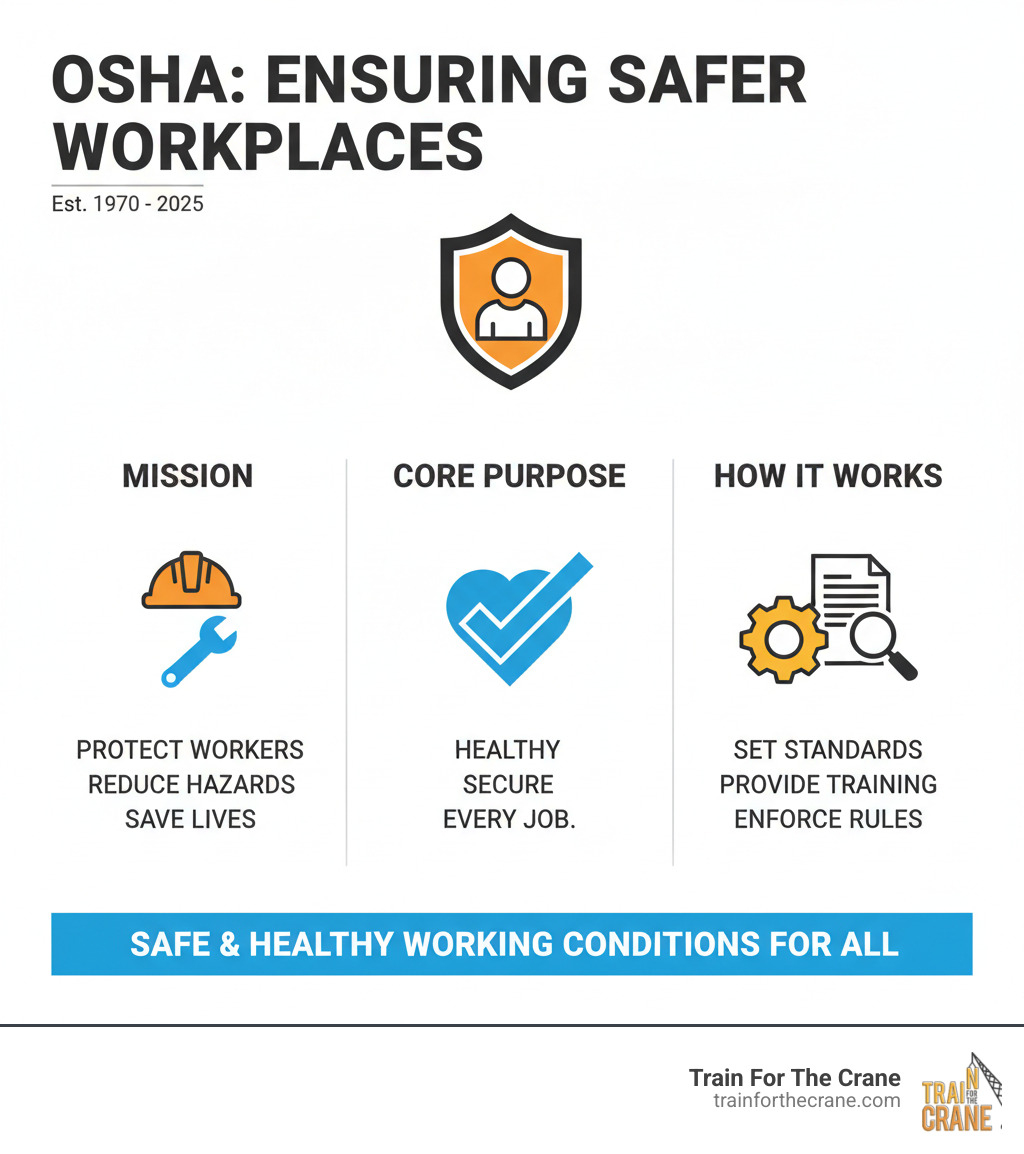
The Occupational Safety and Health Act of 1970 established OSHA to ensure safe working conditions for all American workers. Employers are legally responsible for providing a safe workplace, and OSHA safety training helps them meet this duty while empowering employees to protect themselves and their colleagues. This guide covers everything you need to know about this vital training.
Understanding OSHA Training: Requirements and Key Programs
OSHA safety training provides the knowledge to keep workplaces safe. It’s important to know that while OSHA requires employers to train workers on job-specific hazards, it doesn’t always mandate courses like the 10-hour or 30-hour Outreach training. Often, state laws or individual employers make these courses a requirement.
There is no such thing as an “OSHA certification.” Upon completing an OSHA Outreach Training Program, you earn an official Department of Labor (DOL) card. This card proves you’ve completed a hazard awareness class, not that you are certified for a specific skill.
The Outreach Training Program is a key part of OSHA’s safety mission. Taught by OSHA-authorized trainers, these classes cover hazard identification, worker rights, and employer responsibilities, building a strong foundation in workplace safety. For a complete list of resources, visit OSHA’s official training page.
Training | Occupational Safety and Health Administration – OSHA
What is OSHA Safety Training and Why is it Crucial?
OSHA safety training is a learning process designed to prevent workplace injuries and illnesses. For employers, providing this training is a legal responsibility. OSHA mandates that employers ensure workers are trained for any dangers they might face on the job.
This training is key to building a culture where safety comes first. It helps everyone identify and fix potential dangers before an accident occurs. By giving workers the knowledge to recognize and avoid hazards, we empower them to make safer choices, which directly leads to fewer accidents and injuries. When workers understand the risks, they become active partners in maintaining a safe environment for everyone.
Core OSHA Outreach Training Programs
The most well-known forms of OSHA safety training are the 10-Hour and 30-Hour Outreach Training Programs. These courses build hazard awareness and are taught by OSHA-authorized trainers.
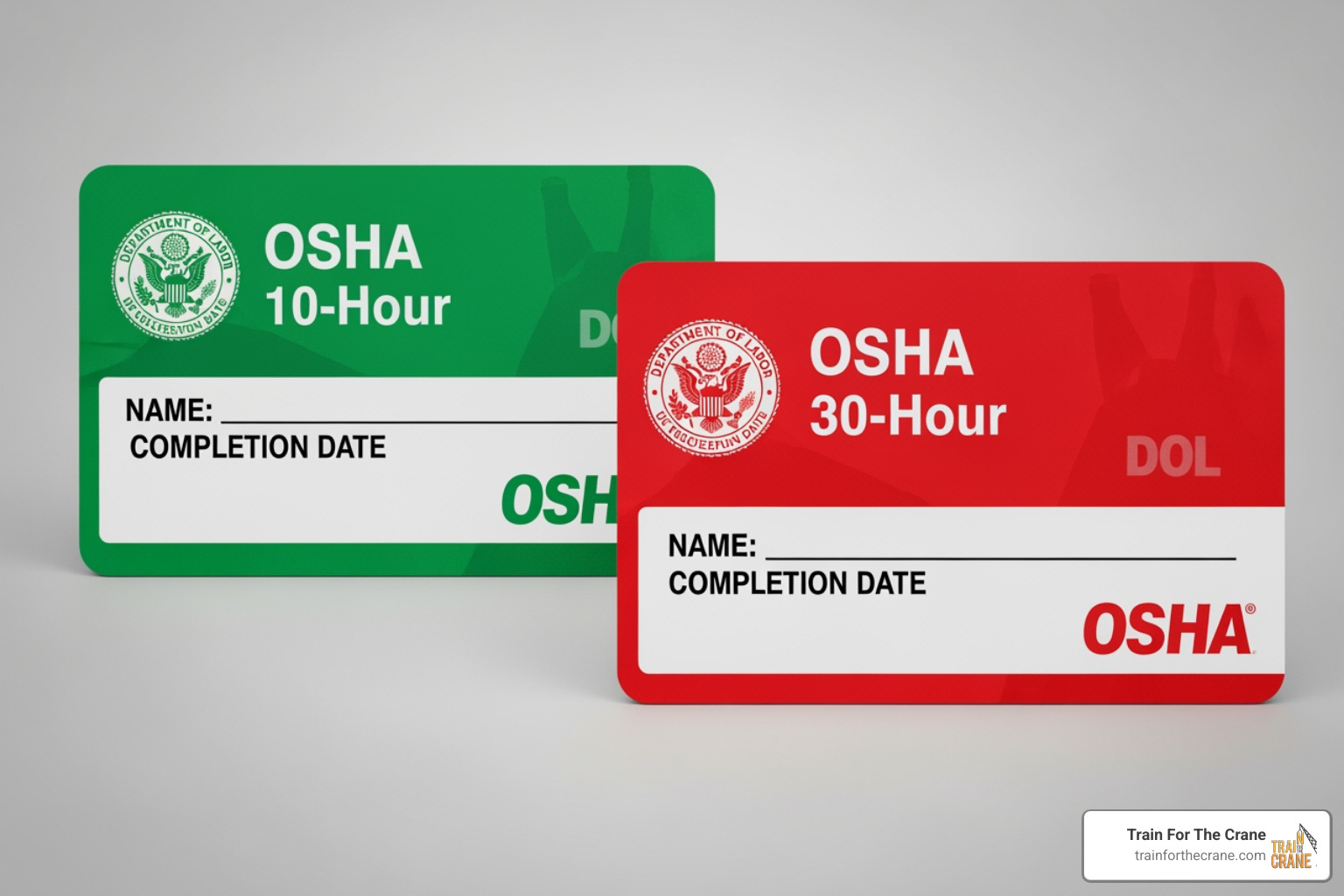
OSHA 10-Hour Training: This course is for entry-level workers and provides a general overview of common safety and health hazards. It’s a solid introduction to workplace safety.
OSHA 30-Hour Training: Designed for supervisors and safety directors, this course offers a more in-depth look at a wide range of safety topics. It focuses on hazard identification, avoidance, control, and prevention.
Both programs are available in versions for General Industry and Construction to suit the specific hazards of each sector. After completing a course, you receive an official OSHA DOL card as proof of your training.
Learn more about these programs on OSHA’s website:
Outreach Training Program (OSHA 10-Hour & 30-Hour Cards)
Specialized Training: HAZWOPER and Industry-Specific Courses
Beyond the Outreach programs, OSHA safety training includes specialized courses for unique workplace dangers. These are critical for workers in specific roles where general hazard awareness isn’t enough.
One of the most significant is HAZWOPER (Hazardous Waste Operations and Emergency Response). This training is mandatory for employees at high risk of exposure to hazardous substances. HAZWOPER courses include:
- 40-Hour HAZWOPER: For workers at hazardous waste operations.
- 24-Hour HAZWOPER: For workers with limited exposure at hazardous sites.
- 8-Hour Refresher: An annual requirement to keep skills current.
OSHA also offers training for sectors like Maritime and Disaster Site Worker. For industries using heavy equipment, like ours at Train For The Crane, specialized training in crane operation and rigging is essential. We ensure our team is not only aware of general hazards but also highly skilled in operating machinery safely. This includes courses like our Crane Operator Course and Certified Rigger Course.
Who Needs OSHA Safety Training and For Which Industry?
Who exactly needs OSHA safety training? The requirements can vary. While federal OSHA requires employers to train workers who face hazards, the specific type of training often depends on state laws, employer policies, or contract requirements.
For example, some states have their own OSHA-approved plans with additional rules. Many employers also require courses like the 10-Hour or 30-Hour Outreach programs before allowing workers on a job site. Generally, if you work in a high-risk industry-such as construction, manufacturing, or healthcare-you will likely need some form of OSHA training. The goal is to ensure every team member has the knowledge to work safely.
Training Requirements for the Construction Industry
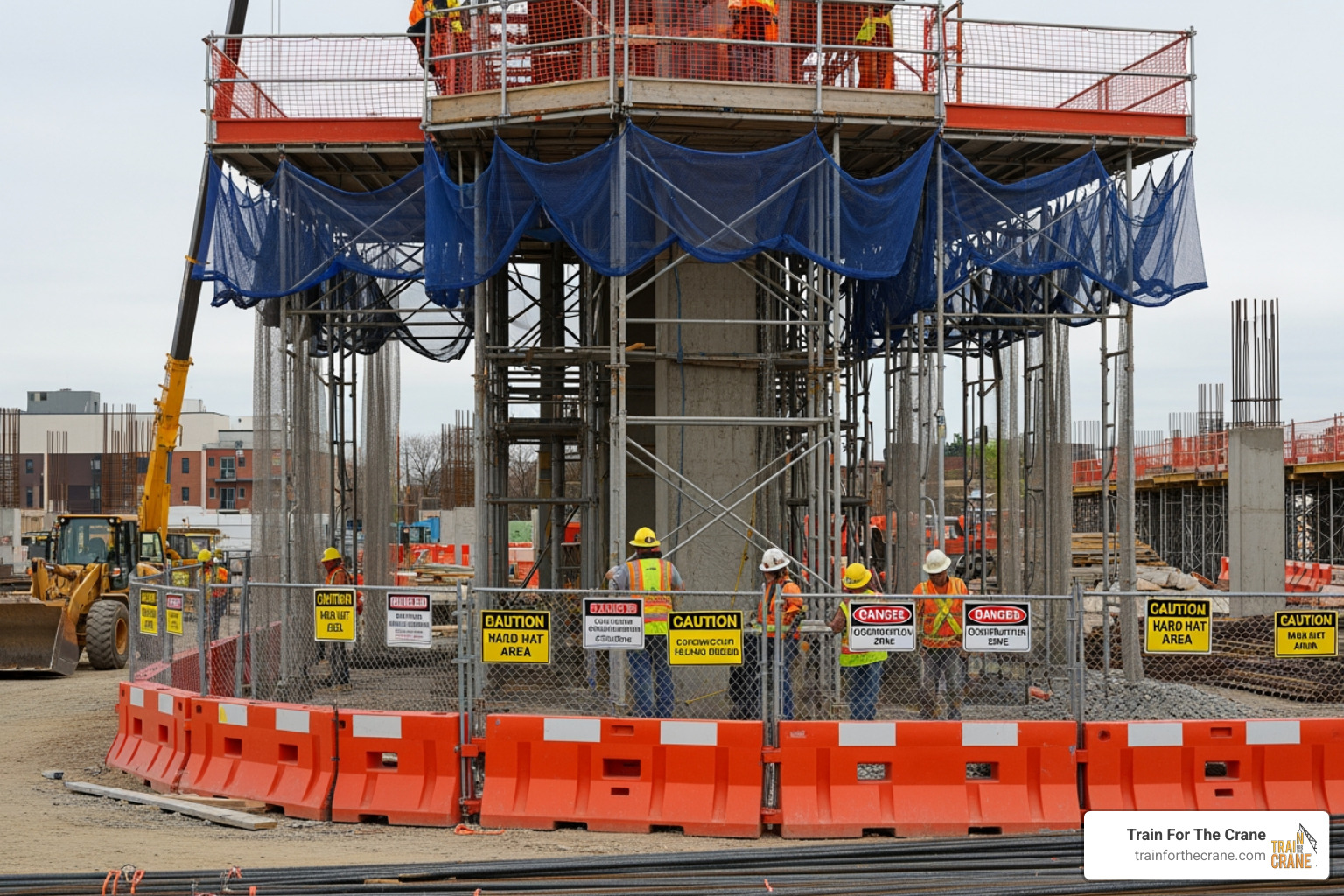
The construction industry is inherently hazardous, making OSHA safety training essential. Workers face daily risks from falls, heavy machinery, electricity, and trench collapses. OSHA has specific standards to prevent accidents in these situations.
Key training areas for construction include:
- Fall Protection Standards: Training covers the use of fall arrest systems, guardrails, and safety nets, as falls are a leading cause of injury and death.
- Electrical Safety: This includes lockout/tagout procedures and safe practices around power lines to prevent electrocution.
- Scaffolding Safety: Workers learn how to safely build, use, and inspect scaffolding.
- Trenching and Excavation: This training addresses cave-in dangers, proper shoring techniques, and safe entry/exit from excavations.
- Crane and Rigging Safety: Proper training in crane operation, rigging, and signaling is crucial to prevent accidents. Our specialized training, like the one for Crane Lifting Safety, ensures all personnel have the necessary skills.
The OSHA 10-Hour and 30-Hour Construction courses are widely recognized and often required in this industry.
Training for General Industry and Maritime
OSHA safety training is equally important in the General Industry and Maritime sectors, which cover a vast range of workplaces with unique hazards.
In General Industry (manufacturing, warehousing, healthcare), training often focuses on:
- Machine Guarding: Ensuring hazardous moving parts are covered to prevent injuries.
- Warehousing and Logistics: Safe operation of powered industrial trucks (forklifts) and proper material handling.
- Lockout/Tagout Procedures: Preventing accidental machine startup during maintenance.
- Hazard Communication Standard (HCS): Understanding and safely handling hazardous chemicals using Safety Data Sheets (SDS).
The Maritime Industry (shipyards, longshoring) faces a different set of dangers. Training addresses risks such as:
- Shipyard Hazards: Dangers related to shipbuilding and repair, including confined spaces and hot work.
- Longshoring and Marine Terminal Hazards: Safe cargo handling and operation of specialized equipment during loading and unloading.
Thorough and relevant OSHA safety training prepares employees to identify and reduce specific hazards in their work environments, creating a safer and more productive workforce across the board.
The Tangible Benefits of Investing in Workplace Safety
Investing in OSHA safety training is a strategic decision that protects your people and strengthens your business. This proactive approach focuses on preventing incidents before they occur, shifting your company’s mindset from reactive to preventive.
The return on investment is clear, with direct financial savings from reduced workers’ compensation claims and fewer OSHA penalties. But the benefits run deeper. When employees feel safe, productivity and morale climb. A positive safety culture isn’t just good ethics-it’s good business.
Conversely, neglecting OSHA safety training can be devastating. The consequences include hefty fines, legal liabilities, a damaged reputation, and, most importantly, preventable injuries or fatalities. Investing in comprehensive safety training is always the responsible choice.
Benefits for Employers
For employers, implementing thorough OSHA safety training programs offers significant advantages.
When your team is properly trained, you will see reduced incident rates. Employees who can spot and handle hazards have fewer accidents, which means less downtime and a healthier workforce. This translates directly into lower workers’ compensation costs and insurance premiums.
A safe workplace also increases productivity and morale. A team that feels protected is more focused, efficient, and motivated. This sense of security builds loyalty and engagement.
Your commitment to safety improves your company reputation, making you an employer of choice for top talent and a preferred partner for clients. Finally, effective training helps you avoid OSHA citations, saving you from costly fines and legal issues. At Train For The Crane, we’ve seen how this investment transforms workplaces for the better.
Advantages for Employees
For employees, the advantages of OSHA safety training are personal and impactful.
The most important benefit is safer work conditions. Understanding hazards and how to prevent accidents dramatically reduces your risk of injury. You go home healthy every day.
Training provides hazard awareness and control. You learn to spot dangers specific to your job and are empowered to take action to protect yourself and your coworkers.
OSHA safety training credentials also boost career development. Up-to-date training makes you a more valuable and marketable employee, leading to better opportunities and advancement. If you’re curious about this career path, you can learn more at How to Become Crane Operator.
Training also teaches you about your worker rights, including the right to a safe workplace and the right to file a complaint without retaliation. This knowledge gives you the confidence to speak up when something isn’t right and to perform your job with skill and purpose.
How to Find and Choose the Right OSHA Training Provider
Choosing the right OSHA safety training provider is crucial for ensuring your team receives high-quality, legitimate instruction. Not all training is created equal, and a wise choice protects your workers and meets regulatory requirements.
Your first step should be to verify the provider’s legitimacy. Only OSHA-authorized providers can issue official DOL cards for Outreach Training Programs. Be wary of anyone promising “OSHA certification” from an unauthorized source. You should also consider the training format (online vs. in-person) and the associated costs.
A great starting point is OSHA’s network of OSHA Training Institute (OTI) Education Centers. These centers are authorized to deliver training across all industries and are a trusted source for compliant instruction. To find an authorized trainer, use OSHA’s official online tool:
Find a Trainer | Occupational Safety and Health Administration – OSHA
Finding OSHA-Authorized Trainers and OTI Centers
When seeking credible OSHA safety training, use OSHA’s official resources to find authorized providers. The agency maintains a database of authorized trainers for the Outreach Training Program, which is essential for verifying that your provider can issue official OSHA DOL cards.
Another reliable option is the OSHA Training Institute (OTI) Education Centers. These centers are authorized by OSHA to deliver a wide range of courses, including specialized topics that go beyond basic Outreach programs.
It is critical to avoid fraudulent training. Always check the credentials of trainers against OSHA’s official lists. If an offer seems too good to be true, like a 30-hour course completed in a few hours, it probably is. For a list of courses offered by OTI Education Centers, you can explore their catalog:
View All Courses By Title and Description | Occupational Safety and …
Online vs. On-Site OSHA Safety Training
You can deliver OSHA safety training either online or on-site (in-person). Each method has its advantages, and the best choice depends on your team’s needs and the complexity of the subject matter.
| Factor | Online Training | On-Site Training |
|---|---|---|
| Flexibility | High: Self-paced, accessible 24/7 from anywhere | Moderate: Scheduled times, fixed location |
| Cost | Often lower per individual, no travel costs | Can be higher, may include instructor travel/setup fees |
| Hands-on Practice | Limited or simulated | Excellent for practical application and equipment use |
| Team Interaction | Low: Individual learning experience | High: Group discussions, direct Q&A, team building |
Online training offers great convenience, with many authorized providers offering self-paced courses. This flexibility is valuable for foundational knowledge.
However, for complex tasks involving heavy machinery like cranes, hands-on, instructor-led training is irreplaceable. While online modules provide theory, they cannot replace practical application and direct feedback from an experienced instructor. Our experience at Train For The Crane has shown that in-person, practical training is essential for developing skilled and safe operators, especially for specialized areas like Accredited Crane Training.
A blended approach, combining online learning for theory with on-site training for practical skills, often yields the best results.
Understanding Training Costs and Free Resources
The cost of OSHA safety training varies by course type, provider, and delivery method. For OSHA 10-Hour or 30-Hour courses, prices can range, and many providers offer group discounts.
While most official training has a fee, OSHA provides a wealth of free guides and tools on its website. These resources are excellent supplements to formal training.
Another key resource is the Susan Harwood Training Grant Program. OSHA awards these grants to non-profit organizations to help them deliver training to workers in high-hazard industries. This program expands access to safety education for those who might not otherwise afford it. You can learn more about the application process here:
The cost of training is an investment. Effective OSHA safety training is a critical safeguard against the much higher costs of workplace accidents, fines, and legal liabilities.
Frequently Asked Questions about OSHA Safety Training
Here are answers to some common questions about OSHA safety training.
How long is an OSHA 10 or 30 card valid?
An official OSHA 10-Hour or 30-Hour Department of Labor (DOL) card does not have an expiration date. Once you earn it, it’s yours.
However, many states, local jurisdictions, or employers require refresher training, often every five years. This ensures workers stay current on the latest safety practices and regulations. This is similar to how specialized certifications, like those from NCCCO for crane operators, require renewal every five years. Staying current is a crucial part of maintaining professional credentials. You can learn more about this at Renew Your Roost: The Crane Operator’s Guide to Staying Certified.
What’s the difference between OSHA training and equipment certification?
This is an important distinction. OSHA safety training and equipment certification serve two different but vital purposes.
OSHA Training for Hazard Awareness: Courses like the 10-Hour or 30-Hour programs provide a broad understanding of safety. They teach you to identify, avoid, and prevent common workplace hazards and cover worker rights and employer responsibilities.
Equipment Certification for Operator Competency: This is more specific. It demonstrates that an individual has the skills and knowledge to safely operate a particular piece of equipment. For example, a crane operator certification proves an operator has met strict industry standards for safe operation.
OSHA requires that individuals like riggers be “qualified.” A “qualified person” has the education, training, and experience to solve job-related problems. A “certified person” has passed a rigorous, independent examination process. Both OSHA training and equipment certification are essential for a safe and competent workforce. Learn more at Crane Operator Certification and NCCCO Crane Certification.
Can I get my OSHA training online?
Yes, you can get your OSHA safety training online. Many OSHA-authorized providers offer the 10-Hour and 30-Hour Outreach Training Programs in a convenient, self-paced online format.
The benefits include:
- Convenience: Access courses from anywhere with an internet connection.
- Accessibility: Complete modules on your own schedule.
However, it is critical to verify that any online provider is genuinely OSHA-authorized to issue official DOL cards. Many websites offer “OSHA training” but are not affiliated with the agency. Always check a provider’s credentials before committing to a course to ensure your training is legitimate and recognized.
Conclusion: Building a Lasting Culture of Safety
OSHA safety training is more than a regulatory requirement; it’s a vital investment in your workforce and your company’s long-term success. By taking a proactive approach, we build an environment where prevention is the priority and safety is a core value.
While OSHA Outreach Programs are invaluable for foundational awareness, specialized roles involving heavy machinery like cranes demand expert-led, practical training. These programs ensure team members achieve the highest level of competency.
At Train For The Crane, we provide exceptional, hands-on training that goes beyond the basics to ensure our students are not just compliant, but truly proficient and safe. Our experienced instructors and proven methods are reflected in our high pass rates for certification exams.
Connect with us to discuss your training needs. Reach out through our Contact Us page or explore our programs to see how we can help lift your team’s safety and skills.
Explore our comprehensive training programs to elevate your team’s safety and skills.