

For anyone pricing tower crane operator training in Indiana, the biggest mistake is assuming the number in a course ad is the full cost. In real life, tower crane operator training cost depends on what is included, what still has to be paid separately, how much practical preparation you need, and whether you are likely to pass on the first attempt. That is especially important for workers in Indianapolis and across Indiana who may need to plan around travel, work schedules, and test-site availability.
This guide breaks down what usually affects the total price, how tower crane training differs from other crane paths, and what to ask before you enroll so you can compare programs with fewer surprises.
What Tower Crane Operator Training Usually Includes
When people compare tower crane operator class price options, they often lump everything together as “school.” In practice, tower crane training can include several separate pieces, and not every provider packages them the same way.
Core classroom instruction
Most tower crane operator training begins with classroom or instructor-led study focused on:
- Crane safety principles
- Load charts and capacity concepts
- Site setup and operating conditions
- Inspection awareness
- Hand signals and communication
- Regulatory and certification requirements
- Written exam preparation
Some programs offer this in person. Others mix live teaching with self-study. That format matters because a lower upfront price may mean more independent study time and less direct coaching.
Practical exam preparation
One of the biggest cost drivers is the amount of hands-on preparation included. Tower crane practical prep is not the same as reading a handbook or watching videos. It typically involves:
- Familiarization with test tasks
- Practice on exam-style equipment or similar equipment
- Coaching on task sequence and time management
- Correction of operating habits that can lead to deductions or failure
If a program says it offers tower crane endorsement training, ask whether that means real practical preparation or only written review. Those are not the same service.
Written and practical exam coordination
Some schools help you with scheduling, application steps, required paperwork, and matching your training timeline to available test dates. Others leave all of that to the student. That can affect not just convenience, but total cost. A poorly timed schedule can create extra travel, extra lodging, missed work, or delayed retesting.
Certification-path guidance
Many students are not starting from the same point. A rigger moving toward operator work has a different training path than someone brand new to crane operations. A worker trying to add tower capability may need to understand how that path fits with broader operator goals. Good programs usually spend time explaining:
- What certification track fits your experience
- What exams are involved
- What prerequisites or related qualifications matter
- How tower crane training fits into a larger career plan
If you are still figuring out the overall path, it helps to review how to get a crane license and become a crane operator before committing to a course based on price alone.
What is often not included
Even when a course looks complete, there may be separate charges for:
- NCCCO written exam fees
- NCCCO practical exam fees
- Retest fees
- Travel to the training or test location
- Lodging and meals
- Additional practice sessions
- Medical or employment-related screening required by an employer
That is why students comparing how much does tower crane training cost in Indiana need a line-by-line explanation, not just a single quoted number.
Typical Tower Crane Training Cost Ranges in Indiana
Because providers structure courses differently, there is no single statewide number that applies to every student. A short written-prep-focused course, a bundled classroom-plus-practical package, and a more comprehensive exam-prep track can all be marketed as tower crane training while carrying very different total costs.
In Indiana, especially for students coming from Indianapolis or surrounding areas, your total cost usually falls into several layers:
- Training tuition for instruction and prep
- Exam-related fees for written and practical testing
- Travel and schedule costs tied to where and when training or testing is available
- Risk costs if you need extra practice or retesting
That means the more useful question is not simply “What is the Indiana crane operator school cost?” but “What does the quoted price cover, and what will I still have to pay?”
Why published prices can be misleading
A quoted tuition number may sound lower than another program, but if it excludes exam fees and hands-on prep, your total expense can end up higher. On the other hand, a program with a higher initial quote may include more instructor time, practical familiarization, and test coordination that reduces retest risk.
When comparing NCCCO tower crane certification cost, break the process into these categories:
- Course tuition
- Written exam fees
- Practical exam fees
- Equipment time for prep
- Travel and lodging if needed
- Retest exposure if the package is thin
That approach gives you a realistic number instead of a marketing number.
Indiana-specific cost considerations
Indiana students often need to think about where training and testing actually occur. If you are based in Indianapolis, a nearby class can be much easier to budget than a program requiring long drives, overnight stays, or multiple trips. Even if tuition is similar, local scheduling can lower the total burden.
For students comparing regional options, reviewing broader crane training in Indiana can help you understand how location and training access affect the full price.

Tower crane training is often narrower and more specialized
One reason tower crane operator training Indiana pricing can feel hard to compare is that tower training is more specialized than broad entry-level crane instruction. It is not unusual for tower crane training options to be more limited in frequency or availability than common mobile crane offerings. Limited availability can create:
- More travel
- Longer waits for classes or practical exams
- More need to coordinate work time off
- Fewer chances to retest quickly if needed
That limited scheduling can influence total cost even if the advertised class price seems straightforward.
What Changes the Total Price From One Student to Another
Two students in Indiana can pursue the same tower crane goal and still end up with very different total costs. The price changes based on experience, preparation, location, and how much support is needed before testing.
Your current experience level
If you already work around cranes, rigging, or signaling, you may move through the written content more efficiently than someone entering from a general labor or career-change background. That does not mean the practical side will be easy, but it often affects how much classroom review you need.
Students commonly fall into a few categories:
- Experienced construction workers who understand jobsite safety and crane communication but need certification-focused prep
- Riggers or signal persons moving toward operator roles who may already have useful load-handling knowledge
- Career changers who need more complete instruction from the ground up
- Workers adding a tower credential who may already understand operator testing structure but need tower-specific preparation
The less direct crane-related experience you have, the more important it is to budget for stronger prep instead of only shopping for the lowest sticker price.
The amount of practical equipment time included
One of the largest differences between programs is how much equipment time is actually built into the training package. A course with very limited practical exposure may look affordable at first, but if you need extra sessions later, your cost rises.
Ask specifically:
- How much practical prep is included?
- Is that one group session or individual turns on equipment?
- Is practice aligned to the practical exam tasks?
- Can extra practice be added if needed, and how is it priced?
This matters because tower crane practical exam fees are only part of the risk. If you arrive underprepared and have to retest, you may pay new exam fees plus added travel and time away from work.
Written-prep depth
Some students mainly need help organizing study materials and focusing on likely exam topics. Others need structured instruction with live explanation, question review, and coaching through technical concepts. Programs that provide stronger written exam preparation may cost more up front but can save money if they reduce confusion and rework.
Travel distance and number of trips
In Indiana, a training program that requires one trip versus several separate trips can significantly change total cost. Think beyond fuel. Repeated travel can also mean:
- Lost work hours
- Meals on the road
- Hotel stays
- Childcare adjustments
- Schedule disruption
For workers in Indianapolis, local or efficiently scheduled training may be worth more than a slightly lower tuition at a harder-to-reach site.
Whether exams are bundled or separate
Some programs quote tuition only. Others include parts of the exam process. Others still help coordinate exams but require the student to pay the testing organization separately. None of those models is automatically wrong, but each affects how you budget.
Ask whether the quote covers:
- Written exam registration
- Practical exam registration
- Any application support
- On-site or coordinated testing dates
- Administrative rescheduling fees, if any
Retest likelihood
Retesting is one of the most overlooked parts of crane certification training cost Indiana. Students often plan for one attempt and no more. But if you are balancing work, travel, and a compressed prep timeline, retest risk is real.
Retest-related costs can include:
- New exam fees
- Additional practice time
- Extra travel
- More days off work
- Delays in applying for jobs or promotions
A training package with better practical preparation can be more economical than a cheaper course that leaves you exposed to those repeat costs.
Hidden Costs People Forget to Budget For
When students ask about tower crane operator training cost, they usually focus on tuition first. That is understandable, but several smaller costs often create the biggest surprise later.
Written and practical exam fees not listed in tuition
This is the first question to ask. A school may honestly advertise training tuition while leaving examination charges outside the quote. That means your actual total is higher than expected from the beginning.

Before enrolling, ask for a full list showing:
- Training tuition
- Written exam fee responsibility
- Practical exam fee responsibility
- Any processing or scheduling fees
Travel, parking, lodging, and meals
If your classroom session is in one place and your practical exam is in another, transportation costs can grow quickly. For students outside the immediate training area, one overnight stay can erase the apparent savings of a low class price.
Indiana students should ask:
- Will I need multiple visits?
- Are training and testing on the same site?
- How often are tower-related dates offered?
- If I miss a date, how long until the next one?
Time away from work
For many working adults, lost wages are a real part of training cost. A program that looks less expensive on paper may require more days away from work than a better-organized option. If your employer does not cover training time, factor that into your comparison.
Extra study materials or prep sessions
Some programs include books, review materials, or guided practice. Others expect you to purchase materials separately or add paid review sessions later. If you need support but enroll in a stripped-down course, the price difference may disappear.
Retest fees and rescheduling problems
A missed test date, an incomplete application, or a failed practical can add direct and indirect cost. Ask how the training provider handles students who need another attempt. Important questions include:
- What happens if I do not pass the first time?
- Are refresher sessions available?
- Are retest coaching sessions included or extra?
- How quickly can I get back on a schedule?
Prerequisite misunderstandings
Sometimes students enroll before fully understanding what employers or worksites may expect beyond certification. While the training itself may still be valid, unclear expectations can delay job readiness. That is why cost discussions should also include the broader path, not just the class fee.
If you are exploring training as part of a larger career move, it can also help to compare this with broader vocational routes discussed on the site’s trade schools in Indiana page.
How Tower Crane Training Differs From Mobile Crane Training on Price Drivers
Students often compare tower crane training to more general crane training and expect the same pricing structure. That can be misleading. Tower crane training has some distinct price drivers.
Specialized availability
Mobile crane training is often more widely discussed and may be available in more common formats. Tower crane training can be more specialized, with fewer training events or testing windows. Fewer options can mean less pricing flexibility and more travel burden.
Equipment access matters more
With tower training, practical preparation is especially important because familiarity with test tasks, controls, and timing can affect performance. If a program does not provide enough equipment exposure, a student may feel the gap more quickly than expected.
Different student profiles
Some people pursuing mobile crane credentials are entering a broader operator path. Tower students may be adding a specialized qualification or targeting a specific type of project environment. That can change how much coaching is needed and how urgently the student needs the credential.
Scheduling can be tighter
If there are fewer tower-specific practical opportunities, delays become more expensive. Missing one date may not just be inconvenient. It may postpone work opportunities or extend the overall timeline. That is why asking about scheduling reliability is part of comparing cost.
How to Compare Tower Crane Training Programs the Right Way
The right comparison is not “Which provider is cheapest?” The right comparison is “Which option gives me the clearest path to being properly prepared for the exams and the work?”
Start with an apples-to-apples checklist
When you compare programs, write down each item separately:
- Tuition
- Written exam prep included or not
- Practical prep included or not
- Amount of equipment time
- Written exam fees included or separate
- Practical exam fees included or separate
- Retest support available or not
- Location of training
- Location of testing
- Number of trips likely required
- Scheduling support
If one program gives a single price without this detail, ask for clarification before comparing it with another provider.
Ask direct questions about practical preparation
This is where many students get tripped up. A provider may say “practical prep included,” but that phrase can mean very different things. Ask:
- How much time do students actually spend preparing for practical tasks?
- Is prep hands-on or mostly verbal explanation?
- How many students share that time?
- Will I receive correction on my technique before testing?
Practical preparation has a direct relationship to retest risk. That makes it one of the most important value questions in the whole buying decision.
Ask what happens if you need more help
Not every student learns at the same pace. A program should be able to explain the next step if you need additional review or another attempt. A good question is:
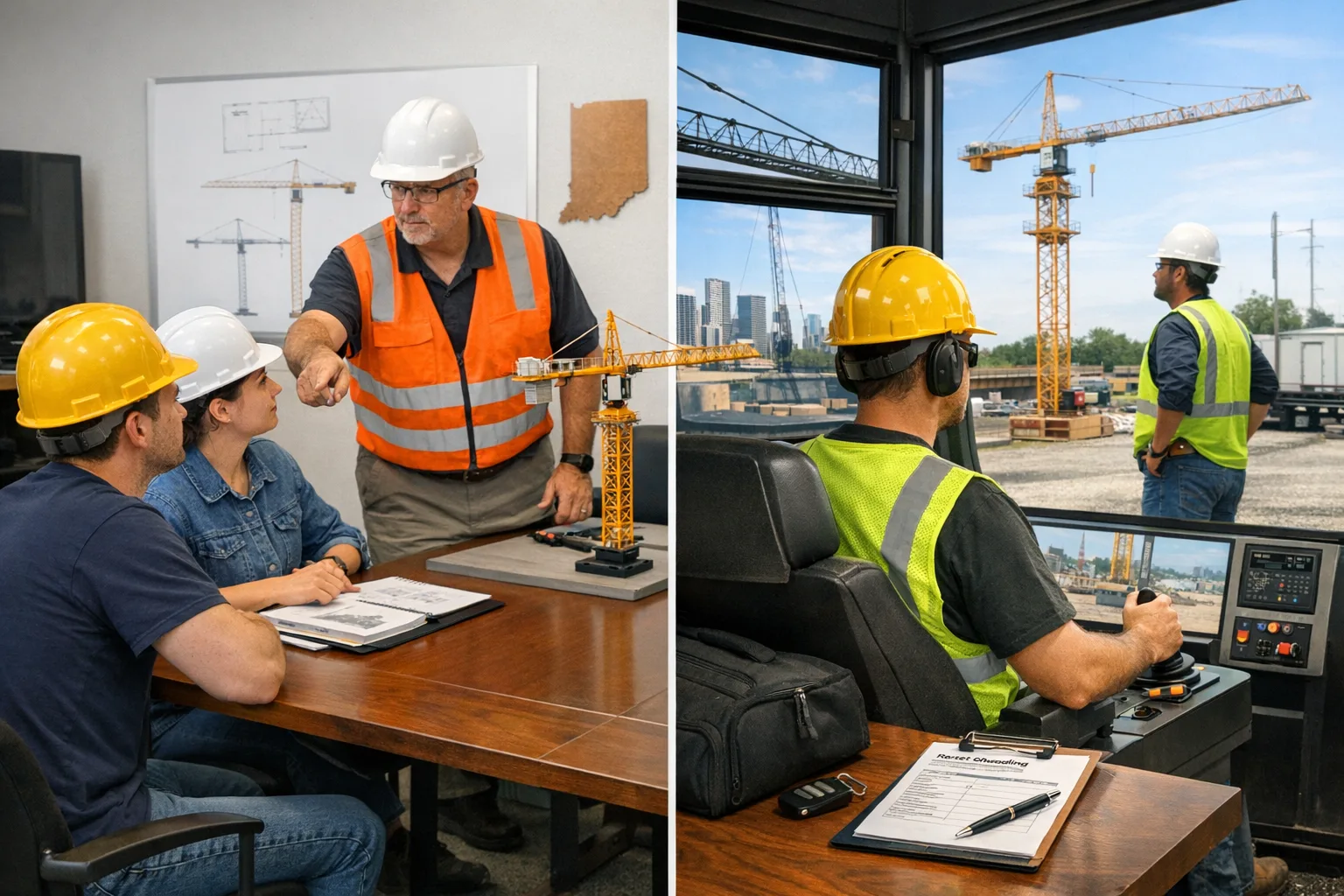
If I am not ready after the first round of prep, what are my options and what additional costs might apply?
This question helps expose whether a low-price course is really just an entry fee into more charges later.
Look at schedule realism, not just course length
A short course sounds efficient, but only if it matches your background. If you are new to crane exams, a compressed schedule may create more stress and weaker retention. For a seasoned worker, that same short format may be perfectly appropriate. Program fit matters more than marketing language.
Consider local convenience as part of value
For Indianapolis-area students, a practical Indiana-based option may lower cost even if tuition is not the lowest line item. Reduced travel and easier rescheduling can have real value. That is especially true for people balancing current construction jobs, family responsibilities, or variable shifts.
If you want a broader frame for comparing your path, the site’s tower crane operator training cost guide covers additional context that can help you ask sharper questions before enrolling.
When a Lower-Priced Course Can Cost More in the Long Run
A lower upfront quote is not automatically a bad option. But it becomes a problem when students assume low price equals low total cost. In tower crane training, that is often not true.
Scenario: low tuition, weak practical prep
Imagine a program that offers a very attractive class price but includes limited hands-on guidance. If you then need extra practice before the practical exam, you may pay more for:
- Additional prep sessions
- Rescheduled test dates
- Retest fees
- Another trip to the test site
At that point, the “cheaper” program may cost more than a stronger package would have from the start.
Scenario: low price, separate exam fees not disclosed early
Another common issue is when students compare tuition numbers only. Program A seems less expensive than Program B, but Program A excludes written and practical fees, while Program B includes more of the exam path. Without a full breakdown, the comparison is not accurate.
Scenario: low price, poor schedule fit
If the course is offered at an inconvenient time or location, the indirect cost can become significant. More missed work, more driving, and more scheduling stress all belong in the real total. This matters a lot for Indiana workers who cannot simply step away from active projects whenever a class opens.
Scenario: low price, little career guidance
Students also lose money when they enroll in the wrong training path. If you are not sure whether tower training fits your immediate job goal, or whether you should build other crane, rigging, or signal credentials first, paying for the wrong course first can delay your progress.
That is why strong front-end guidance matters. Good training decisions are about readiness, not just enrollment.
How to Budget Based on Experience Level and Training Goals
Budgeting works better when you define what kind of student you are. The right budget for a seasoned worker is not the same as the right budget for a complete newcomer.
If you are new to crane operations
Plan for a more complete program. You are more likely to need:
- Structured written instruction
- Extra explanation of load charts and safety concepts
- More practical familiarization
- Clear coaching on exam expectations
In this situation, the lowest tower crane operator class price is often not the best value.
If you already work in rigging or signaling
You may be able to move more efficiently through certain parts of the material, but do not assume operating prep will take care of itself. Transitioning from support roles to operator responsibilities still requires focused preparation. Budget for practical coaching, not just a written review class.
If you are adding tower capability to an existing operator path
You may already understand certification processes and test discipline. In that case, your biggest budget questions may be:
- How much tower-specific prep do I need?
- Can I schedule efficiently?
- What exam-related pieces are already familiar versus new?
Your total cost may depend less on basic classroom instruction and more on practical readiness and date availability.
If you are comparing tower training to other trade-school options
Career changers often compare crane training against other skilled trades. That is a reasonable step, especially in Indiana where vocational and trade pathways remain a practical route for many workers. But compare based on job fit, safety responsibility, and certification demands, not only tuition. Crane operation is a serious, exam-driven path that requires disciplined preparation.
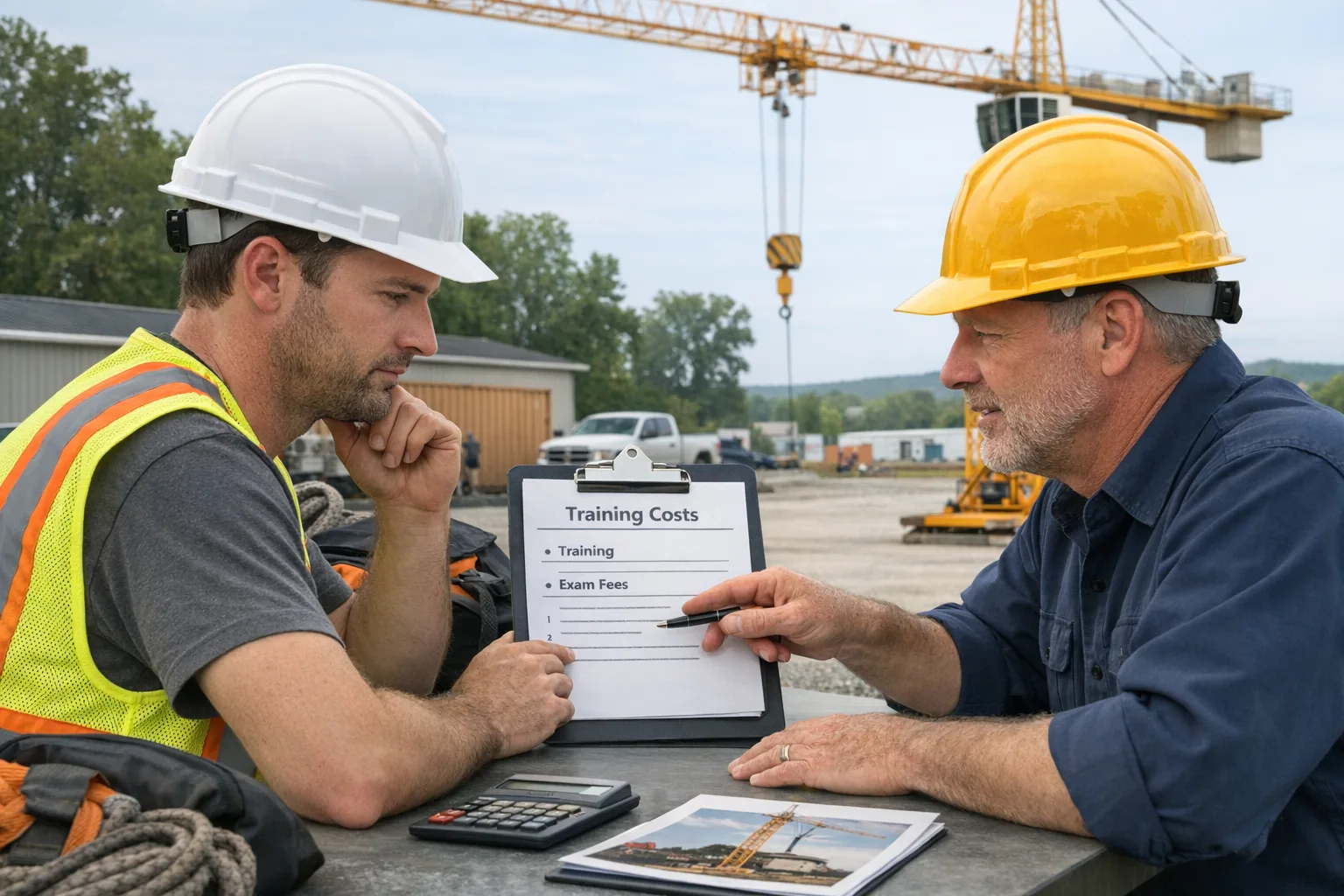
What Students Should Ask About Exam Fees, Equipment Time, and Retest Policies
Before you enroll anywhere, ask these questions directly and get the answers clearly.
Questions about exam fees
- Does the quoted price include the written exam fee?
- Does it include the practical exam fee?
- Are there any application, scheduling, or administrative charges?
- If fees are separate, approximately when are they due?
Questions about equipment time
- How much hands-on prep is included in the package?
- Is the equipment time individual, shared, or demonstration-based?
- Does the practical prep mirror exam tasks closely?
- What happens if I need more time before testing?
Questions about retest policies
- If I do not pass, what support is available?
- Are retest coaching sessions included or extra?
- Will I have to wait a long time for another practical date?
- What costs typically come up for a retest situation?
Questions about fit and readiness
- Is this program appropriate for my experience level?
- Is it designed for first-time students, experienced workers, or both?
- How should I prepare before class to avoid wasting time and money?
- What is included that helps me become job-ready rather than just exam-registered?
These questions help you compare value instead of getting pulled toward a partial quote that does not reflect your true cost.
How to Estimate Your Next Step and Choose the Right Program
If you are trying to narrow down your next move, use a simple decision process.
Step 1: Identify your starting point
Ask yourself:
- Am I brand new to crane operation?
- Do I already work around lifting operations?
- Am I adding tower training to an existing path?
- Do I need strong written support, practical support, or both?
Your answer should shape your budget more than any ad headline does.
Step 2: Build a real total cost estimate
Do not stop at tuition. Add:
- Exam fees
- Travel
- Lodging if needed
- Missed work time
- Possible extra practice
- Possible retest exposure
This is the only way to answer how much does tower crane training cost for your specific situation.
Step 3: Match the program to your likely risk points
If your weak point is written testing, prioritize a provider with structured classroom review. If your weak point is practical confidence, prioritize a program with better equipment prep. If your weak point is scheduling, focus on Indiana convenience and realistic timing.
Step 4: Confirm what is included before you commit
Ask for the full scope in plain language. You want to know exactly what you are paying for and what could still become an extra expense.
Step 5: Make sure the path fits your broader goals
If your long-term goal is a crane career in Indiana, make sure your training decision supports that path rather than treating certification as a one-time purchase. Training should help you move toward safe, qualified job performance, not just a test appointment.
FAQ: Tower Crane Operator Training Cost in Indiana
How much does tower crane operator training usually cost in Indiana?
It varies because providers package training differently. The real total usually includes tuition, written and practical exam fees, travel, scheduling-related costs, and possible retest expenses. The most accurate way to compare programs is to ask for a complete breakdown instead of relying on a single advertised number.
Does the quoted price usually include NCCCO written and practical exam fees?
Not always. Some providers include parts of the exam process, while others quote tuition only and leave exam fees separate. Always ask whether the written exam, practical exam, and any registration support are included.
What extra costs should I expect besides tuition for tower crane training?
Common extra costs include written and practical testing fees, fuel, lodging, meals, time away from work, extra study materials, added practical sessions, and retest-related costs if you need another attempt.
Is a cheaper tower crane training program worth it if I still need exam prep or retesting?
Sometimes no. A lower upfront price can end up costing more if the program leaves gaps in practical preparation, does not include enough written support, or creates more retest risk. The better comparison is total cost plus readiness, not tuition alone.
How do I know whether a tower crane program in Indiana fits my experience level and job goals?
Start by identifying your background, your target role, and whether you need written help, practical help, or both. Then ask the provider who the program is built for, what level of support is included, and how the training fits your certification and job path.
A Practical Way to Compare Your Options Before You Enroll
If you are weighing tower crane operator training cost in Indiana, the issue is rarely just price. The real problem is uncertainty: not knowing whether the quote covers exam fees, whether practical prep is strong enough, whether travel will add more than expected, or whether a lower-priced option will leave you paying again for retesting and extra help.
Before choosing a program, it makes sense to diagnose your likely path first: how much training you actually need, which exam pieces apply to you, what your realistic travel burden looks like, and where your total cost range may land once tuition, testing, and retest risk are all included.
If you want help sorting that out, call Train For The Crane at (317) 385-7190 and ask for a direct breakdown based on your experience level, tower training goals, and likely exam needs. That kind of comparison can help you confirm what is included, spot cost gaps before they become expensive, and choose a program that fits your Indiana training path instead of just looking lower on paper.