

Choosing a Crane Training School in Indiana
If you are comparing a crane certification school, it helps to slow down and look past simple sales claims. For beginners in Indianapolis and across Indiana, the right school is not just the one with a convenient date or a low advertised number. It is the one that teaches the right material, prepares you for the correct certification path, gives you realistic expectations about testing, and helps you build job-ready habits around safety and crane operation.
That matters whether you are aiming for NCCCO crane operator certification training, preparing for a rigging credential, or trying to decide if signal person training should come first. A school should help you understand what you need before you pay, what the exam process looks like, and how much hands-on practice and coaching you can expect.
This guide breaks down how to compare training options in Indiana, what questions to ask, and what red flags to watch for if you are new to the field.
Why School Choice Matters for First-Time Crane Students
First-time students usually do not need hype. They need clarity. Crane work is safety-sensitive, the testing process can feel technical, and different roles have different requirements. Choosing the wrong training path can cost time, money, and confidence.
A strong school helps beginners sort out the basics early:
- Do you need operator training, rigging training, signal person training, or some combination?
- Are you preparing for written testing, practical testing, or both?
- Does the training fit your current experience level?
- Will the program explain industry expectations in a way that makes sense for someone entering construction or changing careers?
In Indiana, this is especially important for workers coming from general construction, warehousing, road work, utility work, or industrial environments. Some students already have jobsite experience but no formal crane background. Others are trade school prospects trying to pick a practical path into the skilled trades. A good crane school recognizes the difference.
School choice also matters because beginners often compare providers on the wrong factors. They may focus only on price, distance, or whether a class date is available next week. Those things matter, but not as much as whether the training is structured correctly. A lower-cost class is not automatically a better value if it leaves you unclear about the exam, the equipment, or the certification category you actually need.
If you are exploring Crane Training Indiana, it helps to compare schools based on preparation quality, practical coaching, and how clearly they explain certification requirements.
What a Good Crane Certification School Should Teach
A beginner-friendly crane certification school should do more than mention NCCCO or talk generally about heavy equipment. It should teach the specific knowledge and practical habits that apply to crane work and certification preparation.
Core operator knowledge
For students pursuing crane operator training Indiana options, the school should cover the basics in a way that is direct and understandable. That includes:
- Crane types and categories relevant to the training path
- Load charts and how to read them
- Site setup awareness
- Capacity and stability concepts
- Inspections and equipment checks
- Lift planning basics
- Communication and jobsite coordination
- Safety procedures tied to real operating decisions
A beginner does not need everything at once, but they do need a school that teaches these topics in an organized progression rather than assuming prior knowledge.

Exam-focused classroom preparation
Good NCCCO certification training should make the testing path easier to understand, not more confusing. That means explaining how written exam preparation fits with practical exam preparation and what knowledge areas students should expect to study.
Exam-focused classroom work should include:
- Plain-language review of the subjects likely to appear on the exam
- Guidance on terminology that beginners may not know yet
- Study structure instead of loose, unorganized review
- Opportunities to ask questions before test day
If a school says exam prep is included, ask exactly what that means. Does it mean real instruction, or just a brief overview and a test date?
Role-specific pathways for riggers and signal persons
Not every student should start with full operator training. Some should begin with rigging and signal person training, especially if their immediate work role involves ground support, load handling, or communication around crane operations.
A quality provider should be able to explain:
- What rigging certification training covers
- How signal person certification aligns with OSHA jobsite expectations
- When operator training makes sense as the first step
- How these paths may connect over time for career growth
That kind of guidance is especially useful for Indiana workers already on jobsites who want to move into more responsibility without guessing at the next step.
Beginner-friendly signs to look for
One of the most common questions is: How do I know if a crane certification school is actually good for beginners? Here are practical signs:
- The school explains terms clearly without talking over you
- It asks about your experience level before recommending a class
- It separates operator, rigger, and signal person paths clearly
- It gives realistic expectations for study, testing, and practice
- It discusses both safety and job-readiness, not just passing an exam
- It answers cost and scheduling questions directly
How to Compare Hands-On Training, Classroom Prep, and Exam Support
When beginners compare schools, they often ask how much practice is enough. That is the right question, but the answer is not just a number. What matters is whether hands-on time is purposeful, supervised, and tied to the certification path you are pursuing.
Hands-on training should be more than observation
If you are evaluating beginner crane operator training, ask whether students actually practice or mostly watch. Real training should include guided exposure to operating tasks, practical coaching, and correction of mistakes before they become habits.
Ask questions like:
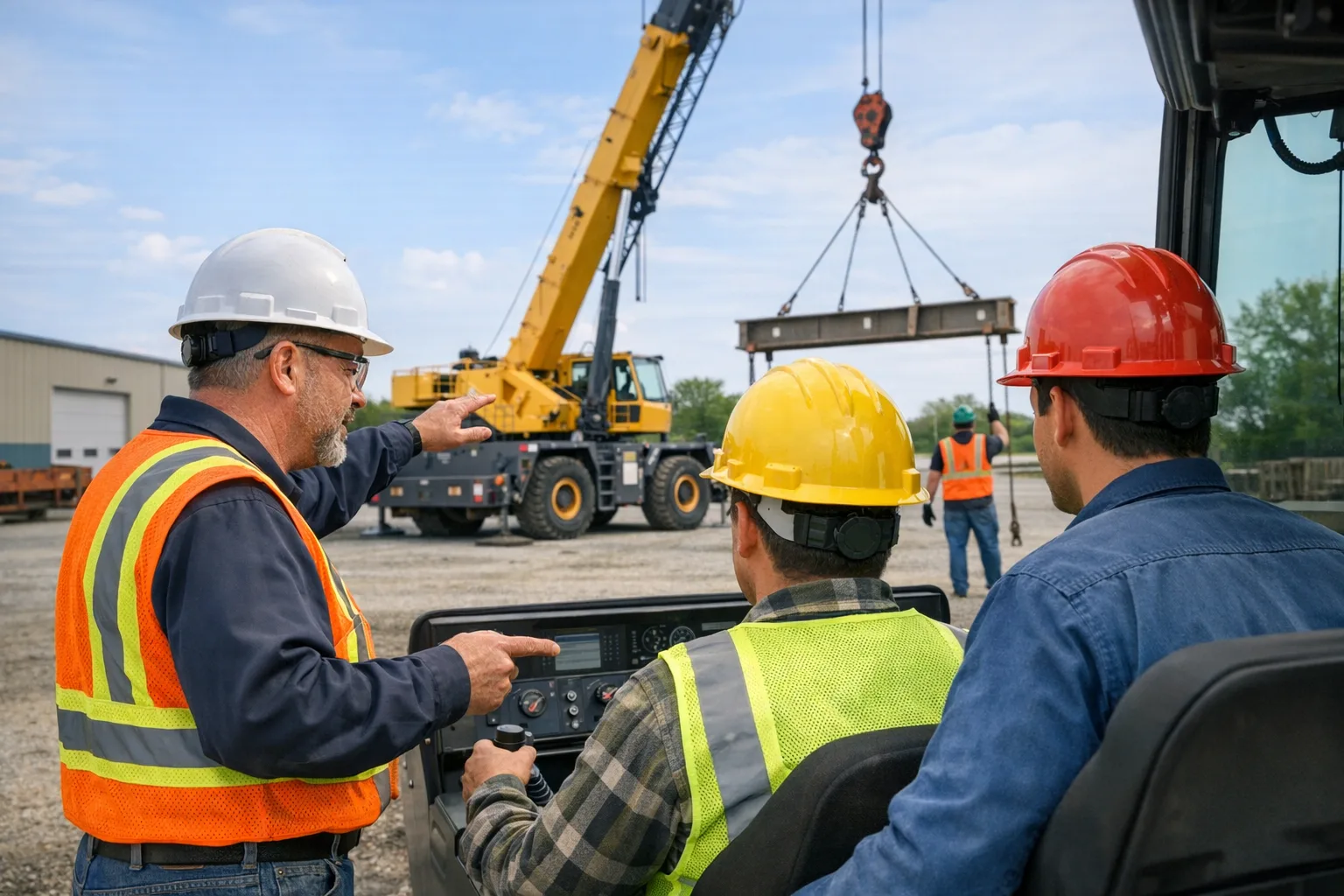
- How is practical training structured?
- Do students receive direct coaching while practicing?
- Is the practical exam format explained before test day?
- How does the instructor help beginners who are nervous or unfamiliar with the controls?
A school does not need to promise unlimited seat time to be useful. It does need to provide meaningful practice with instruction that connects to the exam and real jobsite expectations.
Instructor quality matters as much as equipment access
Students sometimes assume the newest equipment automatically means better training. Equipment matters, but instructor quality matters more. A strong instructor can explain why a mistake happened, how to correct it, and how that correction affects safety and exam performance.
When assessing instructor quality and practical coaching, look for:
- Clear explanations, not rushed demonstrations
- Patience with beginner questions
- Consistency between classroom instruction and field practice
- A focus on safety, control, and good habits
- Specific feedback rather than general encouragement only
If possible, ask how the school handles students with no prior crane experience. That answer often tells you whether the program is built for true beginners or mainly for experienced workers seeking a quick refresher.
Exam support should be specific
Should a beginner choose a school that includes NCCCO exam preparation? In most cases, yes. If you are paying for training with certification in mind, exam prep should not be an afterthought.
Clear exam-prep support matters because many students struggle not with motivation, but with uncertainty. They do not know what will be tested, how the practical exam is structured, or where their weak points are. A solid program helps reduce that confusion.
Ask whether the school provides support for:
- Written exam subject review
- Practical exam familiarization
- Training on common testing mistakes
- Study guidance before the exam date
- Clarification on the certification path being pursued
You can also review helpful planning pages such as How to get a crane license and Become a crane operator to better understand the training sequence before comparing schools.
Questions to Ask About Cost, Scheduling, and Certification Path
Before paying a deposit or reserving a spot, ask direct questions. A good training provider should be comfortable answering them clearly.
Questions about cost clarity
Many people searching crane school cost are trying to compare options without wasting money. That is reasonable. Just remember that cost only helps as a comparison point when you understand what is included.
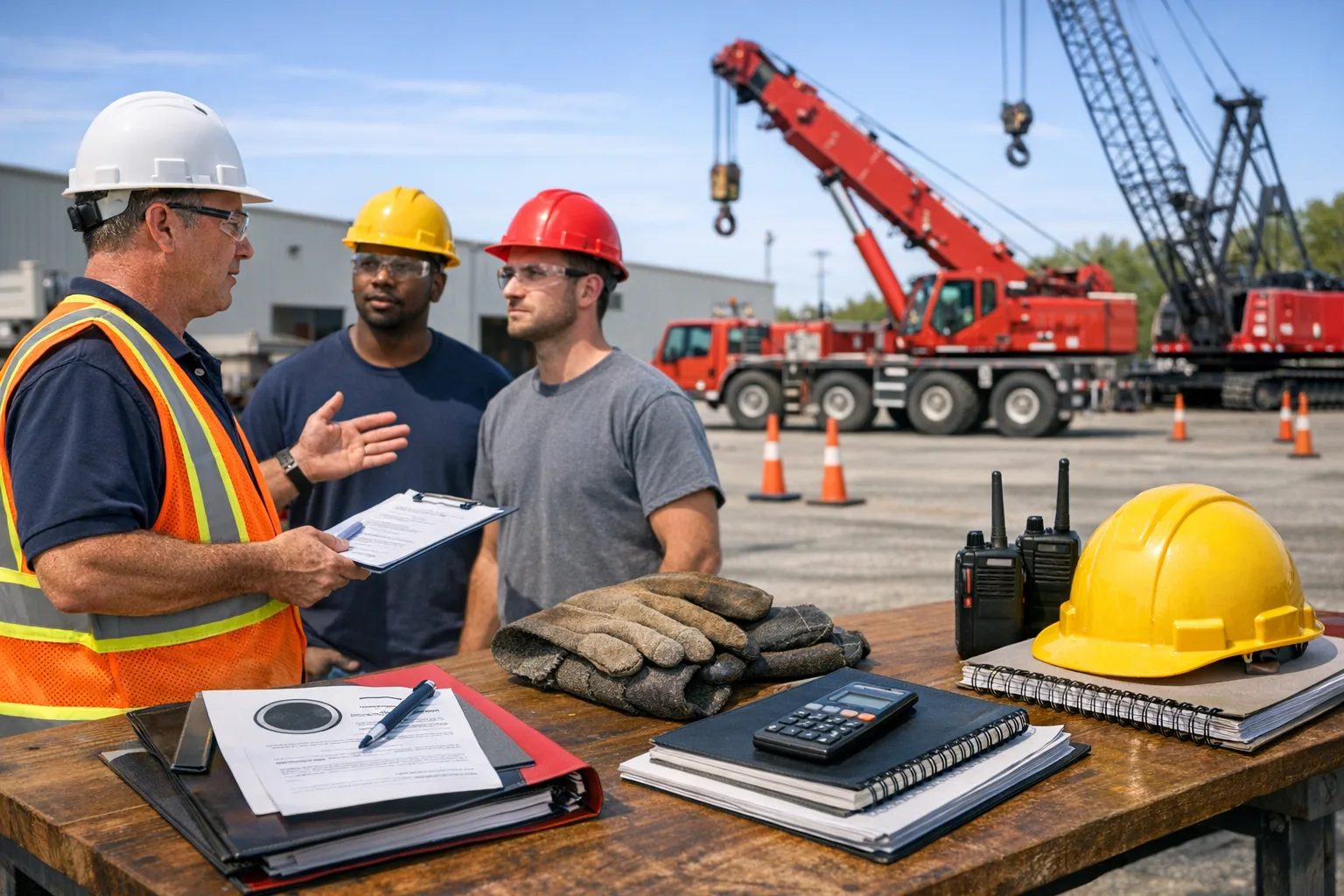
Ask:
- What training is included in the quoted price?
- Does the cost include classroom instruction, practical preparation, or both?
- Are testing-related costs separate?
- Are there added fees if I need more preparation or a later exam date?
- What happens if I need to reschedule?
For a broader breakdown of pricing factors, review Cost of crane operator training. It can help you compare schools based on value and scope rather than looking only for the smallest number.
Questions about scheduling
Scheduling matters for working adults, career changers, and construction workers balancing job demands. A school should be upfront about class structure and time commitment.
Ask:
- How is the program scheduled?
- Is it designed for full-time students, working professionals, or both?
- How much time should I set aside for studying outside class?
- When does practical preparation happen relative to testing?
- If I miss a session, what are my options?
Realistic scheduling expectations are part of a beginner-friendly approach. If a school avoids specifics, that can make planning difficult.
Questions about certification fit
One of the biggest mistakes beginners make is enrolling before confirming the right certification path. Ask:
- Is this program aimed at crane operators, riggers, signal persons, or multiple roles?
- What path do you recommend for someone with my experience?
- Will this training help me prepare for the certification I actually need?
- If I want to move from signal person or rigging work into operation later, what should I do first?
This is especially important for Indiana students entering the trade from another field. The right first step depends on your target job and your current jobsite exposure.
Red Flags Beginners Should Watch for When Comparing Schools
Sometimes the easiest way to choose a school is to identify warning signs early. Beginners do not need to know everything, but they should know what to avoid.
Vague answers about what is included
If a provider cannot clearly explain what the training includes, what exam prep means, or what certification path the class supports, that is a problem. You should not have to guess what you are buying.
Too much focus on speed and not enough on preparation
Be careful with schools that lean heavily on “quick” messaging without explaining how skills, safety, and exam readiness are actually developed. Crane training should be efficient, but not rushed to the point that the student is left unprepared.
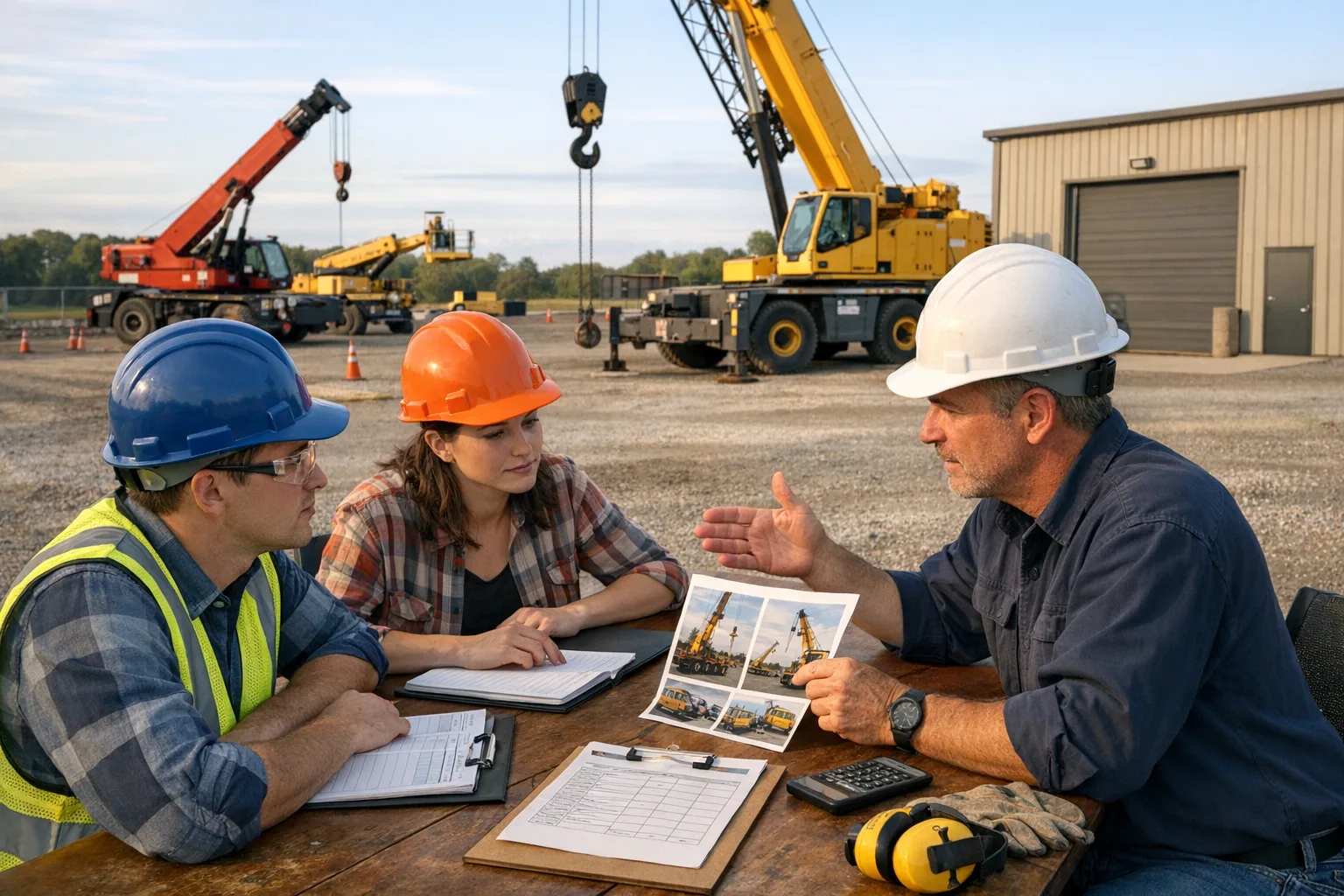
No clear distinction between operator, rigger, and signal person training
These are related roles, but they are not interchangeable. A school that treats them as the same thing may not be giving you accurate guidance.
Little discussion of safety and jobsite expectations
Training should not revolve around test-taking alone. A school should connect classroom material and practical coaching to safe behavior, communication, inspections, and lift awareness on real jobsites.
Price used as the only selling point
The lowest figure is not automatically the right choice. If a lower-priced option offers weak instruction, unclear exam support, or limited practical coaching, it may not be the better value. School quality is not the same thing as cheapest price.
Pressure to pay before your questions are answered
Beginners should be able to ask what the class covers, who it is for, and what to expect before committing. If you are pushed to pay a deposit without clarity, step back.
How Indiana Students Can Choose the Right Training Option
If you are in Indianapolis or elsewhere in Indiana, local fit matters. That does not mean a local option is always better by default, but it often helps when training connects to the work environment and career paths you are likely to encounter nearby.
Consider your likely job path in Indiana
Indiana students may come from commercial construction, industrial sites, road and bridge work, plant environments, logistics facilities, or general trades. Your likely path affects what training makes the most sense.
For example:
- If you want to move into a crane operator role, operator-focused training with strong written and practical exam preparation is likely the priority.
- If you already work around lifts and load handling, rigging and signal person training may be a practical first step.
- If you are comparing trade-school-style options, ask which path best fits your target role rather than choosing the broadest-sounding class.
Local relevance can help with practical planning
Is an Indiana-based training option better if you want local job opportunities? It can be helpful for several reasons:
- Easier travel and scheduling
- Training discussions may be more grounded in regional work conditions and employer expectations
- Better fit for students balancing work and family obligations in the Indianapolis area
- More practical conversations about how certification supports local career moves
That said, location alone should not decide it. A nearby school still needs strong instruction, practical coaching, and clear certification guidance.
Look for plain-language guidance on requirements
Indiana students comparing schools often ask about crane certification requirements because the process can feel fragmented at first. A good training provider should help simplify the path. You should be able to ask what your first step is and receive a direct answer based on your goals, not a generic sales script.
That guidance is especially useful for:
- Career changers entering the skilled trades
- Construction workers seeking formal certification
- Riggers pursuing a recognized credential path
- Signal persons needing OSHA-aligned information
- Students comparing crane school cost and training options in Indiana
FAQ: What Beginners Usually Want to Know
How do I know if a crane certification school is actually good for beginners?
Look for structured teaching, direct answers, and realistic expectations. A beginner-friendly program explains terms clearly, identifies the right certification path for your goals, includes practical coaching, and does not assume prior crane experience.
Should a beginner choose a school that includes NCCCO exam preparation?
In most cases, yes. If your goal is certification, exam preparation should be built into the training approach. That includes classroom review, practical exam familiarization, and clear guidance on what you need to study and practice.
What questions should I ask before paying for crane operator training?
Ask what is included, what type of certification path the class supports, how practical training is handled, what scheduling looks like, whether exam prep is part of the program, and what additional costs may apply. Also ask whether the course is appropriate for someone with your current experience level.
How much hands-on practice should a real crane school provide?
There is no one-size-fits-all number that tells the whole story. What matters is that practical training is structured, supervised, and connected to both safe operation and exam preparation. Beginners should receive real coaching, not just observation time.
Is an Indiana-based training option better if I want local job opportunities?
It can be helpful, especially if you want practical scheduling, regional relevance, and training that fits your likely work environment in Indianapolis or other Indiana markets. Still, local convenience should be weighed alongside instruction quality, exam support, and certification fit.
Next Steps if You Are Ready to Start Crane Operator Training
If you are ready to compare schools seriously, your next step is not just picking the nearest class. It is identifying which path fits your situation:
- Crane operator training
- Rigger certification training
- Signal person certification training
- NCCCO practical exam preparation
- Tower crane operator training
For some students, the right move is full operator preparation. For others, a rigger or signal person path makes more sense first. The key is getting a direct answer based on your goals, timeline, and current experience.
Train For The Crane works with students in Indianapolis and across Indiana who want practical, certification-driven guidance without vague promises. If you are comparing a crane certification school and are not sure whether operator, rigger, or signal person training is the right place to begin, call (317) 385-7190 and ask which training path fits your goals, schedule, and certification needs.