

Why Crane Lifting Plans Are Essential for Every Operation
Crane lifting plans are mandatory, detailed documents that outline every aspect of a lifting operation before it begins. They serve as the blueprint for safe, efficient, and compliant crane work, covering load specifications, crane configuration, rigging details, site hazards, personnel roles, and emergency procedures.
What a crane lift plan must include:
- Load information – weight, dimensions, center of gravity
- Crane specifications – type, capacity, boom length, radius
- Rigging details – slings, shackles, hitch type, capacity
- Site assessment – ground conditions, power lines, obstructions
- Personnel – qualified operator, rigger, signal person
- Communication plan – hand signals, radio, backup methods
- Hazard analysis – environmental factors, contingencies
- Approval signatures – lift director, project manager
Contact with overhead power lines continues to be a leading cause of death involving cranes. Yet many incidents could be prevented with proper planning. A crane lift plan is required for every crane lift on most construction projects, not just the big ones.
The reality is simple: no plan equals no lift. Whether you’re moving a 500-pound load or a 50-ton vessel, whether you’re using a small mobile crane or coordinating multiple machines, the planning process remains critical. At least 48 hours before crane mobilization—and five days for critical lifts—your plan must be submitted, reviewed, and approved.
The good news? Creating an effective lift plan follows a systematic process. Understanding what goes into these plans, who’s responsible for what, and when a standard plan becomes a critical one can mean the difference between a routine operation and a preventable tragedy.
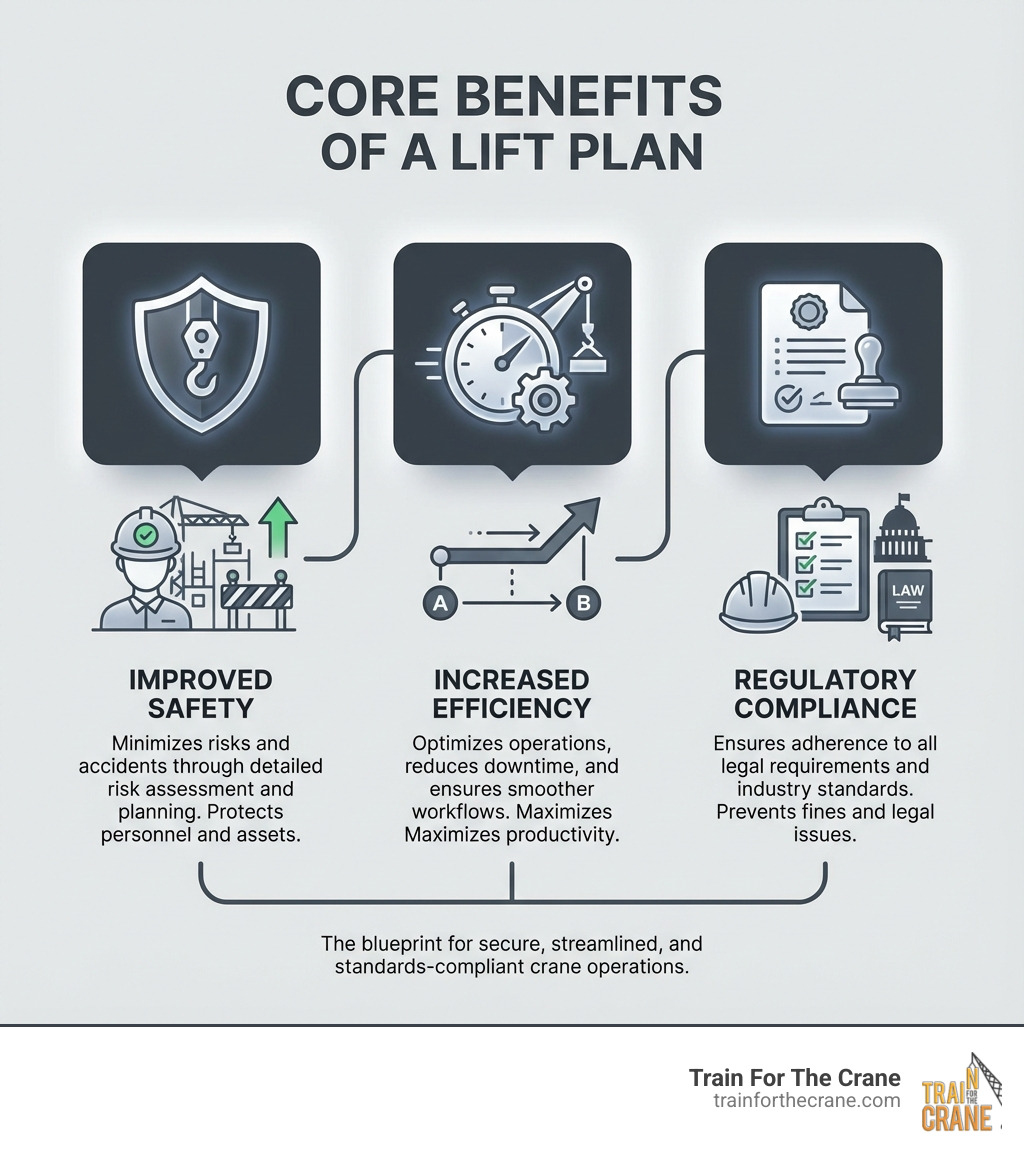
The Blueprint for Safety: What Are Crane Lifting Plans and Why Are They Crucial?
Imagine building a house without blueprints. Chaos, right? That’s precisely why crane lifting plans exist for crane operations. They are the essential blueprints that guide every lift, ensuring safety, efficiency, and compliance from the ground up. In our line of work, especially in busy areas like Danville, IN, where construction and industrial projects are always underway, the stakes are incredibly high. A single misstep can lead to catastrophic accidents, injuries, or even fatalities.
The Purpose of a Lift Plan
At its core, a crane lifting plan is a carefully detailed document that outlines the safe execution of a lifting operation. It’s more than just a checklist; it’s a living document that serves several vital purposes:
- Blueprint for Safety: It systematically identifies potential hazards, assesses risks, and outlines control measures to mitigate them. This proactive approach is fundamental to accident prevention. For instance, we know contact with overhead power lines is a leading cause of death involving cranes. A well-crafted plan addresses this head-on by mandating safe clearance distances, often 20 feet, and outlining specific precautions.
- Step-by-Step Guide: It provides a clear, sequential guide for the entire lifting process, from crane setup to load placement. This ensures everyone involved understands their role and the expected flow of operations.
- Communication Tool: A lift plan acts as a universal language for the entire lift team—operators, riggers, signal persons, and supervisors. It ensures that everyone is on the same page, understands the scope, and agrees on the safest method. This is especially crucial during complex lifts where clear communication is paramount.
- Legal Documentation: In the eyes of regulatory bodies like OSHA, crane lifting plans are mandatory for any lifting operation. They provide documented proof that due diligence was exercised, hazards were considered, and safety protocols were established. This documentation is critical for regulatory compliance and can be vital in the event of an incident.
- Ensuring Compliance: Adherence to the lift plan ensures that operations meet industry standards and regulatory requirements, such as those outlined by OSHA. This not only keeps us safe but also helps us avoid costly fines and project delays.
For more insights into keeping crane operations safe, check out our guide on Crane Lifting Safety.
Why Every Lift Needs a Plan
You might think, “It’s just a small lift, we do this all the time.” But here’s the kicker: every single lift is unique. Even seemingly simple operations can harbor unforeseen risks. The idea that lift planning is “not just for heavy loads” is a critical insight from our research.
- Unique Site Conditions: No two job sites are identical. The ground conditions in one part of Danville, IN, might be firm, while just down the road, you could encounter subsurface vaults, underground storage tanks, or duct-banks that impact ground bearing capacity. A lift plan forces us to survey the site, identify these nuances, and plan accordingly.
- Load Variations: Even if the type of load is familiar, its exact dimensions, weight, and center of gravity can vary. These details directly impact crane configuration and rigging selection.
- Environmental Factors: Weather is a fickle friend in Indiana. Wind, rain, and even cold temperatures can significantly affect a lift. A plan helps us establish criteria for postponing or canceling lifts based on these factors, ensuring we don’t push our luck.
- Preventing Incidents: The primary goal of a lift plan is to prevent accidents. By thinking through every “what if” scenario and putting controls in place, we drastically reduce the likelihood of incidents, protecting our team and our equipment.

Building Your Plan: A Step-by-Step Guide
Creating a crane lifting plan might seem daunting, but it’s a systematic process designed to ensure nothing is overlooked. It’s about breaking down a complex operation into manageable steps, each with its own set of considerations.
Essential Components of a Comprehensive Crane Lift Plan
A comprehensive crane lifting plan is like a detailed recipe for a successful lift. It leaves no stone unturned, covering everything from the load itself to the environment it’s moving through. Here’s a breakdown of the critical information we include:
- Load Details: This is where it all begins. We need a precise description of the load, including its dimensions, exact weight, and crucially, its center of gravity (COG). For complex items, written calculations of the load’s weight and COG are essential.
- Crane Configuration: This section details the specific crane(s) to be used. It includes the crane’s make, model, capacity, and its exact configuration for the lift—boom length, jib length, counterweight, radius, and the resulting percentage of rated capacity. We ensure the crane’s current certification is documented.
- Rigging Specifications: The plan specifies the type of rigging that will be used (slings, shackles, spreader bars, lifting beams), their rated capacities, and how they will be configured (hitch type, sling angles). We also include a detailed rigging diagram.
- Personnel Details: All key personnel involved—the crane operator, rigger(s), signal person(s), and lift director—are identified, along with their current certifications and designations as competent or qualified persons.
- Site Diagrams: Visual aids are incredibly helpful. The plan includes detailed site diagrams showing the crane’s placement, the load’s travel path, designated landing zones, and any identified hazards or obstructions. These diagrams often include radius lines and clearance zones.
- Communication Plan: Clear communication is non-negotiable. The plan outlines the agreed-upon communication method (e.g., hand signals, two-way radio with hands-free capability) and how other affected stakeholders in the area will be notified.
- Hazard Analysis and Contingency Plans: This is where we anticipate what could go wrong. It covers environmental factors (weather, power lines), ground conditions, and potential mechanical failures. Contingency plans for unexpected events, such as exceeding 90% of crane capacity or mechanical issues, are crucial.
- Safety Precautions: The plan details safety measures for all employees in the area, including barricades, exclusion zones, and the use of tag lines to control the load.
- Inspection Records: Most recent annual inspection records for the crane, including the name and qualifications of the inspector, are part of the plan.
Common Hazards and Site Considerations
Planning a lift is also about planning around potential problems. Our research consistently highlights that common hazards, if not addressed, can quickly turn a routine lift into a disaster.
- Ground Conditions: This is paramount. We carefully assess the soil and ground conditions to ensure sufficient bearing capacity for the crane’s outriggers or tracks. This includes identifying any subsurface vaults, underground storage tanks, or duct-banks that could compromise stability. Mats or cribbing are often required to distribute the load effectively.
- Overhead Power Lines: As mentioned, contact with overhead power lines is a leading cause of crane-related fatalities. Our plans always mandate a minimum 20-foot clearance from power lines to the crane’s radius. If closer proximity is unavoidable, specific power line safety plans and stringent controls are implemented.
- Weather: Indiana weather can be unpredictable. We consider wind speed, visibility, and the presence of lightning or heavy rain. The plan establishes clear criteria for postponing or canceling operations based on these conditions. Cold temperatures can also introduce challenges, such as unexpected friction or increased load weight due to freezing.
- Underground Utilities: Beyond ground bearing capacity, we must identify and locate all underground utilities (gas lines, water pipes, electrical conduits) to prevent accidental damage during crane setup or operations.
- Site Access and Swing Radius: The plan details the crane’s access route, setup location, and full swing radius, ensuring it’s clear of obstructions and personnel. Barricading the swing radius and advising personnel of hazards is standard practice.
Understanding rigging is also a huge part of safety. Learn more with our Basic Rigging Training.
Adapting Plans for Different Scenarios
Just as no two job sites are identical, neither are all lifting operations. A good crane lifting plan is adaptable, taking into account the specific challenges presented by various scenarios and crane types.
- Mobile Cranes vs. Tower Cranes: While the core principles remain, planning for a mobile crane involves detailed ground bearing pressure calculations and travel path assessments, whereas a tower crane plan focuses more on assembly/disassembly, tie-ins, and height considerations.
- Multi-Crane Lifts: When two or more cranes are used to lift a single load, the complexity multiplies. The plan must account for load sharing, precise synchronization, communication between multiple operators, and the combined ground bearing pressure. This often qualifies as a critical lift.
- Lifts Over Buildings or Operating Facilities: Lifting loads over occupied structures, operating units, or pipelines introduces significant risk. These scenarios require extremely detailed plans, often with professional engineer review, and are typically classified as critical lifts due to the potential for severe consequences.
- Lifts Out of Water: These present unique challenges related to buoyancy, dynamic forces, and maintaining control as the load breaks the water’s surface. Additional calculations and specialized rigging are often required.
- Hoisting Personnel: OSHA generally prohibits hoisting personnel with a crane unless no safe alternative is possible. When it is necessary, these are always considered critical lifts and require extremely stringent planning, specialized equipment (personnel baskets), and adherence to specific regulations (e.g., 29 CFR 1926.1427).
When Standard Isn’t Enough: Understanding Critical Lifts
While every lift requires a plan, some lifts demand an extra layer of scrutiny and detail. These are known as critical lifts. A critical lift plan isn’t just a longer standard plan; it’s a deeply in-depth evaluation designed for high-risk situations where the margin for error is minimal. These often require professional engineer review and more extensive submission timelines.
For a deeper dive into these complex operations, our resource on How to Create a Critical Lift Plan is invaluable.
Criteria for a Critical Lift
Our research and industry best practices define several conditions that trigger the need for a critical lift plan. If any of these conditions are met, we roll out the red carpet for planning:
- Load Over 75% of Crane’s Rated Capacity: If the load weight for the current crane configuration exceeds 75% of its rated capacity, it’s a critical lift. This indicates a high stress scenario for the crane.
- Loads Over 50 Tons: Simply put, very heavy loads—those exceeding 50 tons—automatically qualify as critical due to their inherent mass and potential for damage.
- Multi-Crane Lifts: Any lift requiring the use of two or more cranes to handle a single load is a critical lift. The coordination and load distribution complexities lift the risk significantly.
- Lifts Over Operating Facilities, Buildings, or Pipelines: Lifting over any occupied unit, shelter, building, or vital infrastructure means that a dropped load could have severe consequences beyond just equipment damage.
- Hoisting Personnel: As mentioned, lifting personnel with a crane is generally prohibited. When absolutely necessary and permitted by regulation, it is always a critical lift due to the direct risk to human life.
- Non-Routine/Technically Difficult Rigging: If the rigging arrangement is unusually complex or involves non-standard techniques, it requires the detailed planning of a critical lift.
- Operator’s Discretion: Perhaps one of the most important criteria is when the crane operator, based on their experience and assessment, believes a lift should be treated as critical due to perceived risk or complexity. We always trust our operators’ judgment on this.
- Lift Requires Load to be Out of Operator’s View: If the operator cannot directly see the load throughout the entire lift, it introduces a significant communication and control challenge, making it critical.
TABLE: Comparing Standard vs. Critical Lift Plan Requirements
| Feature | Standard Lift Plan | Critical Lift Plan |
|---|---|---|
| Trigger | All lifts | High-risk lifts (e.g., >75% capacity) |
| Detail Level | Comprehensive | Highly detailed, in-depth evaluation |
| Review | Site Supervisor / Competent Person | Lift Director, Project Manager, Professional Engineer |
| Documentation | Standard form, JHA | Extensive calculations, drawings, contingency plans |
| Submission | 24-48 hours prior | 5+ days prior |
The Human Element: Roles, Responsibilities, and Regulations
Behind every successful lift plan is a team of dedicated, qualified individuals working in concert. It’s a symphony of coordination, where each member plays a crucial role in ensuring the safety and efficiency of the operation. This is where our training at Train For The Crane truly shines, preparing individuals for these vital responsibilities.
Key Personnel and Their Duties
- Lift Director: This individual holds overall responsibility for the entire lifting operation. The Lift Director is the ultimate authority on site during a lift. They oversee the planning, ensure adherence to the lift plan, manage personnel, and have the authority to stop the lift if conditions become unsafe. For larger projects, you might even need to Hire a Lift Director specifically for complex lifts.
- Crane Operator: The operator is responsible for the safe and efficient operation of the crane itself. They must be certified for the specific type, class, and capacity of the crane they are operating. Their skills extend beyond just operating controls; they need a deep understanding of load charts, crane limitations, and site conditions. Find more about Crane Operator Skills on our site.
- Qualified Rigger: Riggers are responsible for properly attaching the load to the crane, selecting appropriate rigging gear, inspecting it for damage, and ensuring the load is balanced and secure. They must be designated as a “competent person” or “qualified person” for rigging. Our Certified Rigger Course prepares individuals for this critical role.
- Signal Person: When the crane operator’s view of the load or lift area is obstructed, a certified signal person is essential. They communicate with the operator using standardized hand signals or verbal commands (via two-way radio), guiding the load safely through its path.
How OSHA and Industry Standards Shape Crane Lifting Plans
Regulations aren’t just bureaucratic problems; they are born from decades of experience and countless lessons learned, often the hard way. In the United States, and certainly in Indiana, our crane lifting plans are heavily influenced by federal and industry standards.
- OSHA 1926 Subpart CC: This is the big one for construction. OSHA’s regulations (e.g., 29 CFR 1926 Subpart CC) mandate many aspects of crane safety, including the requirement for lift plans, operator certification, rigging inspections, and specific rules regarding proximity to power lines. These regulations are designed to protect workers and prevent accidents.
- ASME P30 Lift Planning: The American Society of Mechanical Engineers (ASME) has a committee (P30) dedicated to creating voluntary standards for lift planning. These standards provide comprehensive guidelines for planning the use of cranes, derricks, hoists, and lifting accessories, often going beyond minimum OSHA requirements to establish best practices.
- Manufacturer Specifications: Every crane comes with a detailed operating manual and load charts from its manufacturer. Our lift plans must always adhere strictly to these specifications, as they outline the crane’s capabilities and limitations. Operating outside these parameters voids warranties and, more importantly, creates extreme safety risks.
- Document Retention: Regulations also dictate how long certain records must be kept. For instance, training records for operators and stand-by personnel should be retained for at least 10 years after their retirement or separation. Daily inspection records are typically kept for one year, while annual inspections and load tests may be retained for 3 years or even for the life of the equipment.
- Inspection Records: The plan must include documentation of the crane’s most recent annual inspection, performed by a certified third party. Regular inspections are not just a good idea; they’re a regulatory requirement to ensure the equipment is in safe working order.
Gaining your NCCCO Crane Certification is a testament to meeting these rigorous standards.
The Final Check: Review and Approval Process
The creation of a crane lifting plan is only half the battle; its thorough review and approval are equally critical. This multi-layered process ensures that every detail has been scrutinized and that all stakeholders are aligned before the first hook moves.
- Pre-Lift Huddle: Before operations begin, a mandatory pre-lift huddle is conducted with all employees involved in the lift. This meeting advises everyone of the hazards, reviews the plan, and ensures everyone understands their roles and the sequence of events. If other contractors have employees in the area, their superintendents are briefed as well.
- Verifying Calculations: The lift director and other qualified personnel carefully verify all calculations within the plan—load weight, crane capacity for the specific configuration, rigging capacities, and ground bearing pressures. Any discrepancies must be resolved before proceeding.
- Confirming Site Conditions: A final, on-site check is performed to confirm that actual site conditions match those outlined in the plan. This includes ground stability, clearance from power lines (ensuring the 20-foot minimum), absence of unexpected obstructions, and current weather conditions.
- Sign-Off Procedures: Once reviewed and confirmed, the lift plan must be formally approved. This typically involves signatures from key personnel, such as the crane operator, rigger(s), signal person, and the lift director. For critical lifts, the project manager, site safety manager, and sometimes a professional engineer will also sign off.
- Daily Safety Review: For multi-day lifts, or even for subsequent lifts on the same day, a daily safety review is often required. This ensures the crane’s condition, configuration, and operating parameters still align with the approved plan, and that no new hazards have emerged.
A crane may not be operated until every single requirement is met. If conditions cannot be met, the crane will be restricted, and operations will be postponed until all requirements are satisfied. This commitment to safety is non-negotiable.
Frequently Asked Questions about Crane Lift Plans
Can a single lift plan be used for multiple lifts?
A lift plan can cover multiple picks only if the crane configuration, location, and load parameters do not change and the plan addresses the worst-case scenario lift within that series. Any significant change requires a new or revised plan. For instance, if you’re lifting identical beams from the same truck to the same spot, and the crane doesn’t move or change its setup, a single plan might suffice. However, if the crane repositions, the load changes, or the landing zone shifts, a new plan or an addendum is necessary. It’s always better to err on the side of caution and create a new plan if there’s any doubt.
What happens if site conditions change unexpectedly?
If conditions change from what is outlined in the lift plan (e.g., weather worsens, unexpected ground subsidence, new obstructions appear), all operations must stop immediately. The plan must be re-evaluated by the lift director and relevant personnel, and work can only resume once it’s deemed safe. This often means revising the existing plan, developing a new one, or implementing additional control measures. Safety always takes precedence over schedule.
What is the role of software in creating lift plans?
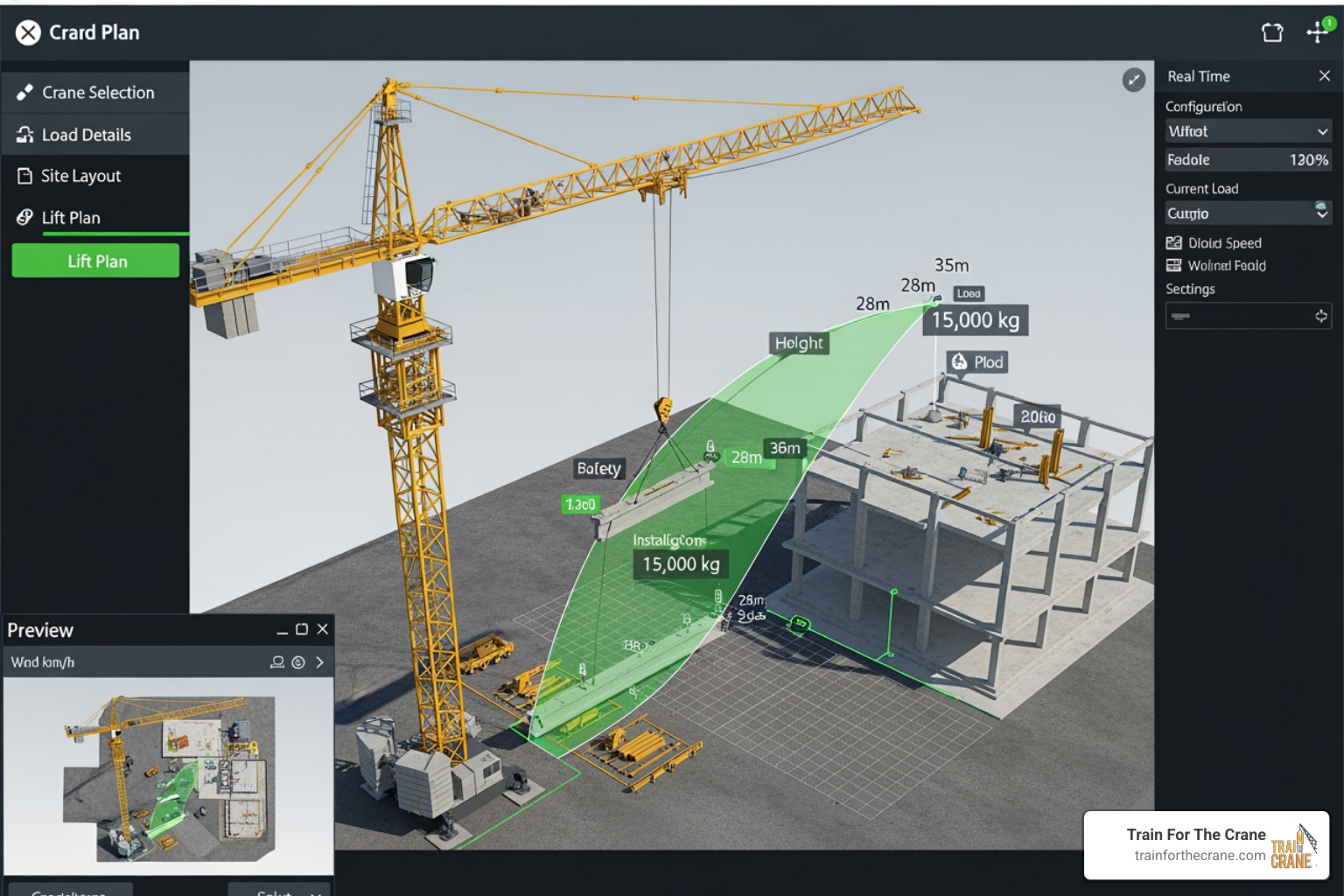
Specialized software like 3D Lift Plan has revolutionized how we approach crane lifting plans. These tools help create highly accurate, detailed plans by simulating the lift in a virtual environment. They assist with crane selection, rigging design, and identifying potential collisions or reach limitations, significantly improving safety and efficiency. This software often includes data for hundreds of cranes, allowing for precise configuration and calculation. The benefits are immense: reduced planning time, improved visualization, improved accuracy, and the ability to easily adapt plans for different scenarios, all contributing to a safer and more efficient operation.
Conclusion
The world of crane operations, whether on a busy construction site in Indianapolis or a quiet industrial park in Danville, IN, is inherently complex and carries significant risks. However, with meticulous preparation and a commitment to safety, these risks can be effectively managed. Crane lifting plans are not just a regulatory obligation; they are the foundation upon which safe, efficient, and successful lifting operations are built.
By embracing proactive planning, understanding the nuances of standard versus critical lifts, and fostering a culture of responsibility among all personnel, we ensure that every lift is executed with the highest degree of safety. Our commitment at Train For The Crane is to equip you with the knowledge and skills necessary to steer these complexities, ensuring that you and your team operate with confidence and competence.
Ready to lift your skills and commitment to safety? Get Your Crane Operator Certification with us today.