

Why Construction Safety Leadership Matters More Than Ever
A construction safety director is a senior-level professional responsible for overseeing all safety programs, policies, and compliance across construction projects, ensuring workers return home safely while protecting the company from liability and regulatory violations.
Quick Career Path Overview:
- Education: Bachelor’s degree in Occupational Health, Safety Management, or related field (90% of jobholders)
- Experience: Typically 10+ years in construction safety management roles
- Key Certifications: Certified Safety Professional (CSP), OSHA 500, industry-specific credentials
- Salary Range: $72,000 – $153,000+ per year (varies by location and experience)
- Core Responsibilities: Policy development, regulatory compliance, risk management, safety culture building, incident investigation
The construction industry has the second-highest fatality rate among all industries. This sobering statistic underscores why the role of construction safety director has become so critical. Unlike safety officers or managers who focus on day-to-day compliance, safety directors operate at a strategic level—developing company-wide policies, managing safety budgets, and fostering a culture where everyone values safety.
According to Mike Parnell, an industry expert, effective safety leaders “know a little about every aspect of the operation, but more importantly, they know how to listen.” This captures the essence of the role: bringing together technical knowledge, regulatory expertise, and leadership skills to prevent accidents before they happen.
The demand for qualified safety professionals continues to grow significantly. Companies recognize that strong safety leadership doesn’t just save lives—it reduces insurance costs, prevents project delays, and protects their reputation. Federal OSHA regulations have also raised the bar, requiring designated competent persons for critical safety functions.
This guide will walk you through the complete path to becoming a construction safety director, from education and certifications to the skills that set top safety leaders apart.
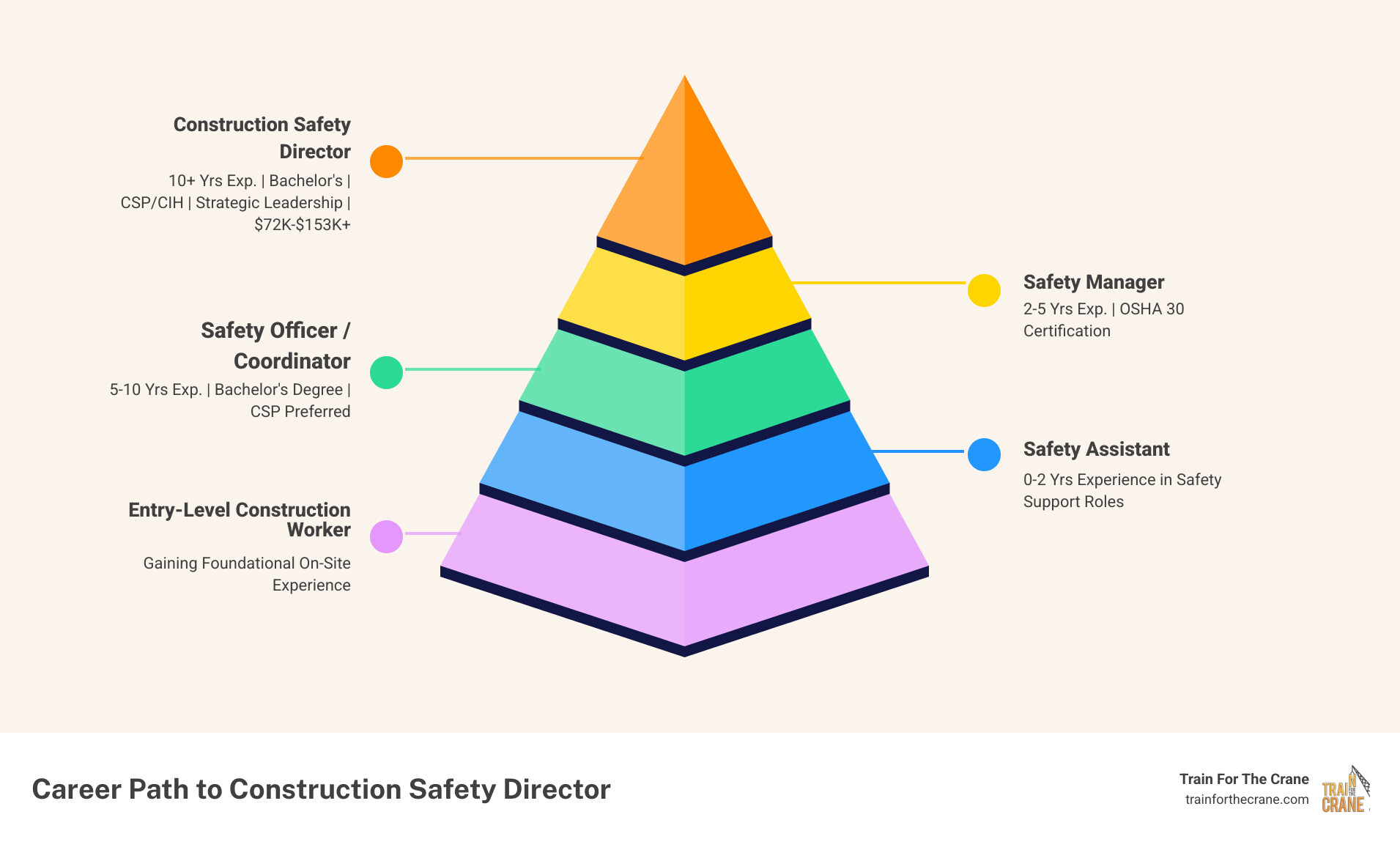
The Core Role: What Does a Construction Safety Director Actually Do?
A great construction company is often defined by its safety leadership, and the construction safety director is at the heart of it. This senior-level professional is the architect of the entire safety culture, developing comprehensive risk management programs that embed safety into the organization’s DNA. They provide strategic oversight across all projects, managing safety budgets, leading teams of safety professionals, and ensuring every worker returns home safely.
Daily Duties and Essential Tasks
While strategy drives the role, a construction safety director stays connected to the day-to-day realities of the job. The work is a dynamic mix of office and fieldwork in varying conditions.
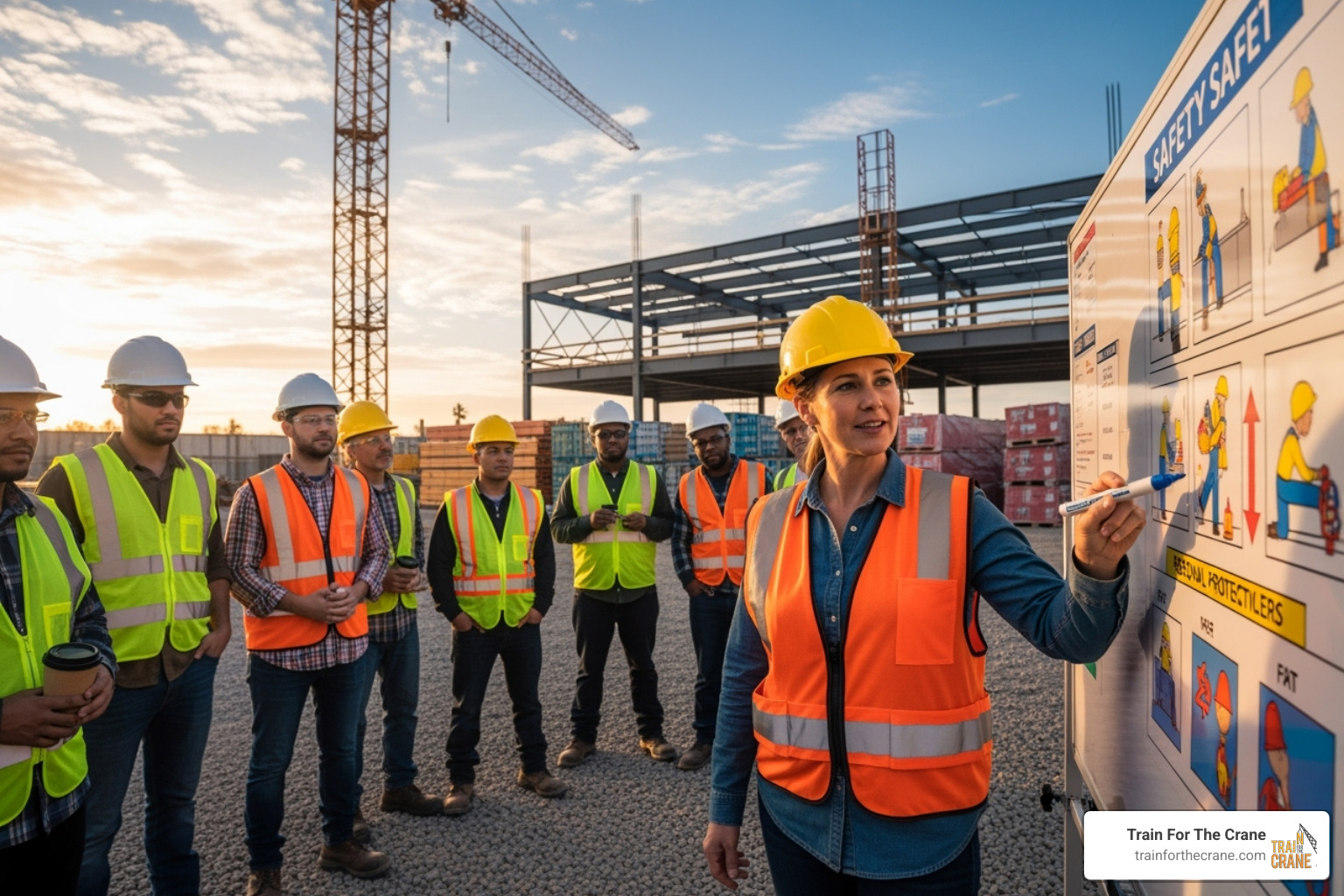
- Site inspections and hazard assessments: Directors regularly visit sites to assess conditions, identify hazards, and evaluate risks before they become incidents. This hands-on presence helps them design practical, real-world solutions.
- Incident investigations: When accidents occur, the director leads thorough investigations to determine root causes and recommend preventive measures, focusing on learning and prevention, not blame.
- Training coordination: Directors oversee safety training for all personnel, from new hires to managers. This includes specialized training for high-risk tasks like confined space entry or operating heavy equipment. Companies like Train For The Crane offer essential programs like NCCCO certification and rigger certification to ensure workers are properly qualified.
- Policy development: They continuously develop and update company safety policies to align with organizational goals and regulatory changes.
- Team management: In larger organizations, they hire, coach, and evaluate safety officers and managers.
- Compliance and reporting: Directors monitor compliance, report to executives on safety performance, manage workers’ compensation claims, and serve as the primary liaison with regulatory authorities.
Ensuring Regulatory Compliance
A single compliance failure can lead to severe liability, injuries, or fatalities. The construction safety director must have in-depth regulatory knowledge and ensure adherence across all projects.
This includes mastering OSHA standards, particularly the construction-specific rules under OSHA 1926. Beyond federal regulations, directors must steer state and local laws, which often have their own specific requirements. Meticulous documentation is essential, including maintaining OSHA 300 logs, inspection findings, and incident reports to protect both workers and the company.
Directors conduct internal audits to identify issues before regulators do and represent the company during inspections. For operations involving heavy equipment, ensuring proper crane lifting safety is critical, as incidents can be catastrophic.
The Difference Between a Safety Manager and a Director
While the titles are sometimes used interchangeably, “safety manager” and “construction safety director” represent distinct levels of responsibility.
A safety manager operates at the tactical level, implementing existing policies on one or a few projects. The construction safety director, in contrast, operates at a strategic level, developing the overall safety vision and policies for the entire organization.
| Feature | Safety Manager | Construction Safety Director |
|---|---|---|
| Strategic vs. Tactical Focus | Primarily tactical; implements existing policies and procedures. | Primarily strategic; develops and defines the overall safety vision and policies. |
| Scope of Responsibility | Typically responsible for safety on one or a few specific projects or sites. | Responsible for safety across multiple projects, divisions, or the entire organization. |
| Team Management | May supervise a small team of safety officers or coordinators. | Leads and manages the entire safety department, including safety managers and officers. |
| Decision-Making Authority | Implements decisions made by senior leadership; makes operational safety decisions. | Makes high-level strategic decisions, influences company-wide policies, and reports to executive leadership. |
| Budgeting Role | Manages safety budgets for their assigned projects/areas. | Develops and manages the overall safety budget for the entire company. |
| Interaction Level | Engages primarily with project teams, supervisors, and workers. | Interacts with executive leadership, legal teams, HR, and external regulatory bodies. |
| Proactivity Level | Focuses on preventing incidents on assigned projects. | Proactively anticipates problems, identifies systemic risks, and drives cultural change. |
| Typical Salary Range | $55,000 – $95,000 | $72,000 – $153,000+ |
The director’s role is about broader influence, deeper strategy, and greater accountability for the overall safety performance and culture of the entire company.
Your Step-by-Step Guide to Becoming a Construction Safety Director
Becoming a construction safety director is a journey that requires formal education, hands-on experience, and a commitment to protecting lives. It’s a career built layer by layer, supported by on-the-job training and mentorship from experienced leaders. What sets successful directors apart is their proactive leadership and ability to anticipate problems.

Step 1: Get the Right Education
A formal education is crucial for a modern construction safety director. 90% of jobholders in this field have a Bachelor’s degree, making it an industry standard. Relevant fields of study include Occupational Health and Safety, Safety Management, Construction Management, or Engineering.
However, education doesn’t stop at graduation. The safety landscape is always changing. Continuing education through workshops, seminars, and additional coursework is essential to stay current with evolving regulations, technologies, and best practices. This commitment shows employers you are serious about staying at the top of your field.
Step 2: Gain Extensive Field Experience
You can’t learn construction safety from a book. Employers expect a minimum of 5-10 years of related experience because practical wisdom is developed on the job site. You need to understand how projects unfold and witness the unique hazards of different jobs.
Many successful directors started in the skilled trades as laborers or equipment operators. This background provides an invaluable perspective on how projects actually work. The typical career path progresses from a safety officer or coordinator (handling daily inspections and compliance) to a safety manager (overseeing larger projects and personnel), with each step building the experience needed for the director level.
Step 3: Earn Essential Qualifications for a Construction Safety Director
Your degree and experience get you in the door, but specific skills and certifications open the path to leadership. These credentials validate your expertise and commitment to professional excellence.
Key skills include leadership, communication, problem-solving, hazard recognition, organizational skills, and critical thinking. The most important certifications include:
- Certified Safety Professional (CSP): The gold standard, signifying a high level of competence.
- OSHA 500: Qualifies you to teach OSHA 10-hour and 30-hour construction safety courses.
- Other valuable credentials include the Certified Industrial Hygienist (CIH), Certified Safety Manager for Construction (CSMC), HAZWOPER, and First Aid/CPR.
For sites using heavy equipment, specialized credentials are vital. NCCCO Certification for crane operators and Rigger Certification for lifting operations are essential for managing these high-risk tasks safely. The investment in these qualifications pays off in career advancement and the confidence to make critical safety decisions.
Salary Expectations and Career Outlook
The role of a construction safety director isn’t just about making a difference—it also comes with solid financial rewards that reflect your expertise and responsibility. The demand for qualified safety professionals is projected to grow significantly, ensuring a strong career outlook.
How Much Does a Construction Safety Director Earn?
The financial outlook for this career is strong. A construction safety director with experience commands a salary between $72,000 and $153,000 per year, with top earners at large firms reaching $160,000 or more. Key factors influencing pay include:
- Location: High-cost cities pay more (e.g., the average in New York is ~$133,000).
- Experience: More years in the field translate to higher compensation.
- Education and Certifications: A Bachelor’s degree and advanced credentials like the Certified Safety Professional (CSP) or Certified Industrial Hygienist (CIH) significantly boost earning potential.
- Company Size: Larger firms with complex projects typically offer more competitive pay.
Alternative Career Paths for a Construction Safety Director
The skills of a construction safety director—risk assessment, regulatory compliance, and leadership—are highly transferable. With projected job growth for safety professionals, you’ll have many options. Alternative career paths include:
- Environmental Health and Safety (EHS) Manager: Broadening focus to include environmental regulations.
- Risk Manager: Overseeing all organizational risks, including financial and operational.
- Corporate VP of Safety: Shaping policy at the highest executive level.
- Construction Project Manager: Using safety knowledge to improve project outcomes.
- Occupational Health and Safety Consultant: Sharing expertise with multiple companies.
- Lift Director: A specialized role overseeing all crane lifting operations. Our Lift Director Training program can help you develop these advanced skills.
Your expertise opens doors in consulting, manufacturing, energy, and anywhere complex operations require serious safety oversight. The foundation you build in construction safety translates remarkably well across industries.
The Challenges and Rewards of the Role
Being a construction safety director is a demanding but highly meaningful career for those passionate about protecting lives. It’s a role that will test you, but the rewards are unparalleled.
The reality of the challenges you’ll face
The role comes with significant challenges. You’ll carry the weight of responsibility for people’s lives in one of America’s most dangerous industries. The regulatory landscape is complex and ever-changing, requiring constant vigilance. You will face resistance from workers and management who may prioritize speed over safety, requiring diplomatic communication and the courage to enforce standards. The job is also physically demanding, with long hours and travel between sites in all weather conditions. Finally, you’ll need to justify safety budgets and prove the value of your programs.
Why it’s all worth it
Despite the difficulties, the rewards are immense. The ultimate satisfaction comes from knowing you save lives. Your work directly prevents accidents and ensures workers return home safely. As a construction safety director, you have the authority to shape an entire organization’s culture, fostering an environment where everyone values safety. The role offers substantial leadership opportunities, professional respect, and strong financial stability, with salaries ranging from $72,000 to $153,000. You’ll also have the chance to innovate, implementing new technologies and training programs, like specialized Lift Director Training, to push the industry forward.
The challenges are real, but if you find purpose in protecting others and thrive on problem-solving, the rewards of being a construction safety director far outweigh the difficulties. This isn’t just a job—it’s a calling.
Conclusion: Build Your Future in Construction Safety
The journey to becoming a construction safety director isn’t a quick one. It requires dedication, continuous learning, and a genuine passion for protecting people. But if you’ve read this far, you already know that this career path is about something bigger than just a paycheck—it’s about making a real difference every single day.
Throughout this guide, we’ve walked through what it takes: the foundational education, the years of hands-on experience, the essential certifications, and the leadership skills that set great safety directors apart. We’ve also been honest about the challenges—the regulatory pressure, the resistance you’ll sometimes face, and the weight of knowing that lives depend on your decisions. Yet, we’ve also highlighted the incredible rewards: the satisfaction of preventing accidents, the respect you’ll earn, and the opportunity to shape an entire organization’s safety culture.
The construction industry isn’t slowing down, and neither is the need for qualified safety professionals. As projects become more complex and regulations continue to evolve, companies are actively seeking leaders who can steer these challenges with expertise and confidence. The construction safety director role has never been more critical or more in demand.
At Train For The Crane, we see how proper training transforms careers and saves lives. Our instructors bring over 30 years of combined experience to every training session, and we’ve built our reputation on proven methods that help professionals pass their certification exams and excel in the field. Whether you’re pursuing your NCCCO Certification, getting your Rigger Certification, or advancing to Lift Director Training, we’re here to support your growth every step of the way.
Safety isn’t just a set of rules to follow—it’s a mindset, a culture, and ultimately, a calling. If you’re ready to step into a role where your expertise directly protects workers and strengthens companies, then this is your moment.
Start your journey with our comprehensive training programs and build the future in construction safety that you—and the industry—deserve.