

The Linchpin of Lifting Operations
Lift director services are specialized offerings that provide trained professionals to oversee, plan, and execute crane lifting operations. These services ensure that complex lifts are conducted safely, efficiently, and in full compliance with federal regulations.
What Lift Director Services Typically Include:
- On-Site Lift Direction – A certified professional oversees all lifting operations in real-time
- Lift Plan Engineering – Development of detailed plans for critical lifts, including load calculations and rigging specifications
- Pre-Lift Meetings – Coordination with operators, riggers, and signal persons to review procedures and identify hazards
- Regulatory Compliance – Ensuring adherence to OSHA 1926 Subpart CC and ASME B30.5 standards
- Risk Assessment – Evaluation of site conditions, load characteristics, and potential obstructions
- Emergency Response Planning – Establishing protocols for unsafe conditions or equipment failures
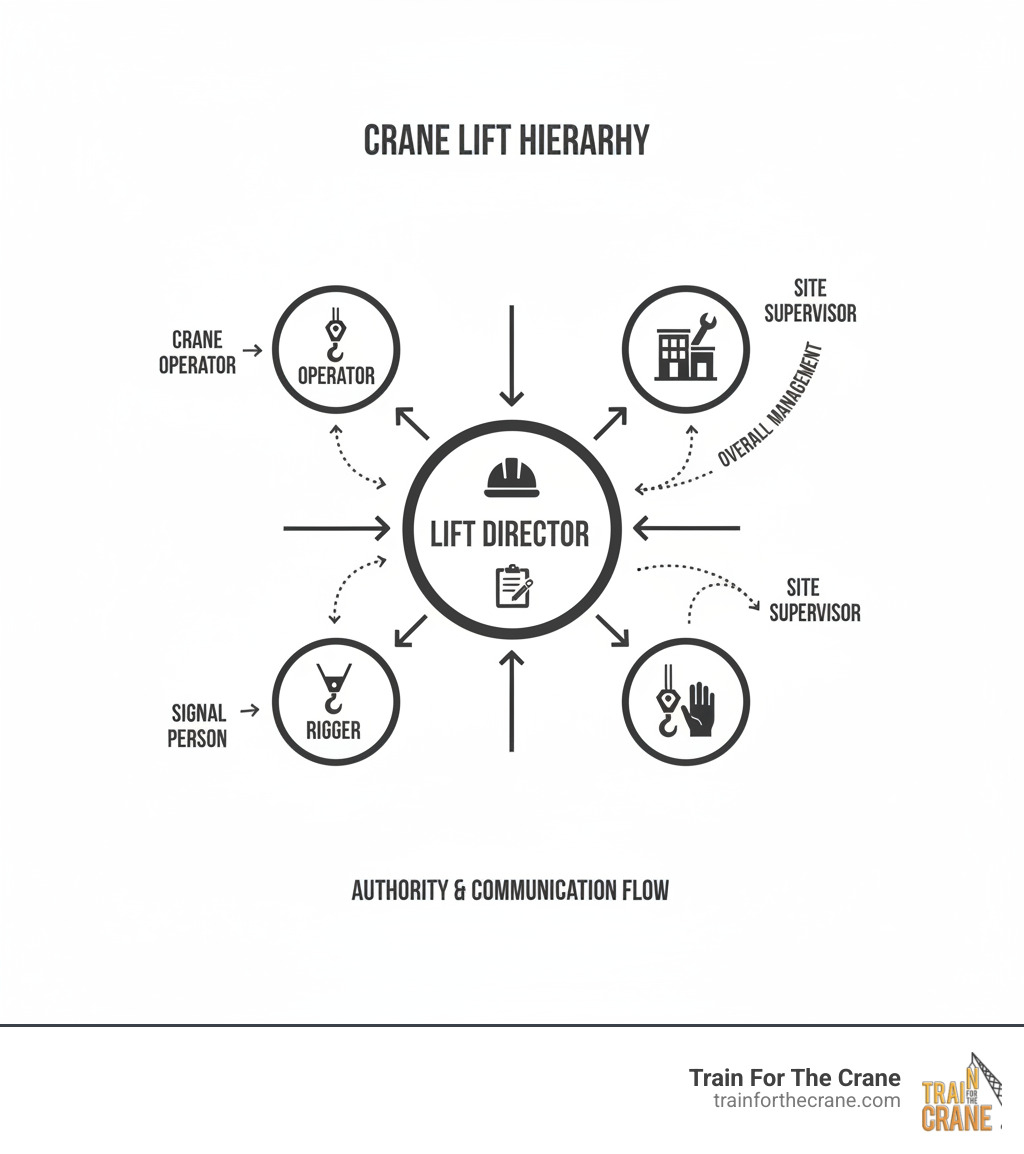
The lift director is the central authority who coordinates crane operators, riggers, signal persons, and site personnel to ensure every lift proceeds safely and efficiently.
This role has become increasingly critical. OSHA’s 2014 compliance directive mentions “Lift Director” 41 times, and companies have been penalized specifically for failing to designate a competent lift director. The lift director holds the authority to stop operations if unsafe conditions arise, making them the ultimate safeguard against accidents.
Understanding lift director services is essential for modern construction and industrial operations, especially for complex or high-value lifts.
The Core Responsibilities and Qualifications of a Lift Director

A lift director is like an orchestra conductor, ensuring every part of a lift works in harmony. The role demands expertise, leadership, and a focus on safety. Hiring lift director services brings in a professional who manages the big picture and the critical details.
What is a Lift Director? Primary Duties Explained
The lift director has the final say during a lift, actively managing it from start to finish. Their work begins long before the lift, ensuring the site is properly prepared by verifying ground conditions, traffic controls, and compliance with manufacturer specifications.
During the lift, they are the central communication hub, coordinating operators, riggers, and signal persons. Their instructions are final. Crucially, a lift director has the authority to stop any operation immediately if an unsafe condition arises. This power is essential for ensuring everyone’s safety.
They are also responsible for verifying the load, confirming its weight and balance, and ensuring proper rigging by competent personnel. They ensure the load never exceeds the crane’s rated capacity. The director also leads pre-lift meetings to review the plan, discuss hazards, and clarify roles. This communication is vital for preventing accidents.
Throughout the operation, they’re monitoring everything, ensuring strict adherence to Crane Lifting Safety standards and making real-time decisions as conditions change.
Differentiating Roles: Lift Director vs. Crane Operator vs. Site Supervisor
On a busy construction site, role clarity during crane operations is essential for safety and compliance. Let’s clear up the confusion:
| Role | Primary Responsibility | Key Focus Area | Authority in Lifting Operations |
|---|---|---|---|
| Lift Director | Planning, overseeing, and executing the entire lift. | Safety and efficiency of the lift sequence. | Ultimate authority to stop, start, and direct all lifting activities. |
| Crane Operator | Manipulating the crane’s controls to move the load. | Safe and precise operation of the crane machine. | Operates the crane under the direction of the signal person and lift director. Cannot be the lift director. |
| Site Supervisor | Overall management of the construction site. | Project schedule, budget, and general site safety. | Oversees the entire site; designates the lift director but typically defers to them on lifting specifics. |
The crane operator focuses solely on operating the machine safely and precisely, following the lift plan and signals. Critically, they cannot also serve as the lift director. The roles must be separate to ensure proper checks and balances.
The site supervisor manages the overall project, including schedules, budgets, and general site safety. They designate the lift director but defer to their authority on all lifting specifics.
The lift director bridges planning and execution. They develop the lift plan, understand all risks, and have final authority over the lift. Lift director services provide a crucial layer of specialized oversight that other roles cannot.
While some overlap may occur on smaller jobs, OSHA and ASME standards require clear separation for complex or critical lifts. Our Crane Operator Training emphasizes this distinction as fundamental to safe operations.
The Path to Becoming a Qualified Lift Director
Becoming a lift director is a serious commitment requiring formal education and real-world experience. ASME standards require a lift director to be a “qualified person”—someone with a degree, certificate, or extensive knowledge, training, and experience to solve problems related to lifting operations.
The path requires significant field experience in crane operations. Many start as riggers or in other crane-related roles, building knowledge from the ground up. NCCCO certification for Lift Directors is a widely recognized and rigorous credential that ensures certified professionals have genuinely earned their expertise.
Beyond technical knowledge, great lift directors possess strong leadership qualities. They are dependable, trustworthy, and make smart decisions under pressure. Excellent communication skills are also vital. They must listen well, ask the right questions, and collaborate effectively with the entire team to ensure everyone understands the plan. Sharp risk assessment abilities are also necessary to identify hazards, analyze load dynamics, and develop risk management strategies.
Our Lift Director Training program is designed to develop all these competencies, preparing professionals for the demands of this challenging role. We also provide resources for NCCCO Crane Certification to help aspiring lift directors meet the industry’s highest standards.
The journey to becoming a qualified lift director takes time, dedication, and a genuine commitment to safety. But for those who make it, the role offers the satisfaction of knowing you’re the person keeping everyone safe during some of the most complex and dangerous operations on a construction site.
The Blueprint for Success: Lift Plans and Regulatory Compliance

A lift plan is the recipe for a safe crane operation. For any critical lift, a detailed plan is essential. The lift director helps create this plan, ensuring it meets operational needs and safety rules.
Deconstructing the Lift Plan: A Director’s Guide
A lift plan is a comprehensive roadmap detailing every aspect of the operation, serving as a lifeline for critical lifts.
A lift is “critical” when the stakes are high. This includes lifts where the load exceeds 75% of the crane’s rated capacity, multiple-crane operations (tandem lifts), or lifts involving hazardous materials or high-value equipment. Other critical lifts include personnel lifts, lifts with a shifting center of gravity, or technically challenging setups like those without outriggers. If something could go seriously wrong, a detailed plan is required.
The lift director is key to creating and executing the plan. This starts with defining load characteristics (weight, dimensions, center of gravity) and moves to crane selection and configuration (boom length, counterweights, outrigger setup). Crucial rigging details include how the load is attached and what gear is used, handled by qualified riggers. A site environment analysis identifies power lines, ground support issues, obstructions, and traffic patterns.
The plan must detail the sequence of events. For critical lifts, this may include a “dry run” to spot problems. Contingency plans for weather changes or equipment failure are also essential. The lift director ensures the plan is documented and understood by all, leading pre-lift meetings to review it. For guidance, see our resource on How to Create a Critical Lift Plan. Our Lift Plan Guide also offers valuable insights.
Navigating the Legal Landscape: OSHA and ASME Requirements
Lift director services are often legally required. Understanding the regulatory landscape is essential to avoid penalties, shutdowns, and accidents. In the U.S., OSHA and ASME set the rules for crane safety, with specific requirements for lift directors.
OSHA’s 29 CFR 1926 Subpart CC is the legal foundation for crane safety. OSHA’s compliance directive mentions “Lift Director” 41 times, and companies have been penalized for failing to designate one, showing the role’s importance. For multiple-crane lifts, OSHA 1926.1432 requires direction by a competent and qualified person (or a competent person assisted by qualified persons). Without clear designation, the site supervisor is often cited.
ASME standards like B30.5 and P30.1 provide further detail on lift director qualifications and responsibilities. While OSHA sets legal minimums, ASME often represents the industry’s gold standard for best practices.
Our lift director services and training programs ensure full compliance with both OSHA and ASME. We ensure personnel understand the OSHA Crane Standards and meet the expectations of the ASME B30.5 Overview. This dual focus helps you achieve the highest level of safety and professionalism.
The Value of Professional Lift Director Services

You wouldn’t let someone perform surgery without a medical degree, and you wouldn’t trust an unlicensed pilot to fly your plane. Yet some companies attempt complex crane operations without a qualified lift director overseeing the process. It’s a risky gamble that rarely pays off.
The presence of professional lift director services on your project isn’t just about checking a regulatory box. It’s a strategic decision that fundamentally transforms how your lifting operations unfold, touching everything from worker safety to your bottom line.
Enhancing Safety and Efficiency with Expert Lift Director Services
Expert lift director services provide peace of mind, creating a safer, more productive work environment. A certified lift director brings immediate safety improvements. With years of experience, they identify subtle hazards others miss, from unstable ground to faulty rigging. Their expertise in risk mitigation involves anticipating problems before they happen.
Crucially, they have the authority to stop work immediately if an issue arises. This power to prevent accidents is invaluable. They ensure the lift plan is followed precisely, equipment is set up correctly, and communication is clear. Beyond safety, lift directors improve efficiency. A single point of authority eliminates confusion. They ensure the correct crane and rigging are used and that everyone understands the plan, making operations smoother.
Pre-lift meetings become focused strategy sessions to solve problems proactively. For critical lifts, a dry run can test the plan, identify obstructions, and confirm roles, preventing costly delays. These efficiency gains lead to less downtime, fewer mistakes, and optimal use of resources. When Basic Rigging Training and Signal Person Training are coordinated by a lift director, the operation runs seamlessly.
The High Cost of In-Action: Consequences of No Lift Director
Skipping this crucial step has real, expensive, and devastating consequences. OSHA issues serious penalties for failing to designate a competent lift director. These fines can impact project budgets and lead to increased scrutiny. Without a designated director, OSHA often cites the site supervisor.
Beyond fines, project delays from unmanaged lifts can be crippling. An accident can shut down a site for days, leading to lost revenue and strained client relationships. The worst-case scenario is a catastrophic failure, such as a crane collapse or dropped load, leading to serious injuries or fatalities. The resulting legal liability, including lawsuits and potential criminal charges, can destroy a company.
A major incident will cause insurance costs to skyrocket. A poor safety record marks a company as high-risk, leading to higher premiums for years, or even refusal of coverage. The reputational damage from a major accident can be severe, making it harder to win bids, attract talent, and maintain client trust.
The investment in professional lift director services is minimal compared to these potential costs. It’s insurance against disaster. Learn more on our Industry Insights page.
Why a Certified Director is Crucial for Critical Lifts
For critical lifts—high-stakes operations pushing equipment to its limits—a certified lift director is essential. These include tandem lifts requiring perfect synchronization, high-value equipment installations, and lifts exceeding 75% of a crane’s capacity. Such operations demand extraordinary expertise.
The NCCCO Lift Director certification is a rigorous credential requiring extensive experience and a demanding exam. Hiring a certified director means their expertise has been validated, proving they can handle the pressure of critical lifts. This validated expertise is evident in their approach to complex challenges. They can engineer solutions for unusual loads or sites, develop detailed 3D lift plans, and lead comprehensive pre-lift meetings.
With zero margin for error on critical lifts, a certified director ensures flawless execution. They methodically review every detail, from load charts to contingency plans, and confirm the entire team understands the plan. The peace of mind from this expertise is invaluable. Stakeholders can be confident their most challenging lifts are managed by a true professional. If you’re facing a critical lift, explore how you can Hire a Lift Director through our services. We bring precision and safety to every complex operation.
Finding and Hiring Qualified Lift Director Services

Finding and hiring the right lift director is a critical decision. This professional will have the authority to stop operations to ensure safety, so choose wisely.
Where to Find Professional Lift Director Services
Knowing where to find qualified lift director services can save time and prevent issues. Here are your best options:
- Specialized training companies like ours are an excellent starting point. We are deeply embedded in the industry, and our experienced instructors and network of skilled professionals make us a prime resource.
- Crane rental companies, particularly those with full-service packages, often have certified lift directors on staff or can recommend trusted contractors.
- Industry associations like the Steel Erectors Association of America (SEAA) can provide referrals to qualified professionals in your area.
- Professional certifying bodies like the NCCCO offer registries to verify the credentials of any potential hire.
Prioritize providers who emphasize certification and continuous training to ensure they are current with evolving regulations. We support this by maintaining resources like our Lift Director Jobs page and working with Industry Partners to connect projects with top talent.
What to Look for in a Service Provider
Not all lift director services are equal. Asking the right questions upfront is crucial. Look for these qualifications:
- NCCCO Certification: This should be your top priority. This rigorous certification validates a director’s knowledge and experience. A lack of current certification is a major red flag.
- Proven Experience: Look for a track record with lifts of similar complexity to yours. Ask about their experience with tandem lifts, high-value moves, or challenging environments. For example, our instructors have managed lifts valued over $25 million and coordinated up to 10 cranes at once.
- 3D Lift Planning Capabilities: For critical lifts, the ability to use 3D planning software is crucial for visualizing the operation and identifying potential issues that 2D plans might miss.
- Deep Regulatory Knowledge: The director must be an expert in current OSHA, ASME, and local standards. This knowledge must be up-to-date, as regulations and interpretations change.
- Communication and Leadership Skills: A director must be an excellent communicator and leader, able to coordinate the entire team effectively. Look for someone who is a good listener, collaborative, and decisive under pressure.
- Client Testimonials and References: Always ask for references. A reputable provider will gladly connect you with past clients. Hesitation to provide them is a warning sign.
- Commitment to Continuous Improvement: The industry is always evolving. Hire a director from a provider that emphasizes ongoing training and professional development to ensure they are using the latest best practices.
At Train For The Crane, these qualities are the foundation of our Lift Director Training. We produce professionals who are not just certified, but true leaders. We work with Authorized Training Partners to ensure consistent quality.
When you’re ready to bring a qualified lift director onto your project, you’re not just checking a regulatory box. You’re making a strategic investment in safety, efficiency, and peace of mind. Choose wisely, and that investment will pay dividends throughout your project.
Frequently Asked Questions about Lift Directors
Here are answers to common questions about lift director services and crane safety regulations.
Can a crane operator also act as the lift director?
The answer is a clear no. CCO guidelines and industry best practices require these roles to be separate for critical safety reasons. A crane operator must focus entirely on the machine: its controls, movements, and signals. Their attention is fully dedicated to the technical operation of the crane.
The lift director has a broader focus, overseeing the entire operation—the load, environment, personnel, and adherence to the lift plan. They must maintain a big-picture perspective. Separating these roles creates a vital system of checks and balances, ensuring both the technical operation and overall safety are managed by dedicated experts. One person plays an instrument; the other conducts the orchestra.
Is a lift director required for every single lift?
No, a dedicated lift director is not required for every simple, routine lift with minimal risk. However, a lift director is mandated in specific scenarios. Multiple-crane lifts are a clear example, as OSHA 1926.1432 explicitly requires a competent and qualified person to direct them.
Critical lifts also require a lift director. This includes lifts over 75% of the crane’s capacity, those with high-value or hazardous loads, personnel lifts, or complex rigging. For these, a director is often legally required and always a best practice. Many companies now use lift directors as a standard best practice for any non-routine lift, as the investment improves safety and efficiency.
When in doubt, hire a qualified lift director. The cost is minimal compared to the potential consequences of an accident.
What is the difference between a “competent person” and a “qualified person”?
These OSHA terms sound similar but have distinct meanings regarding capability and responsibility.
A competent person is trained to identify existing and predictable hazards and has the authority to take immediate corrective action. They spot on-site problems and are empowered to fix them.
A qualified person has a higher level of expertise, demonstrated by a degree, certification, or extensive experience. They can solve complex problems, design solutions, interpret complex data, and make sophisticated technical decisions.
For many critical operations, OSHA requires the lift director to be both competent and qualified, ensuring they can both identify hazards and engineer effective solutions. Our Lift Director Training is designed to develop professionals who meet both of these stringent criteria, equipping them to solve problems confidently and safely.
Conclusion: Elevating Your Project’s Safety and Success
The complex, coordinated crane operations on a major construction site don’t happen by accident. They are the result of a lift director at the helm, ensuring every detail is managed and every person is safe.
As we’ve seen, lift director services are the linchpin of safe and efficient lifting. These professionals provide technical expertise, regulatory knowledge, and leadership, from planning to execution. They prevent incidents, stop unsafe work, and coordinate teams for a seamless workflow.
The value is clear: investing in lift director services is an investment in accident prevention, compliance, and efficiency. It helps avoid costly penalties and delays while ensuring every team member goes home safe. The question isn’t if you can afford a lift director, but if you can afford to work without one. They are not a budget line item; they are the difference between success and disaster.
If you’re ready to bring this level of expertise to your projects, Train For The Crane can help. With three decades of combined industry experience, we know what it takes to produce lift directors who excel in this demanding role. Ready to lift your project’s safety standards? Get certified with our Lift Director Training program and transform your lifting operations. Your next successful lift starts here.